
In "Psychopathology of Everyday Life," Sigmund Freud meticulously examines the seemingly trivial mistakes and slips of the tongue that permeate daily interactions. Establishing a pioneering framework, Freud delves into the unconscious mind, unraveling the intricate connections between our repressed desires and the mundane mishaps that punctuate human existence. His literary style combines anecdotal evidence with crisp analysis, marking a seminal contribution to psychoanalytic theory and establishing a context wherein the ordinary becomes a portal to understanding the psyche's deeper mechanisms. This work is not merely an exploration of neuroses; it is an invitation into the inner workings of human thought and behavior, revealing a hidden world shaped by unacknowledged motives and conflicted emotions. Freud, an Austrian neurologist and the father of psychoanalysis, was driven by a profound curiosity about the workings of the mind and the human condition. His extensive clinical experience, coupled with an interest in literature and philosophy, significantly influenced his approach to psychology. Through his investigations, Freud sought to illuminate the complexities of human thought, making "Psychopathology of Everyday Life" not only a personal exploration of his insights but also a foundational text that challenges traditional perceptions of rational behavior. This book is recommended for anyone interested in the depths of human psychology, as it offers profound insights into the seemingly trivial aspects of daily life. Freud's engaging style and profound revelations enrich our understanding of human fallibility, making this a vital read for psychologists, literary scholars, and anyone curious about the complexities of the mind.
Psychopathology of Everyday Life : Why We Forget Words and Make Errors
Starten Sie noch heute mit diesem Buch für 0 €
- Hole dir während der Testphase vollen Zugriff auf alle Bücher in der App
- Keine Verpflichtungen, jederzeit kündbar
Autor*in:
Sprache:
Englisch
Format:

100 Meisterwerke der Weltliteratur - Klassiker die man kennen muss : Ein literarisches Panorama: Meisterwerke, Klassiker und Autoren der Weltliteratur
Johann Wolfgang von Goethe, Jules Verne, Gustave Flaubert, Franz Kafka, Lewis Carroll, Selma Lagerlöf, Sigmund Freud, Johanna Spyri, Theodor Storm, Rainer Maria Rilke, Charles Dickens, Stefan Zweig, Heinrich Heine, Honoré de Balzac, Theodor Fontane, Karl May, Gottfried Keller, Mark Twain, Heinrich Mann, Else Lasker-Schüler, Robert Musil, Walt Whitman, Oscar Wilde, Annette von Droste-Hülshoff, Arthur Schopenhauer, Robert Louis Stevenson, Gustav Freytag, James Fenimore Cooper, Edgar Allan Poe, Heinrich von Kleist, William Shakespeare, Dante Alighieri, Charlotte Brontë, Emily Brontë, Jack London, Arthur Conan Doyle, Joseph Conrad, Jane Austen, Herman Melville, Guy De Maupassant, Walter Scott, Jonathan Swift, Jacob Grimm, Wilhelm Grimm, Alexandre Dumas, Rudyard Kipling, Nathaniel Hawthorne, Homer, O.Henry, Voltaire, Lew Wallace, John Galsworthy, E. T. A. A Hoffmann, Marcus Aurelius, Hans Christian Andersen, Anton Pawlowitsch Tschechow, Platon, Friedrich Nietzsche, Iwan Sergejewitsch Turgenew, Tacitus, Nikolai Gogol, Miguel de Cervantes, Mary Shelley, Thomas Wolfe, Emile Zola, Fjodor Michailowitsch Dostojewski, Leo Tolstoi, Joseph Roth, Joseph von Eichendorff, Kurt Tucholsky, Iwan Alexandrowitsch Gontscharow, Oswald Spengler, Moliere, Alfred Adler, Sophie Laroche, Klaus Mann, Rumi
book
200 Meisterwerke der Literaturgeschichte : Die größten Klassiker der Weltliteratur
Franz Kafka, Victor Hugo, Fjodor Michailowitsch Dostojewski, Lord Byron, Giacomo Leopardi, Marcel Proust, Henrik Ibsen, Percy Bysshe Shelley, Charles Dickens, Jane Austen, Mary Shelley, Emily Brontë, Charlotte Brontë, Anne Brontë, William Makepeace Thackeray, Bram Stoker, Henry Fielding, George Eliot, William Shakespeare, D. H. Lawrence, Walt Whitman, Herman Melville, Thomas Wolfe, Virginia Woolf, Joseph Conrad, Sinclair Lewis, Lewis Carrol, Edgar Allan Poe, Edward Bulwer-Lytton, Oscar Wilde, H.G. Wells, Daniel Defoe, James Fenimore Cooper, Lew Wallace, Jonathan Swift, Robert Louis Stevenson, Mark Twain, Walter Scott, Nathaniel Hawthorne, Harriet Beecher Stowe, Laurence Sterne, Frances Hodgson Burnett, Arthur Conan Doyle, Wilkie Collins, Edgar Wallace, Jack London, Henry David Thoreau, John Galsworthy, F. Scott Fitzgerald, Rudyard Kipling, G.K. Chesterton, Washington Irvin, O.Henry, Ambrose Bierce, Alexander Sergejewitsch Puschkin, Michail Lermontow, Iwan Sergejewitsch Turgenew, Leo Tolstoi, Nikolai Gogol, Iwan Gontscharow, Nikolai Leskow, Anton Pawlowitsch Tschechow, Maxim Gorki, François Rabelais, Jean de la Fontaine, Blaise Pascal, Pierre Corneille, Moliere, Jean Baptiste Racine, Charles Perrault, Voltaire, Denis Diderot, Jean-Jacques Rousseau, Pierre Ambroise de Laclos, Antoine-François Prévost, Marquis De Sade, François René Chateaubriand, Stendhal, Honoré de Balzac, Alexandre Dumas, Alphonse de Lamartine, George Sand, Gustave Flaubert, Emile Zola, Guy De Maupassant, Alphonse Daudet, Jules Verne, Joris-Karl Huysmans, Prosper Mérimée, Charles Baudelaire, Stéphane Mallarmé, Arthur Rimbaud, André Gide, Arthur Schopenhauer, Heinrich Heine, Friedrich Schiller, Johann Wolfgang von Goethe, Jacob Grimm, Gottfried von Straßburg, Wolfram von Eschenbach, E. T. Hoffmann, Annette von Droste-Hülshoff, Heinrich von Kleist, Friedrich Hölderlin, Theodor Fontane, Gustav Freytag, Gottfried Keller, Theodor Storm, Stefan Zweig, Joseph von Eichendorff, Klaus Mann, Rainer Maria Rilke, Johanna Spyri, Joseph Roth, Karl May, Robert Musil, Heinrich Mann, Sigmund Freud, Friedrich Nietzsche, Dante Alighieri, Giovanni Boccaccio, Giacomo Casanova, Luigi Pirandello, Giosuè Carducci, Gabriele D’Annunzio, Niccolo Machiavelli, Miguel Cervantes de Saavedra, Pedro Calderón de la Barca, Vicente Blasco Ibañez, Knut Hamsun, Homer, Äsop, Herodot, Thukydides, Xenophon, Platon, - Aristoteles, - Sophokles, Euripides, - Aristophanes, Lao Tse, - Konfuzius, Siddhartha Gautama Buddha, Titus Livius, Tacitus, Marcus Tullius Cicero, Vergil, Ovid, Lukian, Petronius, Apuleius, Longos von Lesbos, Mark Aurel, Aurelius Augustinus
book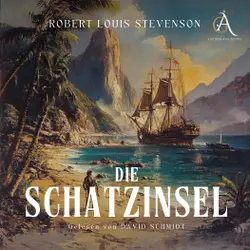
Die Schatzinsel - Hörbuch
Sigmund Freud
audiobook
Jenseits des Lustprinzips
Sigmund Freud
audiobookbook
Die Psychologie der Sexualität: Essentielle Schriften : Venus Urania, Jenseits des Lustprinzips, Die sexuelle Krise, Über die weibliche Sexualität, Der Untergang des Ödipuskomplexes
Alfred Adler, Sigmund Freud, Lou Andreas-Salomé, Grete Meisel-Heß, Basilius von Ramdohr
book
Das Unheimliche : Studien über Ängstlichkeit
Sigmund Freud
book
Die schönste Zeit - Weihnachten mit Meisterwerken der Weltliteratur : Eine literarische Reise durch die Weihnachtszeit
Franz Kafka, Sigmund Freud, Charles Dickens, Stefan Zweig, Karl May, Walt Whitman, Arthur Schopenhauer, Robert Louis Stevenson, James Fenimore Cooper, Edgar Allan Poe, Arthur Conan Doyle, Joseph Conrad, Jacob Grimm, Wilhelm Grimm, Alexandre Dumas, Homer, O.Henry, Marcus Aurelius, Hans Christian Andersen, Platon, Friedrich Nietzsche, Tacitus, Mary Shelley, Fjodor Michailowitsch Dostojewski, Oswald Spengler, Alfred Adler, Rumi
book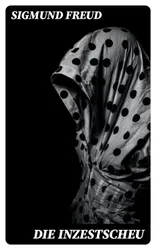
Die Inzestscheu
Sigmund Freud
book
Traum und Telepathie : Vortrag in der Wiener psychoanalytischen Vereinigung
Sigmund Freud
book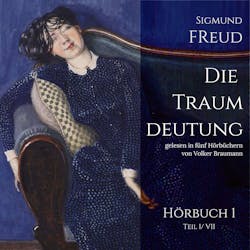
Die Traumdeutung (Hörbuch 1)
Sigmund Freud
audiobook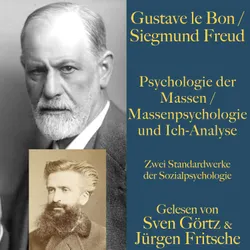
Psychologie der Massen / Massenpsychologie und Ich-Analyse : Zwei Standardwerke der Sozialpsychologie von Gustave le Bon und Siegmund Freud
Gustave Le Bon, Sigmund Freud
audiobook
Sigmund Freud: Das Ich und das Es
Sigmund Freud
audiobookbook