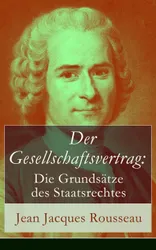
The Confessions

The Confessions is an autobiographical book by Jean-Jacques Rousseau. In modern times, it is often published with the title The Confessions of Jean-Jacques Rousseau in order to distinguish it from Saint Augustine's Confessions. Covering the first fifty-three years of Rousseau's life, up to 1765, it was completed in 1769, but not published until 1782, four years after Rousseau's death, even though Rousseau did read excerpts of his manuscript publicly at various salons and other meeting places. The Confessions was two distinct works, each part consisting of six books. Books I to VI were written between 1765 and 1767 and published in 1782, while books VII to XII were written in 1769–1770 and published in 1789. Rousseau alludes to a planned third part, but this was never completed. Though the book contains factual inaccuracies—in particular, Rousseau's dates are frequently off, some events are out of order, and others are misrepresented, incomplete, or incorrect—Rousseau provides an account of the experiences that shaped his personality and ideas. For instance, some parts of his own education are clearly present in his account of ideal education, Emile, or On Education. Rousseau's work is notable as one of the first major autobiographies. Prior to the Confessions, the two great autobiographies were Augustine's own Confessions and Saint Teresa's Life of Herself. However, both of these works focused on the religious experiences of their authors; the Confessions was one of the first autobiographies in which an individual wrote of his own life mainly in terms of his worldly experiences and personal feelings. Rousseau recognized the unique nature of his work; it opens with the famous words: "I have resolved on an enterprise which has no precedent and which, once complete, will have no imitator. My purpose is to display to my kind a portrait in every way true to nature, and the man I shall portray will be myself."

Über dieses Buch

The Confessions is an autobiographical book by Jean-Jacques Rousseau. In modern times, it is often published with the title The Confessions of Jean-Jacques Rousseau in order to distinguish it from Saint Augustine's Confessions. Covering the first fifty-three years of Rousseau's life, up to 1765, it was completed in 1769, but not published until 1782, four years after Rousseau's death, even though Rousseau did read excerpts of his manuscript publicly at various salons and other meeting places. The Confessions was two distinct works, each part consisting of six books. Books I to VI were written between 1765 and 1767 and published in 1782, while books VII to XII were written in 1769–1770 and published in 1789. Rousseau alludes to a planned third part, but this was never completed. Though the book contains factual inaccuracies—in particular, Rousseau's dates are frequently off, some events are out of order, and others are misrepresented, incomplete, or incorrect—Rousseau provides an account of the experiences that shaped his personality and ideas. For instance, some parts of his own education are clearly present in his account of ideal education, Emile, or On Education. Rousseau's work is notable as one of the first major autobiographies. Prior to the Confessions, the two great autobiographies were Augustine's own Confessions and Saint Teresa's Life of Herself. However, both of these works focused on the religious experiences of their authors; the Confessions was one of the first autobiographies in which an individual wrote of his own life mainly in terms of his worldly experiences and personal feelings. Rousseau recognized the unique nature of his work; it opens with the famous words: "I have resolved on an enterprise which has no precedent and which, once complete, will have no imitator. My purpose is to display to my kind a portrait in every way true to nature, and the man I shall portray will be myself."
Starte noch heute mit diesem Buch für 0 €

  • Hole dir während der Testphase vollen Zugriff auf alle Bücher in der App
  • Keine Verpflichtungen, jederzeit kündbar
Jetzt kostenlos testen
Mehr als 52 000 Menschen haben Nextory im App Store und auf Google Play 5 Sterne gegeben.

  1. 3.0

    200 Meisterwerke der Literaturgeschichte : Die größten Klassiker der Weltliteratur

    Franz Kafka, Victor Hugo, Fjodor Michailowitsch Dostojewski, Lord Byron, Giacomo Leopardi, Marcel Proust, Henrik Ibsen, Percy Bysshe Shelley, Charles Dickens, Jane Austen, Mary Shelley, Emily Brontë, Charlotte Brontë, Anne Brontë, William Makepeace Thackeray, Bram Stoker, Henry Fielding, George Eliot, William Shakespeare, D. H. Lawrence, Walt Whitman, Herman Melville, Thomas Wolfe, Virginia Woolf, Joseph Conrad, Sinclair Lewis, Lewis Carrol, Edgar Allan Poe, Edward Bulwer-Lytton, Oscar Wilde, H.G. Wells, Daniel Defoe, James Fenimore Cooper, Lew Wallace, Jonathan Swift, Robert Louis Stevenson, Mark Twain, Walter Scott, Nathaniel Hawthorne, Harriet Beecher Stowe, Laurence Sterne, Frances Hodgson Burnett, Arthur Conan Doyle, Wilkie Collins, Edgar Wallace, Jack London, Henry David Thoreau, John Galsworthy, F. Scott Fitzgerald, Rudyard Kipling, G.K. Chesterton, Washington Irvin, O.Henry, Ambrose Bierce, Alexander Sergejewitsch Puschkin, Michail Lermontow, Iwan Sergejewitsch Turgenew, Leo Tolstoi, Nikolai Gogol, Iwan Gontscharow, Nikolai Leskow, Anton Pawlowitsch Tschechow, Maxim Gorki, François Rabelais, Jean De Fontaine, Blaise Pascal, Pierre Corneille, Moliere, Jean Baptiste Racine, Charles Perrault, Voltaire, Denis Diderot, Jean-Jacques Rousseau, Pierre Ambroise Laclos, Antoine-François Prévost, Marquis De Sade, François René Chateaubriand, Stendhal, Honoré de Balzac, Alexandre Dumas, Alphonse de Lamartine, George Sand, Gustave Flaubert, Emile Zola, Guy De Maupassant, Alphonse Daudet, Jules Verne, Joris-Karl Huysmans, Prosper Mérimée, Charles Baudelaire, Stéphane Mallarmé, Arthur Rimbaud, André Gide, Arthur Schopenhauer, Heinrich Heine, Friedrich Schiller, Johann Wolfgang Goethe, Jacob Grimm, Gottfried von Straßburg, Wolfram von Eschenbach, E. T. Hoffmann, Annette von Droste-Hülshoff, Heinrich von Kleist, Friedrich Hölderlin, Theodor Fontane, Gustav Freytag, Gottfried Keller, Theodor Storm, Stefan Zweig, Joseph von Eichendorff, Klaus Mann, Rainer Maria Rilke, Johanna Spyri, Joseph Roth, Karl May, Robert Musil, Heinrich Mann, Sigmund Freud, Friedrich Nietzsche, Dante Alighieri, Giovanni Boccaccio, Giacomo Casanova, Luigi Pirandello, Giosuè Carducci, Gabriele D’Annunzio, Niccolo Machiavelli, Miguel Cervantes Saavedra, Pedro Calderón Barca, Vicente Blasco Ibañez, Knut Hamsun, Homer, Äsop, Herodot, Thukydides, Xenophon, Platon, - Aristoteles, - Sophokles, Euripides, - Aristophanes, Lao Tse, - Konfuzius, Siddhartha Gautama Buddha, Titus Livius, Tacitus, Marcus Tullius Cicero, Vergil, Ovid, Lukian, Petronius, Apuleius, Longos von Lesbos, Mark Aurel, Aurelius Augustinus

  2. Jean-Jacques Rousseau: Der Gesellschaftsvertrag : Prinzipien des Staatsrechts: Ein philosophischer Grundlagentext

    Jean-Jacques Rousseau

  3. 100 Klassiker der Romantik - Meisterwerke, die man kennen muss : Epische Liebesdramen und große Erwartungen in zeitlosen Geschichten

    Jane Austen, Louisa May Alcott, D. H. Lawrence, Fjodor Dostojewski, William Shakespeare, Hedwig Courths-Mahler, Frances Burney, Charlotte Brontë, Alexandre Dumas, Margaret Mitchell, Charles Dickens, L.M. Montgomery, Eugenie Marlitt, Wilhelmine Heimburg, Elisabeth Bürstenbinder, Stendhal, Johann Wolfgang Goethe, Walter Scott, Guy De Maupassant, Victor Hugo, George Sand, Leo Tolstoi, Gabriele D’Annunzio, Rudyard Kipling, Gustave Flaubert, Nathaniel Hawthorne, Jean-Jacques Rousseau, Bernardin de Saint-Pierre, F. Scott Fitzgerald, Prosper Mérimée, Edith Wharton, Lena Christ, François-René de Chateaubriand, Stefan Zweig, Alexander Sergejewitsch Puschkin, Ida Boy-Ed, Arthur Schnitzler, Anatole France, Johanna Spyri, George Eliot, Gaston Leroux, Nataly von Eschstruth, Gottfried von Straßburg, Sophie Mereau, Caroline von Wolzogen, Benedikte Naubert, Henry De Stacpoole, Levin Schücking

  4. Essenzielle Klassiker der politischen Philosophie : Der Staat, Der Gesellschaftsvertrag, Der Fürst, Utopia, Manifest der Kommunistischen Partei, Geschichte der Socialdemokratie

    Niccolò Machiavelli, Montesquieu, Friedrich der Große, Platon, - Aristoteles, Marcus Tullius Cicero, Tommaso Campanella, Thomas Morus, Samuel von Pufendorf, Abbé Castel Saint-Pierre, Jean-Jacques Rousseau, Immanuel Kant, Johann Gottlieb Fichte, Karl Marx, Friedrich Engels, Wilhelm von Humboldt, Friedrich Christoph Dahlmann, Franz Mehring, Johann Most, John Henry Mackay, Rosa Luxemburg, Erich Mühsam

  5. Jean Jacques Rousseau : Der Gesellschaftsvertrag, Julie oder Die neue Heloise, Emile oder über die Erziehung…

    Jean-Jacques Rousseau

  6. Der Gesellschaftsvertrag

    Jean-Jacques Rousseau

  7. Emil oder über die Erziehung

    Jean-Jacques Rousseau

  8. Der Gesellschaftsvertrag

    Jean-Jacques Rousseau

  9. Schriften zur Kulturkritik : Über Kunst und Wissenschaft (1750). Über den Ursprung der Ungleichheit unter den Menschen (1755). Zweisprachige Ausgabe

    Jean-Jacques Rousseau

  10. Große Klassiker der französischen Literatur : Französische Meisterwerke: Von Romantik bis zur Revolution

    Victor Hugo, Marcel Proust, Voltaire, George Sand, Emile Zola, Gustave Flaubert, Honoré de Balzac, François Rabelais, Alexandre Dumas, Charles Baudelaire, Stendhal, Denis Diderot, Jean-Jacques Rousseau, Marie-Madeleine de Fayette, Alphonse Daudet, Jules Verne, Antoine-François Prévost, Pierre Ambroise Laclos, Joris-Karl Huysmans, Marquis De Sade, Anatole France, Alfred de Musset, Guy De Maupassant, Jean Giraudoux, François René Chateaubriand, Guillaume de Lorris, Pierre de Beaumarchais, Moliere, Jean Baptiste Racine, Edmond Rostand, Pierre Corneille

  11. Rousseau - Gesammelte Werke

    Jean-Jacques Rousseau

  12. 4.0

    Der Gesellschaftsvertrag : Prinzipien des politischen Rechtes

    Jean-Jacques Rousseau