Über dieses Buch

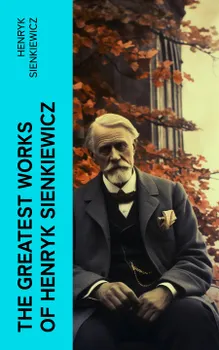
The Greatest Works of Henryk Sienkiewicz gathers the major achievements of Poland's Nobel laureate, showcasing the breadth of his historical imagination, moral seriousness, and narrative vigor. From the epic national memory of the Trilogy to the early Christian drama of Quo Vadis, Sienkiewicz writes in a lucid, panoramic style, blending romance, adventure, political allegory, and meticulous historical reconstruction. His fiction belongs to the nineteenth-century European historical novel, yet it is distinctly shaped by Poland's struggle to preserve identity under partition. Henryk Sienkiewicz (1846–1916) was a journalist, traveler, novelist, and one of the central literary figures of partitioned Poland. His experiences as a correspondent, his travels in America and Europe, and his deep engagement with Polish history and Catholic-humanist values helped form his art. Writing for a nation deprived of statehood, he sought not merely to entertain but to strengthen cultural memory, ethical courage, and communal hope. This collection is recommended for readers who value historical fiction on a grand scale, animated by suspense, vivid characterization, and patriotic depth. It offers both literary pleasure and insight into how fiction can sustain a people's imagination across centuries of crisis.

This enriched edition has been carefully crafted to add value to your reading experience.

- A comprehensive Introduction outlines these selected works' unifying features, themes, or stylistic evolutions.

- The Author Biography highlights personal milestones and literary influences that shape the entire body of writing.

- A Historical Context section situates the works in their broader era—social currents, cultural trends, and key events that underpin their creation.

- A concise Synopsis (Selection) offers an accessible overview of the included texts, helping readers navigate plotlines and main ideas without revealing critical twists.

- A unified Analysis examines recurring motifs and stylistic hallmarks across the collection, tying the stories together while spotlighting the different work's strengths.

- Reflection questions inspire deeper contemplation of the author's overarching message, inviting readers to draw connections among different texts and relate them to modern contexts.

- Lastly, our hand‐picked Memorable Quotes distill pivotal lines and turning points, serving as touchstones for the collection's central themes.
Starte noch heute mit diesem Buch für 0 €

  • Hole dir während der Testphase vollen Zugriff auf alle Bücher in der App
  • Keine Verpflichtungen, jederzeit kündbar
Jetzt kostenlos testen
Mehr als 52 000 Menschen haben Nextory im App Store und auf Google Play 5 Sterne gegeben.

  1. Nobelpreis
    3.5

    Quo vadis?

    Henryk Sienkiewicz

  2. Nobelpreis

    Historische Romane : Bereicherte Ausgabe. Die Kreuzritter + Quo Vadis? + Mit Feuer und Schwert + Sintflut + Pan Wolodyjowski

    Henryk Sienkiewicz

  3. Nobelpreis
    3.7

    Quo Vadis

    Henryk Sienkiewicz

  4. Nobelpreis

    Auswanderer : historischer Roman

    Henryk Sienkiewicz

  5. Nobelpreis

    Historische Romane : Erweiterte Ausgabe. Mittelalter-Romane + Rittergeschichten + Historische Romane aus der Römerzeit

    Henryk Sienkiewicz

  6. Nobelpreis

    Quo Vadis? - Geschichte aus der Zeit Neros (Kommentiert) : Erweiterte Ausgabe. Eine Liebesgeschichte in der Zeit der Christenverfolgungen

    Henryk Sienkiewicz

  7. Nobelpreis

    Henryk Sienkiewicz : Gesammelte Werke

    Henryk Sienkiewicz

  8. Neu

    Quo Vadis : The Illustrated Gift Edition

    Henryk Sienkiewicz

  9. Neu

    Quo Vadis : A Narrative of the Time of Nero

    Henryk Sienkiewicz

  10. Neu

    Quo vadis : Tome 1

    Henryk Sienkiewicz

  11. 100 Clásicos de la Literatura Universal

    Francis Scott Fitzgerald, Mary Shelley, Lyman Frank Baum, Louisa May Alcott, Dante Alighieri, Jane Austen, Ambrose Bierce, Emily Brontë, Edgar Rice Burroughs, Lewis Carroll, Wilkie Collins, René Descartes, Charles Dickens, Emily Dickinson, Alexandre Dumas, Gustave Flaubert, Benito Pérez Galdós, Johann Wolfgang von Goethe, Thomas Hardy, E T A Hoffmann, Washington Irving, Henry James, James Joyce, Franz Kafka, Gaston Leroux, Federico García Lorca, H.P. Lovecraft, Publio Virgilio Marón, Lucy Maud Montgomery, John William Polidori, Marco Polo, Antoine de Saint-Exupéry, Emilio Salgari, Walter Scott, Mark Twain, Jules Verne, Julio Verne, H.G. Wells, Edith Wharton, Mary Wollstonecraft, Stefan Zweig, Sun Tzu, Bram Stoker, - Aristoteles, George Bernard Shaw, Henryk Sienkiewicz, Concepción Arenal, Charlotte Brontë, Miguel de Cervantes, G.K. Chesterton, Daniel Defoe, Fyodor Mikhailovich Dostoyevsky, Arthur Conan Doyle, Sigmund Freud, H. Rider Haggard, Homero, Immanuel Kant, Rudyard Kipling, Molière, Friedrich Nietzsche, Fernando de Rojas, Sófocles, William Makepeace Thackeray, León Tolstói, Voltaire, Ramón María del Valle-Inclán, Oscar Wilde, Virginia Woolf

  12. QUO VADIS ? : Une passion interdite au cœur de l’incendie de la Rome impériale.

    Henryk Sienkiewicz