5.0(1)

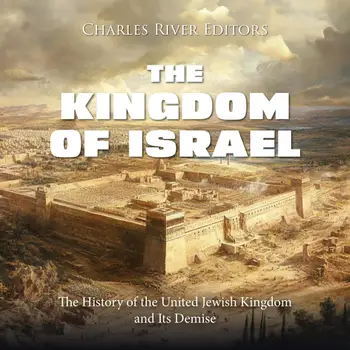
The Kingdom of Israel: The History of the United Jewish Kingdom and Its Demise

Before any type of unified political entity named Israel existed, the Jewish groups whose descendants would later form Israel identified themselves by their particular tribe. If asked their nationality or country of origin, they would likely identify themselves as Danites (from the tribe of Dan; Ex. 31:6) or Ephraimites (from the tribe of Ephraim; Judg. 12:5), etc. The main way to differentiate these tribes from other tribes in Canaan was their common worship of the deity YHWH, but in terms of language or other cultural characteristics, it would have been difficult to tell a Canaanite from an Israelite.

Eventually, these separate tribes united together as a type of confederation, allies who made a treaty (covenant) to provide military aid for one another when threatened by an enemy state. But it was only under the charismatic leadership of David that the 12 tribes united into a single political entity. Scholars refer to the period encompassing the reign of David and his son Solomon as the United Monarchy. This period, spanning only two generations, was the only time when all of the tribes were politically united, and after a contentious schism that resulted because the northern tribes felt exploited by the Judean kings, the northern tribes seceded from the “United Kingdom” and reverted back to the ancient northern versus southern division of the tribes. The main difference this time was that the southern kingdom now incorporated the tribe of Benjamin, located at the border between these two new nations, within its political borders. The tribe of Simeon (south of Judah) had already ceased to maintain a separate existence (see below). The new northern kingdom adopted the name Israel, while the southern kingdom took their regional name of Judah.
Über dieses Buch

Before any type of unified political entity named Israel existed, the Jewish groups whose descendants would later form Israel identified themselves by their particular tribe. If asked their nationality or country of origin, they would likely identify themselves as Danites (from the tribe of Dan; Ex. 31:6) or Ephraimites (from the tribe of Ephraim; Judg. 12:5), etc. The main way to differentiate these tribes from other tribes in Canaan was their common worship of the deity YHWH, but in terms of language or other cultural characteristics, it would have been difficult to tell a Canaanite from an Israelite.

Eventually, these separate tribes united together as a type of confederation, allies who made a treaty (covenant) to provide military aid for one another when threatened by an enemy state. But it was only under the charismatic leadership of David that the 12 tribes united into a single political entity. Scholars refer to the period encompassing the reign of David and his son Solomon as the United Monarchy. This period, spanning only two generations, was the only time when all of the tribes were politically united, and after a contentious schism that resulted because the northern tribes felt exploited by the Judean kings, the northern tribes seceded from the “United Kingdom” and reverted back to the ancient northern versus southern division of the tribes. The main difference this time was that the southern kingdom now incorporated the tribe of Benjamin, located at the border between these two new nations, within its political borders. The tribe of Simeon (south of Judah) had already ceased to maintain a separate existence (see below). The new northern kingdom adopted the name Israel, while the southern kingdom took their regional name of Judah.
Starte noch heute mit diesem Buch für 0 €

  • Hole dir während der Testphase vollen Zugriff auf alle Bücher in der App
  • Keine Verpflichtungen, jederzeit kündbar
Jetzt kostenlos testen
Mehr als 52 000 Menschen haben Nextory im App Store und auf Google Play 5 Sterne gegeben.

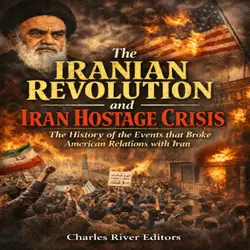
  1. The Iranian Revolution and Iran Hostage Crisis: The History of the Events that Broke American Relations with Iran

    Charles River Editors

  2. 4.0

    The Empires of India: The History of the Dynasties that Ruled India Before the British

    Charles River Editors

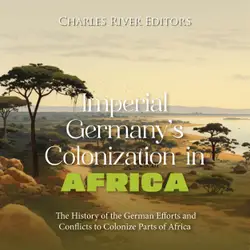
  3. Imperial Germany’s Colonization in Africa: The History of the German Efforts and Conflicts to Colonize Parts of Africa

    Charles River Editors

  4. 4.3

    The Sentinelese: The History of the Uncontacted People on North Sentinel Island

    Charles River Editors

  5. 3.4

    Mustafa Kemal Atatürk and the Republic of Turkey: The History of the Ottoman Empire’s Collapse and the Establishment of a New State

    Charles River Editors

  6. 2.0

    Die Panzer: Die Geschichte und das Vermächtnis von Nazideutschlands berühmtesten Panzern des Zweiten Weltkriegs

    Charles River Editors

  7. Japan in the World Wars: The History of the Imperial Japanese Empire during World War I and World War II

    Charles River Editors

  8. Ada Lovelace: The Life and Legacy of the Math Prodigy Who Pioneered Computer Science

    Charles River Editors

  9. Die Han-Dynastie: Geschichte und Erbe des einflussreichsten Reiches des alten China

    Charles River Editors

  10. The Ancient Kingdoms of Africa: The History and Legacy of the African Continent’s Most Prominent Kingdoms in Antiquity

    Charles River Editors

  11. The Spanish Empire in the Americas: The History of Spain’s Colonization across Central America and South America

    Charles River Editors

  12. Das mittelalterliche Russland: Die Geschichte und das Erbe der Gruppen, die den russischen Staat im Mittelalter entwickelten

    Charles River Editors