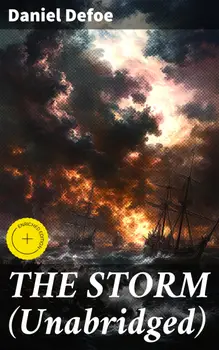
THE STORM (Unabridged) : Enriched edition. The First Substantial Work of Modern Journalism Covering the Great Storm of 1703; Including the Biography of the Author and His Own Experiences

In "The Storm," Daniel Defoe employs his renowned narrative technique to vividly recount the harrowing experiences of a tempest that struck the British Isles in 1703. This unabridged work masterfully blends factual accounts with imaginative storytelling, capturing the chaos and destruction of one of history's most violent storms. Defoe's prose is characterized by its meticulous detail and psychological insight, showcasing the human response to nature's unpredictability. Set against the backdrop of emerging Enlightenment thought, the text not only illustrates the physical wildness of nature but also reflects the burgeoning interest in empiricism and rationality within early 18th-century literature. Daniel Defoe, best known for his groundbreaking novel "Robinson Crusoe," was a keen observer of social and environmental phenomena. His life as a writer, journalist, and merchant gave him a unique perspective on the interconnectedness of humanity and nature. Drawing upon his own experiences with trade and shipwrecks, Defoe infuses "The Storm" with a sense of urgency and realism, allowing readers to grapple with the sublime forces that shape human existence. This compelling narrative is recommended for anyone interested in the intersection of literature, history, and natural disasters. Defoe's rich descriptive style and thoughtful commentary offer not just an account of a tempest but also a reflection on human endurance, making it a vital read for scholars and casual readers alike.

In this enriched edition, we have carefully created added value for your reading experience:

- A succinct Introduction situates the work's timeless appeal and themes.

- The Synopsis outlines the central plot, highlighting key developments without spoiling critical twists.

- A detailed Historical Context immerses you in the era's events and influences that shaped the writing.

- An Author Biography reveals milestones in the author's life, illuminating the personal insights behind the text.

- A thorough Analysis dissects symbols, motifs, and character arcs to unearth underlying meanings.

- Reflection questions prompt you to engage personally with the work's messages, connecting them to modern life.

- Hand‐picked Memorable Quotes shine a spotlight on moments of literary brilliance.

- Interactive footnotes clarify unusual references, historical allusions, and archaic phrases for an effortless, more informed read.

Starte noch heute mit diesem Buch für 0 €

  • Hole dir während der Testphase vollen Zugriff auf alle Bücher in der App
  • Keine Verpflichtungen, jederzeit kündbar
Jetzt kostenlos testen
Mehr als 52 000 Menschen haben Nextory im App Store und auf Google Play 5 Sterne gegeben.

  1. 3.0

    200 Meisterwerke der Literaturgeschichte : Die größten Klassiker der Weltliteratur

    Franz Kafka, Victor Hugo, Fjodor Michailowitsch Dostojewski, Lord Byron, Giacomo Leopardi, Marcel Proust, Henrik Ibsen, Percy Bysshe Shelley, Charles Dickens, Jane Austen, Mary Shelley, Emily Brontë, Charlotte Brontë, Anne Brontë, William Makepeace Thackeray, Bram Stoker, Henry Fielding, George Eliot, William Shakespeare, D. H. Lawrence, Walt Whitman, Herman Melville, Thomas Wolfe, Virginia Woolf, Joseph Conrad, Sinclair Lewis, Lewis Carrol, Edgar Allan Poe, Edward Bulwer-Lytton, Oscar Wilde, H.G. Wells, Daniel Defoe, James Fenimore Cooper, Lew Wallace, Jonathan Swift, Robert Louis Stevenson, Mark Twain, Walter Scott, Nathaniel Hawthorne, Harriet Beecher Stowe, Laurence Sterne, Frances Hodgson Burnett, Arthur Conan Doyle, Wilkie Collins, Edgar Wallace, Jack London, Henry David Thoreau, John Galsworthy, F. Scott Fitzgerald, Rudyard Kipling, G.K. Chesterton, Washington Irvin, O.Henry, Ambrose Bierce, Alexander Sergejewitsch Puschkin, Michail Lermontow, Iwan Sergejewitsch Turgenew, Leo Tolstoi, Nikolai Gogol, Iwan Gontscharow, Nikolai Leskow, Anton Pawlowitsch Tschechow, Maxim Gorki, François Rabelais, Jean de la Fontaine, Blaise Pascal, Pierre Corneille, Moliere, Jean Baptiste Racine, Charles Perrault, Voltaire, Denis Diderot, Jean-Jacques Rousseau, Pierre-Ambroise Choderlos de Laclos, Antoine-François Prévost, Marquis De Sade, François René Chateaubriand, Stendhal, Honoré de Balzac, Alexandre Dumas, Alphonse de Lamartine, George Sand, Gustave Flaubert, Emile Zola, Guy De Maupassant, Alphonse Daudet, Jules Verne, Joris-Karl Huysmans, Prosper Mérimée, Charles Baudelaire, Stéphane Mallarmé, Arthur Rimbaud, André Gide, Arthur Schopenhauer, Heinrich Heine, Friedrich Schiller, Johann Wolfgang von Goethe, Jacob Grimm, Gottfried von Straßburg, Wolfram von Eschenbach, E T A Hoffmann, Annette von Droste-Hülshoff, Heinrich von Kleist, Friedrich Hölderlin, Theodor Fontane, Gustav Freytag, Gottfried Keller, Theodor Storm, Stefan Zweig, Joseph von Eichendorff, Klaus Mann, Rainer Maria Rilke, Johanna Spyri, Joseph Roth, Karl May, Robert Musil, Heinrich Mann, Sigmund Freud, Friedrich Nietzsche, Dante Alighieri, Giovanni Boccaccio, Giacomo Casanova, Luigi Pirandello, Giosuè Carducci, Gabriele D’Annunzio, Niccolo Machiavelli, Miguel Cervantes de Saavedra, Pedro Calderón de la Barca, Vicente Blasco Ibañez, Knut Hamsun, Homer, Äsop, Herodot, Thukydides, Xenophon, Platon, - Aristoteles, - Sophokles, Euripides, - Aristophanes, Lao Tse, - Konfuzius, Siddhartha Gautama Buddha, Titus Livius, Tacitus, Marcus Tullius Cicero, Vergil, Ovid, Lukian, Petronius, Apuleius, Longos von Lesbos, Mark Aurel, Aurelius Augustinus

  2. 200 Literarische Meisterwerke der Weltgeschichte : Die größten Klassiker aus Deutschland, England, den USA, Russland und Frankreich

    Lew Tolstoi, Virginia Woolf, Henrik Ibsen, Franz Kafka, Fjodor Michailowitsch Dostojewski, Lord Byron, Victor Hugo, Giacomo Leopardi, Marcel Proust, Percy Bysshe Shelley, Charles Dickens, Jane Austen, Mary Shelley, Emily Brontë, Charlotte Brontë, Anne Brontë, William Makepeace Thackeray, Bram Stoker, Henry Fielding, George Eliot, William Shakespeare, D. H. Lawrence, Walt Whitman, Herman Melville, Thomas Wolfe, Joseph Conrad, Sinclair Lewis, Lewis Carrol, Edgar Allan Poe, Edward Bulwer-Lytton, Oscar Wilde, H.G. Wells, Daniel Defoe, James Fenimore Cooper, Lew Wallace, Jonathan Swift, Robert Louis Stevenson, Mark Twain, Walter Scott, Nathaniel Hawthorne, Harriet Beecher Stowe, Laurence Sterne, Frances Hodgson Burnett, Arthur Conan Doyle, Wilkie Collins, Edgar Wallace, Jack London, Henry David Thoreau, John Galsworthy, F. Scott Fitzgerald, Rudyard Kipling, G.K. Chesterton, Alexander Sergejewitsch Puschkin, Leo Tolstoi, Nikolai Gogol, Charles Baudelaire, Arthur Rimbaud, Edmond Rostand, Jean Giraudoux, André Gide, Arthur Schopenhauer, Heinrich Heine, Friedrich Schiller, Johann Wolfgang von Goethe, Jacob Grimm, Wilhelm Grimm, Gottfried von Straßburg, Wolfram von Eschenbach, E T A Hoffmann, Annette von Droste-Hülshoff, Dante Alighieri, Giovanni Boccaccio, Luigi Pirandello, Niccolo Machiavelli, Miguel Cervantes de Saavedra, Pedro Calderón de la Barca, Vicente Blasco Ibañez, Knut Hamsun, Friedrich Nietzsche, Homer, Äsop, Herodot, Thukydides, Xenophon, Platon, - Aristoteles, Tacitus, - Konfuzius, Siddhartha Gautama Buddha, Marcus Tullius Cicero, Vergil, Ovid, Mark Aurel, Aurelius Augustinus

  3. 100 Meisterwerke der englischen Literatur - Klassiker, die man kennen muss

    George Orwell, Charles Dickens, Jane Austen, Katherine Mansfield, H.P. Lovecraft, William Wordsworth, John Keats, Percy Bysshe Shelley, Robert Burns, John Milton, William Shakespeare, Christopher Marlowe, Geoffrey Chaucer, Laurence Sterne, Henry Fielding, Mary Shelley, Emily Brontë, Charlotte Brontë, Anne Brontë, William Makepeace Thackeray, George Eliot, D. H. Lawrence, Herman Melville, Thomas Wolfe, Virginia Woolf, Joseph Conrad, Sinclair Lewis, Walt Whitman, Edgar Allan Poe, Oscar Wilde, Jerome K Jerome, Washington Irving, Bram Stoker, H.G. Wells, Daniel Defoe, Lew Wallace, James Fenimore Cooper, Jonathan Swift, Robert Louis Stevenson, Mark Twain, Lewis Carrol, Edward Bulwer-Lytton, F. Scott Fitzgerald, Arthur Conan Doyle, Jack London, Henry David Thoreau, G.K. Chesterton, Edith Wharton, Henry James, Thomas Hardy, Margaret Mitchell, Kate Chopin, Willa Cather, Charlotte Perkins Gilman, James Joyce, John Galsworthy, Francis Hodgson Burnett, Lucy Maud Montgomery, Louisa May Alcott, Rudyard Kipling

  4. Die größten Heldinnen der Literatur (50 Romane in einem Band)

    Charlotte Brontë, Jane Austen, Louisa May Alcott, Leo Tolstoi, Virginia Woolf, Thomas Hardy, Sinclair Lewis, Hedwig Dohm, Charlotte Perkins Gilman, Elizabeth Burgoyne Corbett, Daniel Defoe, Anne Brontë, L.M. Montgomery, Victor Hugo, Wilhelmine von Hillern, Adalbert Stifter, Luise Ahlborn, George Eliot, Lou Andreas-Salomé, Stefan Zweig, D. H. Lawrence, Henry James, Margaret Mitchell, Edith Wharton, Miles Franklin, Willa Cather, Elizabeth Gaskell, Nikolai Semjonowitsch Leskow, Theodore Dreiser, Elizabeth von Arnim, Colette, Honoré de Balzac, William Makepeace Thackeray, Gustave Flaubert, Emile Zola, Theodor Fontane, Ada Langworthy Collier, Joseph Sheridan Le Fanu, Johanna Schopenhauer, Nathaniel Hawthorne, Charles Dickens

  5. Grundlegende Werke des Feminismus : Frauenbewegung in Deutschland, Lelia, Die sexuelle Krise, Zur Kritik der Weiblichkeit, Aus dem Leben einer Frau

    Virginia Woolf, George Sand, Louise Otto, Clara Zetkin, Rosa Luxemburg, Rosa Mayreder, Bertha Pappenheim, Grete Meisel-Heß, George Eliot, Luise Ahlborn, Adalbert Stifter, Jane Austen, Wilhelmine von Hillern, Charlotte Brontë, Nathaniel Hawthorne, Daniel Defoe, Victor Hugo, Anne Brontë, Henrik Ibsen, Hedwig Dohm, Sinclair Lewis

  6. Die größten Liebesgeschichten der britischen Literatur : Romeo und Julia, Stolz und Vorurteil, Emma, Cecilia, Überredung, Jane Eyre, Große Erwartungen, Die Braut von Lammermoor

    Jane Austen, Charlotte Brontë, William Shakespeare, Walter Scott, Frances Burney, Emily Brontë, Anne Brontë, Charles Dickens, Rudyard Kipling, George Eliot, Nathaniel Hawthorne, D. H. Lawrence, Daniel Defoe, Lew Wallace, F. Scott Fitzgerald

  7. Die spannendsten Seeabenteuer zum Abschalten (50+ Packende Abenteuer-Klassiker & 70 Seegeschichten) : Epische Reisen über sieben Meere: Abenteuerklassiker und fesselnde Seegeschichten

    Jules Verne, Karl May, Amalie Schoppe, Robert Louis Stevenson, James Fenimore Cooper, Edgar Allan Poe, Victor Hugo, Joseph Conrad, Herman Melville, Jonathan Swift, Pierre Loti, Daniel Defoe, Alexandre Dumas, Rudyard Kipling, Emilio Salgari, Franz Treller, Robert Kraft, Frederick Kapitän Marryat, Alexander von Ungern-Sternberg, Walther Kabel, Heinrich Smidt

  8. Dead Men Tell No Tales - 60+ Pirate Novels, Treasure-Hunt Tales & Sea Adventure Classics : A Swashbuckling Voyage Through Time and Legend

    Jules Verne, Charles Dickens, Robert Louis Stevenson, James Fenimore Cooper, Edgar Allan Poe, William Hope Hodgson, Howard Pyle, Jack London, Arthur Conan Doyle, Richard Le Gallienne, Daniel Defoe, Alexandre Dumas, Charles Ellms, Frederick Marryat, Harold MacGrath, Joseph Lewis French, Harry Collingwood, Stanley Lane-Poole, Charles Boardman Hawes, L. Frank Baum, J.M. Barrie, R.M Ballantyne, G. A Henty, J. D. Jerrold Kelley, J. Allan Dunn, Robert E. Howard, F. Scott Fitzgerald, Sir Walter Scott, Ralph D. Paine, Captain Charles Johnson, W. H. G. Kingston, Currey E. Hamilton, John Esquemeling

  9. Echos des Feminismus in den literarischen Klassikern : Ein Puppenheim, Orlando, Jane Eyre, Christa Ruland, Die Geierwally, Brigitta, Middlemarch

    George Sand, George Eliot, Virginia Woolf, Sinclair Lewis, Hedwig Dohm, Henrik Ibsen, Anne Brontë, Victor Hugo, Daniel Defoe, Nathaniel Hawthorne, Charlotte Brontë, Wilhelmine von Hillern, Jane Austen, Adalbert Stifter, Lou Andreas-Salomé

  10. Unerschütterliche Heldinnen der Weltliteratur : Überredung, Jane Eyre, Effi Briest, Middlemarch, Julie oder Die neue Heloise, Anna Karenina

    Jane Austen, George Sand, Fjodor Michailowitsch Dostojewski, Adalbert Stifter, Balzac, Charlotte Brontë, Emily Brontë, Anne Brontë, Charles Dickens, George Eliot, Sinclair Lewis, Wilhelmine von Hillern, Stefan Zweig, Gustave Flaubert, Lew Tolstoi, Alexandre Dumas, William Makepeace Thackeray, Eugenie Marlitt, Victor Hugo, Theodor Fontane, Guy De Maupassant, Jean-Jacques Rousseau, Lou Andreas-Salomé, Heinrich Mann, Marquis De Sade, Nathaniel Hawthorne, Johanna Spyri, Daniel Defoe, Alfred Schirokauer

  11. Gekürzt
    3.0

    Robinson Crusoe : Nach einem Roman von Daniel Defoe

    Daniel Defoe

  12. Die Pest in London

    Daniel Defoe