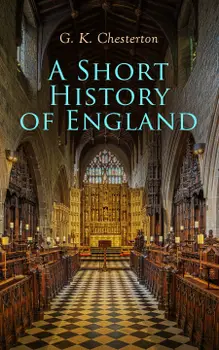
A Short History of England : From the Roman Times to the World War I

A Short History of England is a history book written by G. K. Chesterton in which he summarizes British history from the time of Roman provinces on the British Island to the great wars in 20th century. Chesterton takes a rather romanticized view of the absolute monarchy of olden times and naturally gets increasingly more political as his history nears his own time period of World War I. Chesterton's unique perspective as a Catholic and as a collectivist are all reflected in his interpretation of everything from the dissolution of the monasteries to the poor laws of the 19th and 20th centuries

Sobre este libro

A Short History of England is a history book written by G. K. Chesterton in which he summarizes British history from the time of Roman provinces on the British Island to the great wars in 20th century. Chesterton takes a rather romanticized view of the absolute monarchy of olden times and naturally gets increasingly more political as his history nears his own time period of World War I. Chesterton's unique perspective as a Catholic and as a collectivist are all reflected in his interpretation of everything from the dissolution of the monasteries to the poor laws of the 19th and 20th centuries

Empieza este libro hoy por 0 €

  • Disfruta de acceso completo a todos los libros de la app durante el periodo de prueba
  • Sin compromiso, cancela cuando quieras
Pruébalo gratis ahora
Más de 52 000 clientes han dado a Nextory 5 estrellas en la App Store y Google Play.

  1. 100 Clásicos de la Literatura Universal

    Francis Scott Fitzgerald, Mary Shelley, Lyman Frank Baum, Louisa May Alcott, Dante Alighieri, Jane Austen, Ambrose Bierce, Emily Brontë, Edgar Rice Burroughs, Lewis Carroll, Wilkie Collins, René Descartes, Charles Dickens, Emily Dickinson, Alexandre Dumas, Gustave Flaubert, Benito Pérez Galdós, Johann Wolfgang von Goethe, Thomas Hardy, E T A Hoffmann, Washington Irving, Henry James, James Joyce, Franz Kafka, Gaston Leroux, Federico García Lorca, H.P. Lovecraft, Publio Virgilio Marón, Lucy Maud Montgomery, John William Polidori, Marco Polo, Antoine de Saint-Exupéry, Emilio Salgari, Walter Scott, Mark Twain, Jules Verne, Julio Verne, H.G. Wells, Edith Wharton, Mary Wollstonecraft, Stefan Zweig, Sun Tzu, Bram Stoker, - Aristoteles, George Bernard Shaw, Henryk Sienkiewicz, Concepción Arenal, Charlotte Brontë, Miguel de Cervantes, G.K. Chesterton, Daniel Defoe, Fyodor Mikhailovich Dostoyevsky, Arthur Conan Doyle, Sigmund Freud, H. Rider Haggard, Homero, Immanuel Kant, Rudyard Kipling, Molière, Friedrich Nietzsche, Fernando de Rojas, Sófocles, William Makepeace Thackeray, León Tolstói, Voltaire, Ramón María del Valle-Inclán, Oscar Wilde, Virginia Woolf

  2. 3.0

    Las paradojas de Mr Pond "The Paradoxes of Mr. Pond"

    G.K. Chesterton

  3. El padre Brown

    G.K. Chesterton

  4. 4.0

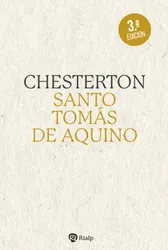
    Santo Tomás de Aquino

    G.K. Chesterton

  5. 3.0

    The Napoleon of Notting Hill

    G.K. Chesterton

  6. Las pisadas misteriosas

    G.K. Chesterton

  7. #11

    La esfera y la cruz

    G.K. Chesterton

  8. 5.0

    El candor del Padre Brown

    G.K. Chesterton

  9. El hombre que fue jueves

    G.K. Chesterton

  10. #168

    La superstición del escéptico : Polémicas y debates filosóficos

    G.K. Chesterton

  11. El hombre que sabía demasiado : Un hombre atrapado por los secretos que no debería conocer. Nueva Traducción

    G.K. Chesterton

  12. El hombre eterno : Una visión de la humanidad y la fe desde los albores de la historia. Nueva Traducción

    G.K. Chesterton