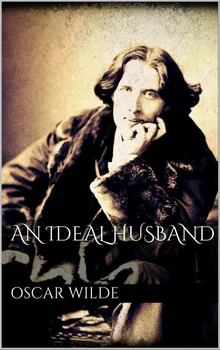
mrs. marchmont. Going on to the Hartlocks' tonight, Margaret?
lady basildon. I suppose so. Are you?
mrs. marchmont. Yes. Horribly tedious parties they give, don't they?
lady basildon. Horribly tedious! Never know why I go. Never know why I go anywhere.
mrs. marchmont. I come here to be educated.
lady basildon. Ah! I hate being educated!
mrs. marchmont. So do I. It puts one almost on a level with the commercial classes, doesn't it? But dear Gertrude Chiltern is always telling me that I should have some serious purpose in life. So I come here to try to find one.
lady basildon. [Looking round through her lorgnette.] I don't see anybody here tonight whom one could possibly call a serious purpose. The man who took me in to dinner talked to me about his wife the whole time.
mrs. marchmont. Going on to the Hartlocks' tonight, Margaret?
lady basildon. I suppose so. Are you?
mrs. marchmont. Yes. Horribly tedious parties they give, don't they?
lady basildon. Horribly tedious! Never know why I go. Never know why I go anywhere.
mrs. marchmont. I come here to be educated.
lady basildon. Ah! I hate being educated!
mrs. marchmont. So do I. It puts one almost on a level with the commercial classes, doesn't it? But dear Gertrude Chiltern is always telling me that I should have some serious purpose in life. So I come here to try to find one.
lady basildon. [Looking round through her lorgnette.] I don't see anybody here tonight whom one could possibly call a serious purpose. The man who took me in to dinner talked to me about his wife the whole time.
Empieza este libro hoy por 0 €
Disfruta de acceso completo a todos los libros de la app durante el periodo de prueba
Novelista, poeta, crítico literario y autor teatral de origen irlandés, gran exponente del esteticismo, Oscar Wilde conoció el éxito desde sus comienzos gracias al ingenio punzante y epigramático que derrochó en sus obras, dedicadas casi siempre a fustigar a sus contemporáneos. Defensor del arte por el arte, sus relatos repletos de diálogos vivos y cargados de ironía provocaron feroces críticas de los sectores conservadores, que se acentuaron cuando Wilde fue acusado y condenado por su homosexualidad, lo que originó el declive de su carrera literaria y de su vida personal. Entre sus obras destacan las cuatro comedias teatrales El abanico de lady Windermere (1892), Una mujer sin importancia (1893), Un marido ideal (1895) y La importancia de llamarse Ernesto (1895), El fantasma de Canterville o El retrato de Dorian Gray, su única novela.