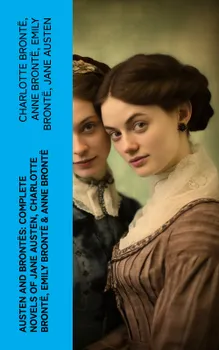
Austen and Brontës : Enriched Edition. Classic Novels of Courtship, Class, and Gothic Romance

Austen and Brontës gathers the complete novelistic achievements of four defining nineteenth-century writers, offering a sweeping panorama of courtship, class, conscience, gender, imagination, and moral selfhood. From the polished social comedy of drawing rooms to the storm-dark intensities of Gothic romance and psychological realism, the volume traces the evolution of the English novel across some of its most enduring forms. Works such as Pride and Prejudice, Emma, Jane Eyre, Wuthering Heights, and The Tenant of Wildfell Hall stand beside less frequently revisited novels, revealing a remarkable spectrum of irony, passion, social critique, and narrative experiment. Together, Jane Austen and the Brontë sisters illuminate distinct yet intersecting literary worlds: Regency manners, Romantic inwardness, Victorian constraint, and emergent feminist consciousness. Their backgrounds—Austen's acute observation of provincial gentry life and the Brontës' imaginative formation amid intellectual isolation and religious, social, and economic pressures—produce voices both sharply individual and historically resonant. Read collectively, their novels deepen understanding of women's authorship, domestic ideology, inheritance, education, desire, and resistance. This collection is indispensable for readers seeking a concentrated encounter with the foundations of modern English fiction. It offers students, scholars, and general readers an exceptional opportunity to compare styles, themes, and narrative strategies within one volume. To read these novels together is to enter a rich dialogue about love, autonomy, society, and the enduring power of literary imagination.

This enriched edition has been carefully crafted to add value to your reading experience.

- An Introduction draws the threads together, discussing why these diverse authors and texts belong in one collection.

- Historical Context explores the cultural and intellectual currents that shaped these works, offering insight into the shared (or contrasting) eras that influenced each writer.

- A combined Synopsis (Selection) briefly outlines the key plots or arguments of the included pieces, helping readers grasp the anthology's overall scope without giving away essential twists.

- A collective Analysis highlights common themes, stylistic variations, and significant crossovers in tone and technique, tying together writers from different backgrounds.

- Reflection questions encourage readers to compare the different voices and perspectives within the collection, fostering a richer understanding of the overarching conversation.
Sobre este libro

Austen and Brontës gathers the complete novelistic achievements of four defining nineteenth-century writers, offering a sweeping panorama of courtship, class, conscience, gender, imagination, and moral selfhood. From the polished social comedy of drawing rooms to the storm-dark intensities of Gothic romance and psychological realism, the volume traces the evolution of the English novel across some of its most enduring forms. Works such as Pride and Prejudice, Emma, Jane Eyre, Wuthering Heights, and The Tenant of Wildfell Hall stand beside less frequently revisited novels, revealing a remarkable spectrum of irony, passion, social critique, and narrative experiment. Together, Jane Austen and the Brontë sisters illuminate distinct yet intersecting literary worlds: Regency manners, Romantic inwardness, Victorian constraint, and emergent feminist consciousness. Their backgrounds—Austen's acute observation of provincial gentry life and the Brontës' imaginative formation amid intellectual isolation and religious, social, and economic pressures—produce voices both sharply individual and historically resonant. Read collectively, their novels deepen understanding of women's authorship, domestic ideology, inheritance, education, desire, and resistance. This collection is indispensable for readers seeking a concentrated encounter with the foundations of modern English fiction. It offers students, scholars, and general readers an exceptional opportunity to compare styles, themes, and narrative strategies within one volume. To read these novels together is to enter a rich dialogue about love, autonomy, society, and the enduring power of literary imagination.

This enriched edition has been carefully crafted to add value to your reading experience.

- An Introduction draws the threads together, discussing why these diverse authors and texts belong in one collection.

- Historical Context explores the cultural and intellectual currents that shaped these works, offering insight into the shared (or contrasting) eras that influenced each writer.

- A combined Synopsis (Selection) briefly outlines the key plots or arguments of the included pieces, helping readers grasp the anthology's overall scope without giving away essential twists.

- A collective Analysis highlights common themes, stylistic variations, and significant crossovers in tone and technique, tying together writers from different backgrounds.

- Reflection questions encourage readers to compare the different voices and perspectives within the collection, fostering a richer understanding of the overarching conversation.
Empieza este libro hoy por 0 €

  • Disfruta de acceso completo a todos los libros de la app durante el periodo de prueba
  • Sin compromiso, cancela cuando quieras
Pruébalo gratis ahora
Más de 52 000 clientes han dado a Nextory 5 estrellas en la App Store y Google Play.

  1. 100 Clásicos de la Literatura Universal

    Francis Scott Fitzgerald, Mary Shelley, Lyman Frank Baum, Louisa May Alcott, Dante Alighieri, Jane Austen, Ambrose Bierce, Emily Brontë, Edgar Rice Burroughs, Lewis Carroll, Wilkie Collins, René Descartes, Charles Dickens, Emily Dickinson, Alexandre Dumas, Gustave Flaubert, Benito Pérez Galdós, Johann Wolfgang von Goethe, Thomas Hardy, E T A Hoffmann, Washington Irving, Henry James, James Joyce, Franz Kafka, Gaston Leroux, Federico García Lorca, H.P. Lovecraft, Publio Virgilio Marón, Lucy Maud Montgomery, John William Polidori, Marco Polo, Antoine de Saint-Exupéry, Emilio Salgari, Walter Scott, Mark Twain, Jules Verne, Julio Verne, H.G. Wells, Edith Wharton, Mary Wollstonecraft, Stefan Zweig, Sun Tzu, Bram Stoker, - Aristoteles, George Bernard Shaw, Henryk Sienkiewicz, Concepción Arenal, Charlotte Brontë, Miguel de Cervantes, G.K. Chesterton, Daniel Defoe, Fyodor Mikhailovich Dostoyevsky, Arthur Conan Doyle, Sigmund Freud, H. Rider Haggard, Homero, Immanuel Kant, Rudyard Kipling, Molière, Friedrich Nietzsche, Fernando de Rojas, Sófocles, William Makepeace Thackeray, León Tolstói, Voltaire, Ramón María del Valle-Inclán, Oscar Wilde, Virginia Woolf

  2. 100 Obras Maestras de la Literatura Universal : Edición enriquecida. Explorando la diversidad literaria a lo largo de los siglos

    Johann Wolfgang Goethe, Gustave Flaubert, Franz Kafka, Lewis Carroll, Sigmund Freud, Henrik Ibsen, Charles Dickens, Honoré de Balzac, Mark Twain, Immanuel Kant, Friedrich Schiller, Harriet Beecher Stowe, Oscar Wilde, Robert Louis Stevenson, Edgar Allan Poe, William Shakespeare, Dante Alighieri, Giovanni Boccaccio, Bram Stoker, Charlotte Brontë, Emily Brontë, Jack London, Henry James, Louisa May Alcott, Victor Hugo, Arthur Conan Doyle, Joseph Conrad, Jane Austen, José Rizal, Edgar Rice Burroughs, Herman Melville, Jonathan Swift, Gustavo Adolfo Bécquer, Vicente Blasco Ibáñez, Benito Pérez Galdós, Jean-Jacques Rousseau, Daniel Defoe, Pedro Calderón Barca, Virginia Woolf, Washington Irving, Juan Valera, Horacio Quiroga, Nathaniel Hawthorne, Charles Baudelaire, Wilkie Collins, William Makepeace Thackeray, Voltaire, Apuleius, Leopoldo Alas, John Milton, José Martí, Lope de Vega, Emilio Salgari, Francisco de Quevedo, Rubén Darío, Antonio Machado, José Zorrilla, Tirso de Molina, Emilia Pardo Bazán, Fernando de Rojas, L. Frank Baum, H.G. Wells, J.M. Barrie, H. Rider Haggard, H.P. Lovecraft, Seneca, Hans Christian Andersen, Friedrich Nietzsche, Mary Shelley, Baltasar Gracián, Sófocles, Sun Tzu, Fiódor Dostoyevski, Antón Chéjov, León Tolstoi, Tomás Moro, San Agustín, Nikolái Gógol, Julio Verne, Homero, Platón, Alejandro Dumas, Aristóteles, Hermanos Grimm, Jorge Isaacs, Ignacio De Loyola, Nicolás Maquiavelo, Miguel Cervantes, Teresa de Jesús, Alejandro Dumas hijo, Mijaíl Bakunin, Miguel De Unamuno, Duque de Rivas, Ramón María Valle-Inclán, Federico García Lorca, Gibrán Jalil Gibrán

  3. 100 Obras Maestras de la Literatura Universal : Edición enriquecida. Viaje intertemporal por iconos mundiales y el diálogo cultural histórico

    Johann Wolfgang Goethe, Gustave Flaubert, Franz Kafka, Lewis Carroll, Sigmund Freud, Henrik Ibsen, Charles Dickens, Honoré de Balzac, Mark Twain, Immanuel Kant, Friedrich Schiller, Harriet Beecher Stowe, Oscar Wilde, Robert Louis Stevenson, Edgar Allan Poe, William Shakespeare, Dante Alighieri, Giovanni Boccaccio, Bram Stoker, Charlotte Brontë, Emily Brontë, Jack London, Henry James, Louisa May Alcott, Victor Hugo, Arthur Conan Doyle, Joseph Conrad, Jane Austen, José Rizal, Edgar Rice Burroughs, Herman Melville, Jonathan Swift, Gustavo Adolfo Bécquer, Vicente Blasco Ibáñez, Benito Pérez Galdós, Jean-Jacques Rousseau, Daniel Defoe, Pedro Calderón Barca, Virginia Woolf, Washington Irving, Juan Valera, Horacio Quiroga, Nathaniel Hawthorne, Charles Baudelaire, Wilkie Collins, William Makepeace Thackeray, Voltaire, Apuleius, Leopoldo Alas, John Milton, José Martí, Lope de Vega, Emilio Salgari, Francisco de Quevedo, Rubén Darío, Antonio Machado, José Zorrilla, Tirso de Molina, Emilia Pardo Bazán, Fernando de Rojas, L. Frank Baum, H.G. Wells, J.M. Barrie, H. Rider Haggard, H.P. Lovecraft, Seneca, Hans Christian Andersen, Friedrich Nietzsche, Mary Shelley, Baltasar Gracián, Sófocles, Sun Tzu, Fiódor Dostoyevski, Antón Chéjov, León Tolstoi, Tomás Moro, San Agustín, Nikolái Gógol, Julio Verne, Homero, Platón, Alejandro Dumas, Aristóteles, Hermanos Grimm, Jorge Isaacs, Ignacio De Loyola, Nicolás Maquiavelo, Miguel Cervantes, Teresa de Jesús, Alejandro Dumas hijo, Mijaíl Bakunin, Miguel De Unamuno, Duque de Rivas, Ramón María Valle-Inclán, Federico García Lorca, Gibrán Jalil Gibrán

  4. Jane Austen y Hermanas Brontë - Novelas Completas : Orgullo y Prejuicio, Sentido y Sensibilidad, Emma, Persuasión, Jane Eyre, Cumbres borrascosas, La inquilina de Wildfell Hall

    Jane Austen, Charlotte Brontë, Emily Brontë, Anne Brontë

  5. 1 oct

    El profesor

    Charlotte Brontë

  6. Jane Eyre

    Charlotte Brontë

  7. Jane Eyre

    Charlotte Brontë

  8. Ella, fantasma : 14 relatos espectrales de escritoras del siglo XIX

    Virginia Woolf, Amelia Edwards, Elizabeth Gaskell, Margaret Oliphant, Eliza Lynn Linton, Edith Nesbit, Charlotte Brontë, May Sinclair, Edith Wharton, Gertrude Atherton, Charlotte Perkins Gilman, Madeline Yale Wynne, Elia Wilkinson Peattle, Louisa Baldwin

  9. Jane Eyre

    Charlotte Brontë

  10. Villette

    Charlotte Brontë

  11. El Profesor

    Charlotte Brontë

  12. Charlotte Brontë - Obras Completas : Jane Eyre, Shirley, Villette, El Professor, El Enano Verde

    Charlotte Brontë


Categorías relacionadas