Sobre este libro

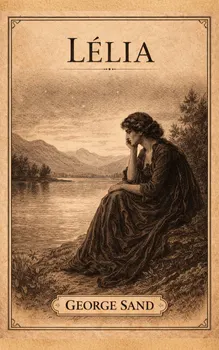
A daring and philosophical exploration of love, despair, faith, and female independence, Lélia stands as one of George Sand's most provocative and introspective works. First published in 1833, this deeply emotional and intellectually charged novel challenges the moral, spiritual, and social conventions of its time, offering a portrait of a woman far ahead of her era.

At the center of the story is Lélia, a brilliant, enigmatic, and profoundly disillusioned woman who struggles with the limitations imposed upon her by society, religion, and romantic expectation. Gifted with exceptional intelligence and acute self-awareness, she finds herself torn between spiritual longing and earthly desire, between the ideal of transcendent love and the harsh reality of human imperfection.

Lélia is admired and pursued by Sténio, a passionate young poet who sees in her the embodiment of sublime beauty and inspiration. Yet she cannot fully surrender to his devotion. Haunted by doubt and philosophical questioning, she resists conventional love, fearing both emotional bondage and the loss of her independence. Her inner conflict forms the emotional core of the novel—an intense examination of longing, skepticism, and the search for meaning.

Through lyrical prose and dramatic dialogue, George Sand weaves a narrative rich in romanticism and existential inquiry. The novel explores themes of spiritual crisis, the constraints of gender roles, the conflict between body and soul, and the isolation that can accompany intellectual superiority. Lélia's defiance of societal norms—especially those governing women's desires and autonomy—made the work controversial upon its publication, yet it remains a powerful statement of early feminist thought.

More than a love story, Lélia is a meditation on human aspiration and disillusionment. Sand presents her heroine not as a simple romantic figure, but as a complex thinker wrestling with faith, morality, and the meaning of happiness. The novel's atmosphere is intense and poetic, filled with philosophical reflection and emotional depth.

Bold, introspective, and revolutionary for its time, Lélia continues to resonate as a profound exploration of freedom, identity, and the restless search for truth. George Sand's masterpiece invites readers into the mind of a woman determined to define herself in a world determined to define her.
Empieza este libro hoy por 0 €

  • Disfruta de acceso completo a todos los libros de la app durante el periodo de prueba
  • Sin compromiso, cancela cuando quieras
Pruébalo gratis ahora
Más de 52 000 clientes han dado a Nextory 5 estrellas en la App Store y Google Play.

Más de George Sand

  1. 4.5

    Las señoritas (Prometheus Classics)

    George Sand

  2. Indiana

    George Sand

  3. 2.0
    #12

    Un invierno en Mallorca

    George Sand

  4. 3.7

    La marquesa

    George Sand

  5. 50 Masterpieces you have to read before you die vol: 2

    Joseph Sheridan Fanu, Madame de Fayette, Jerome K Jerome, James Joyce, Charles Kingsley, Rudyard Kipling, Pierre Choderlos Laclos, D. H. Lawrence, Matthew Gregory Lewis, Sinclair Lewis, Jack London, H.P. Lovecraft, Thomas Mann, W. Somerset Maugham, Guy De Maupassant, Herman Melville, Edgar Allan Poe, Marcel Proust, Ann Radcliffe, Samuel Richardson, George Sand, Walter Scott, Mary Shelley, Henryk Sienkiewicz, May Sinclair, Upton Sinclair, Stendhal, Laurence Sterne, Robert Louis Stevenson, Bram Stoker, Harriet Beecher Stowe, Jonathan Swift, Rabindranath Tagore, William Makepeace Thackeray, Leo Tolstoy, Anthony Troloppe, Ivan Turgenev, Mark Twain, Jules Verne, Lew Wallace, H.G. Wells, Rebecca West, Edith Wharton, Oscar Wilde, Cao Xueqin, Émile Zola

  6. 50 Masterpieces You Have to Read : Volume Two - A Second Library of World Literature

    Joseph Sheridan Fanu, Madame de Fayette, Jerome K Jerome, James Joyce, Charles Kingsley, Rudyard Kipling, Pierre Choderlos Laclos, D. H. Lawrence, Matthew Gregory Lewis, Sinclair Lewis, Jack London, H.P. Lovecraft, Thomas Mann, W. Somerset Maugham, Guy De Maupassant, Herman Melville, Edgar Allan Poe, Marcel Proust, Ann Radcliffe, Samuel Richardson, George Sand, Walter Scott, Mary Shelley, Henryk Sienkiewicz, May Sinclair, Upton Sinclair, Stendhal, Laurence Sterne, Robert Louis Stevenson, Bram Stoker, Harriet Beecher Stowe, Jonathan Swift, Rabindranath Tagore, William Makepeace Thackeray, Leo Tolstoy, Anthony Trollope, Ivan Turgenev, Mark Twain, Jules Verne, Lew Wallace, H.G. Wells, Rebecca West, Edith Wharton, Oscar Wilde, Cao Xueqin, Émile Zola

  7. Un invierno en Mallorca

    George Sand

  8. Un invierno en Mallorca

    George Sand

  9. 5.0

    El Pantano del Diablo

    George Sand

  10. 1.0

    Indiana

    George Sand

  11. 3.0

    Obras - Coleccion de George Sand

    George Sand

  12. Las senoritas

    George Sand