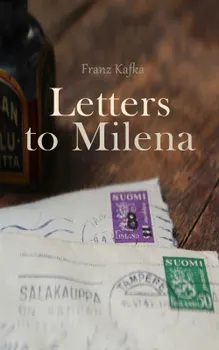
Letters to Milena

"Letters to Milena" by Franz Kafka is a deeply personal collection that reveals not only the intense emotional connection he shared with Milena Jesenská but also the writer's own inner turmoil. Composed between 1920 and 1923, these letters were addressed to Milena, a Czech journalist and translator, who first introduced Kafka's works to Czech readers. Born in 1883 in Prague, Kafka was a German-speaking Jewish author best known for works like The Metamorphosis and The Trial. Meanwhile, Milena (1896–1944) was a spirited writer and journalist, known for her progressive views and bold critique of social injustices.

Their correspondence began after Milena sought permission to translate Kafka's stories. Initially rooted in mutual admiration, it quickly intensified into a profound emotional bond. Though never married, their exchange of letters represents one of the most significant relationships in Kafka's life. Within these pages, readers encounter Kafka's remarkable ability to articulate longing, vulnerability, and introspection. He bares his anxieties and fears, oscillating between hope and despair as he grapples with questions of identity, creativity, and love. Milena often responds with empathy, providing reassurance and, at times, challenging Kafka's pessimism.

Beyond depicting a deeply personal connection, "Letters to Milena" is vital for understanding Kafka's artistic sensibilities. Shaped by a perpetual sense of alienation, his writing finds a haven in Milena's sympathy and intellect. This emotional refuge allowed him to delve deeper into his creative process, giving rise to some of his most poignant reflections. For scholars and casual readers alike, the collection offers a rare window into Kafka's personal life, illuminating the delicate interplay between his profound vulnerabilities and intellectual rigor. Through these letters, one witnesses an intensely human portrait of a writer forever seeking understanding in a world defined by uncertainty. Published posthumously, the letters remain a testament to the enduring resonance of Kafka's literary legacy. This translation has been assisted by artificial intelligence.

Empieza hoy con este libro por 0 €

  • Disfruta de acceso completo a todos los libros de la app durante el periodo de prueba
  • Sin compromiso, cancela cuando quieras
Pruébalo gratis ahora
Más de 52 000 clientes han dado a Nextory 5 estrellas en la App Store y Google Play.

  1. 100 Obras Maestras de la Literatura Universal : Edición enriquecida. Explorando la diversidad literaria a lo largo de los siglos

    Johann Wolfgang von Goethe, Gustave Flaubert, Franz Kafka, Lewis Carroll, Sigmund Freud, Henrik Ibsen, Charles Dickens, Honoré de Balzac, Mark Twain, Immanuel Kant, Friedrich Schiller, Harriet Beecher Stowe, Oscar Wilde, Robert Louis Stevenson, Edgar Allan Poe, William Shakespeare, Dante Alighieri, Giovanni Boccaccio, Bram Stoker, Charlotte Brontë, Emily Brontë, Jack London, Henry James, Louisa May Alcott, Victor Hugo, Arthur Conan Doyle, Joseph Conrad, Jane Austen, José Rizal, Edgar Rice Burroughs, Herman Melville, Jonathan Swift, Gustavo Adolfo Bécquer, Vicente Blasco Ibáñez, Benito Pérez Galdós, Jean-Jacques Rousseau, Daniel Defoe, Pedro Calderón de la Barca, Virginia Woolf, Washington Irving, Juan Valera, Horacio Quiroga, Nathaniel Hawthorne, Charles Baudelaire, Wilkie Collins, William Makepeace Thackeray, Voltaire, Apuleius, Leopoldo Alas, John Milton, José Martí, Lope de Vega, Emilio Salgari, Francisco de Quevedo, Rubén Darío, Antonio Machado, José Zorrilla, Tirso de Molina, Emilia Pardo Bazán, Fernando de Rojas, L. Frank Baum, H.G. Wells, J.M. Barrie, H. Rider Haggard, H.P. Lovecraft, Seneca, Hans Christian Andersen, Friedrich Nietzsche, Mary Shelley, Baltasar Gracián, Sófocles, Sun Tzu, Fiódor Dostoyevski, Antón Chéjov, León Tolstoi, Tomás Moro, San Agustín, Nikolái Gógol, Julio Verne, Homero, Platón, Alejandro Dumas, Aristóteles, Hermanos Grimm, Jorge Isaacs, Ignacio De Loyola, Nicolás Maquiavelo, Miguel Cervantes, Teresa de Jesús, Alejandro Dumas hijo, Mijaíl Bakunin, Miguel De Unamuno, Duque de Rivas, Ramón María del Valle-Inclán, Federico García Lorca, Gibrán Jalil Gibrán

  2. 4.0

    La Metamorfosis Ed. 2022

    Franz Kafka

  3. 4.1

    La Metamorfosis (Versión íntegra)

    Franz Kafka

  4. 3.9

    La metamorfosis - Audiolibro

    Franz Kafka, Audiolibros Clásicos, Audiolibros de Clásicos

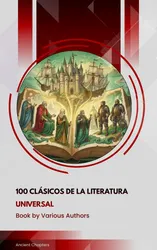
  5. 100 Clásicos de la Literatura: Tesoros Literarios Atemporales en un Solo Libro

    Francis Scott Fitzgerald, Mary Shelley, Lyman Frank Baum, Louisa May Alcott, Dante Alighieri, Jane Austen, Ambrose Bierce, Emily Brontë, Edgar Rice Burroughs, Lewis Carroll, Wilkie Collins, René Descartes, Charles Dickens, Emily Dickinson, Alexandre Dumas, Gustave Flaubert, Benito Pérez Galdós, Johann Wolfgang von Goethe, Thomas Hardy, E T A Hoffmann, Washington Irving, Henry James, James Joyce, Franz Kafka, Gaston Leroux, Federico García Lorca, H.P. Lovecraft, Publio Virgilio Marón, Lucy Maud Montgomery, John William Polidori, Marco Polo, Antoine de Saint-Exupéry, Emilio Salgari, Walter Scott, Mark Twain, Jules Verne, H.G. Wells, Edith Wharton, Mary Wollstonecraft, Fernando de Rojas

  6. 4.6

    Carta al padre :

    Franz Kafka

  7. 4.1

    Metamorphosis - Audiobook

    Franz Kafka, Classic Audiobooks

  8. 4.3

    La metamorfosis (Completo)

    Franz Kafka

  9. 3.6

    El proceso

    Franz Kafka

  10. 5.0

    El proceso "The Trial"

    Franz Kafka

  11. 4.0

    La metamorfosis

    Franz Kafka

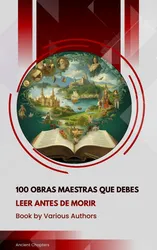
  12. 100 Obras Maestras Que Debes Leer Antes De Morir

    Francis Scott Fitzgerald, Mary Shelley, Lyman Frank Baum, Edith Nesbit, Dante Alighieri, Jane Austen, Ambrose Bierce, Emily Brontë, Edgar Rice Burroughs, Lewis Carroll, Wilkie Collins, René Descartes, Charles Dickens, Emily Dickinson, Alexandre Dumas, Gustave Flaubert, Benito Pérez Galdós, Johann Wolfgang von Goethe, Thomas Hardy, E T A Hoffmann, Washington Irving, Henry James, James Joyce, Franz Kafka, Gaston Leroux, Federico García Lorca, H.P. Lovecraft, Publio Virgilio Marón, Lucy Maud Montgomery, John William Polidori, Marco Polo, Antoine de Saint-Exupéry, Emilio Salgari, Walter Scott, Mark Twain, Jules Verne, H.G. Wells, Edith Wharton, Mary Wollstonecraft, Fernando de Rojas


Categorías relacionadas