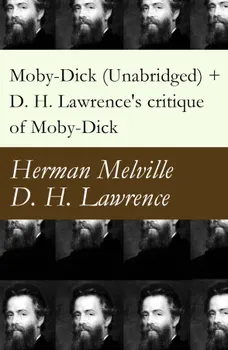
Herman Melville's Moby-Dick (Unabridged) is at once maritime adventure, metaphysical epic, encyclopedic anatomy of whaling, and tragic drama of obsession. Through Ishmael's meditative narration and Captain Ahab's monomaniacal pursuit of the white whale, Melville fuses Shakespearean rhetoric, biblical cadence, philosophical speculation, and documentary realism. This edition's inclusion of D. H. Lawrence's critique enriches the literary context, framing the novel as a dark, symbolic confrontation with American will, nature, and the unknowable. Melville, born in 1819, drew deeply upon his own years at sea, including voyages on merchant and whaling vessels, as well as his wide reading in scripture, classical literature, travel writing, and philosophy. His experience of maritime labor, imperial commerce, and human extremity furnished the material basis for the novel, while his disillusionment with easy moral certainties shaped its profound ambiguity. Though neglected in his lifetime, Melville later emerged as a central figure of American letters. This volume is recommended for readers seeking not merely a story of pursuit, but a monumental inquiry into fate, authority, knowledge, and spiritual terror. Lawrence's accompanying critique makes it especially valuable for students, scholars, and serious readers interested in the novel's symbolic power and enduring modernity.
This enriched edition has been carefully crafted to add value to your reading experience.
- An Introduction draws the threads together, discussing why these diverse authors and texts belong in one collection.
- Historical Context explores the cultural and intellectual currents that shaped these works, offering insight into the shared (or contrasting) eras that influenced each writer.
- A combined Synopsis (Selection) briefly outlines the key plots or arguments of the included pieces, helping readers grasp the anthology's overall scope without giving away essential twists.
- A collective Analysis highlights common themes, stylistic variations, and significant crossovers in tone and technique, tying together writers from different backgrounds.
- Reflection questions encourage readers to compare the different voices and perspectives within the collection, fostering a richer understanding of the overarching conversation.