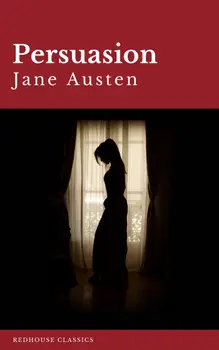
Persuasion

First published in 1818, Persuasion was Jane Austen's last work. Its mellow character and autumnal tone have long made it a favorite with Austen readers. Set in Somersetshire and Bath, the novel revolves around the lives and love affair of Sir Walter Elliot, his daughters Elizabeth, Anne, and Mary, and various in-laws, friends, suitors, and other characters, In Anne Elliot, the author created perhaps her sweetest, most appealing heroine.

At the center of the novel is Anne's thwarted romance with Captain Frederick Wentworth, a navy man Anne met and fell in love with when she was 19. At the time, Wentworth was deemed an unsuitable match and Anne was forced to break off the relationship. Eight years later, however, they meet again. By this time Captain Wentworth has made his fortune in the navy and is an attractive "catch." However, Anne is now uncertain about his feelings for her. But after various twists and turns of fortune, the novel ends on a happy note.

In Persuasion, as in such novels as Sense and Sensibility, Pride and Prejudice, and Emma, Austen limned the plight of young women who could escape the constraints of family life only by marrying, and suggest the foolishness of women who believed they were free and not dependent on the financial and social resources of men. At the same time, Persuasion offers an ironic and subtle paean to the true love that enables one woman to rise above straitened economic circumstances and the stifling social conventions that restricted women to narrowly circumscribed lives in the common sitting room.

Sure to appeal to admirers of Jane Austen, Persuasion will delight any reader with its finely drawn characters, gentle satire, and charming re-creation of the genteel world of the 19th-century English countryside.

Anne Elliot must have been Jane Austen herself, speaking for the last time. There is something so true, so womanly about her, that it is impossible not to love her. She is the bright-eyed heroine of the earlier novels matured, chastened, cultivated, to whom fidelity has brought only greater depth and sweetness instead of bitterness and pain. —Anne Thackeray Ritchie

The wit of Jane Austen has for partner the perfection of her taste. —Virginia Woolf
Sobre este libro

First published in 1818, Persuasion was Jane Austen's last work. Its mellow character and autumnal tone have long made it a favorite with Austen readers. Set in Somersetshire and Bath, the novel revolves around the lives and love affair of Sir Walter Elliot, his daughters Elizabeth, Anne, and Mary, and various in-laws, friends, suitors, and other characters, In Anne Elliot, the author created perhaps her sweetest, most appealing heroine.

At the center of the novel is Anne's thwarted romance with Captain Frederick Wentworth, a navy man Anne met and fell in love with when she was 19. At the time, Wentworth was deemed an unsuitable match and Anne was forced to break off the relationship. Eight years later, however, they meet again. By this time Captain Wentworth has made his fortune in the navy and is an attractive "catch." However, Anne is now uncertain about his feelings for her. But after various twists and turns of fortune, the novel ends on a happy note.

In Persuasion, as in such novels as Sense and Sensibility, Pride and Prejudice, and Emma, Austen limned the plight of young women who could escape the constraints of family life only by marrying, and suggest the foolishness of women who believed they were free and not dependent on the financial and social resources of men. At the same time, Persuasion offers an ironic and subtle paean to the true love that enables one woman to rise above straitened economic circumstances and the stifling social conventions that restricted women to narrowly circumscribed lives in the common sitting room.

Sure to appeal to admirers of Jane Austen, Persuasion will delight any reader with its finely drawn characters, gentle satire, and charming re-creation of the genteel world of the 19th-century English countryside.

Anne Elliot must have been Jane Austen herself, speaking for the last time. There is something so true, so womanly about her, that it is impossible not to love her. She is the bright-eyed heroine of the earlier novels matured, chastened, cultivated, to whom fidelity has brought only greater depth and sweetness instead of bitterness and pain. —Anne Thackeray Ritchie

The wit of Jane Austen has for partner the perfection of her taste. —Virginia Woolf

Empieza este libro hoy por 0 €

  • Disfruta de acceso completo a todos los libros de la app durante el periodo de prueba
  • Sin compromiso, cancela cuando quieras
Pruébalo gratis ahora
Más de 52 000 clientes han dado a Nextory 5 estrellas en la App Store y Google Play.

  1. 100 Clásicos de la Literatura

    Francis Scott Fitzgerald, Mary Shelley, Lyman Frank Baum, Louisa May Alcott, Dante Alighieri, Jane Austen, Ambrose Bierce, Emily Brontë, Edgar Rice Burroughs, Lewis Carroll, Wilkie Collins, René Descartes, Charles Dickens, Emily Dickinson, Alexandre Dumas, Gustave Flaubert, Benito Pérez Galdós, Johann Wolfgang von Goethe, Thomas Hardy, E T A Hoffmann, Washington Irving, Henry James, James Joyce, Franz Kafka, Gaston Leroux, Federico García Lorca, H.P. Lovecraft, Publio Virgilio Marón, Lucy Maud Montgomery, John William Polidori, Marco Polo, Antoine de Saint-Exupéry, Emilio Salgari, Walter Scott, Mark Twain, Jules Verne, H.G. Wells, Edith Wharton, Mary Wollstonecraft, Fernando de Rojas

  2. 4.5
    #1

    Orgullo Y Prejuicio

    Jane Austen

  3. Mejor valorados
    4.7

    Orgullo y prejuicio - Audiolibro

    Jane Austen, Audiolibros Clásicos, Audiolibros de Clásicos

  4. 4.4

    Orgullo y Prejuicio

    Jane Austen

  5. 3.9

    Persuasión

    Jane Austen

  6. 100 Clásicos de la Literatura Universal

    Francis Scott Fitzgerald, Mary Shelley, Lyman Frank Baum, Louisa May Alcott, Dante Alighieri, Jane Austen, Ambrose Bierce, Emily Brontë, Edgar Rice Burroughs, Lewis Carroll, Wilkie Collins, René Descartes, Charles Dickens, Emily Dickinson, Alexandre Dumas, Gustave Flaubert, Benito Pérez Galdós, Johann Wolfgang von Goethe, Thomas Hardy, E T A Hoffmann, Washington Irving, Henry James, James Joyce, Franz Kafka, Gaston Leroux, Federico García Lorca, H.P. Lovecraft, Publio Virgilio Marón, Lucy Maud Montgomery, John William Polidori, Marco Polo, Antoine de Saint-Exupéry, Emilio Salgari, Walter Scott, Mark Twain, Jules Verne, Julio Verne, H.G. Wells, Edith Wharton, Mary Wollstonecraft, Stefan Zweig, Sun Tzu, Bram Stoker, - Aristoteles, George Bernard Shaw, Henryk Sienkiewicz, Concepción Arenal, Charlotte Brontë, Miguel de Cervantes, G.K. Chesterton, Daniel Defoe, Fyodor Mikhailovich Dostoyevsky, Arthur Conan Doyle, Sigmund Freud, H. Rider Haggard, Homero, Immanuel Kant, Rudyard Kipling, Molière, Friedrich Nietzsche, Fernando de Rojas, Sófocles, William Makepeace Thackeray, León Tolstói, Voltaire, Ramón María del Valle-Inclán, Oscar Wilde, Virginia Woolf

  7. 2.0

    50 Clásicos que Debes Leer Antes de Morir: Tu Pasaporte a los Tesoros de la Literatura Universal

    Dante Alighieri, Aristóteles, Jane Austen, Charles Baudelaire, Giovanni Boccaccio, Anne Brontë, C. Collodi, James Fenimore Cooper, Fedor Mikhaïlovitch Dostoïevski, Arthur Conan Doyle, Alexandre Dumas, José de Espronceda, Gustave Flaubert, Sigmund Freud, Benito Pérez Galdós, Kahlil Gibran, Johann Wolfgang Goethe, Johann Wolfgang von Goethe, Victor Hugo, Thomas Hardy, Nathaniel Hawthorne, Vicente Blasco Ibáñez, Washington Irving, James Joyce, Mariano José de Larra, Jack London, Federico García Lorca, H.P. Lovecraft, Antonio Machado, Gustav Meyrink, John Stuart Mill, Amado Nervo, Friedrich Nietzsche, Solomon Northup, Alexander Sergeyevich Pushkin, Francisco de Quevedo, Walter Scott, William Shakespeare, Robert Louis Stevenson, Harriet Beecher Stowe, Jonathan Swift, Mark Twain, Miguel De Unamuno, Ramón María del Valle-Inclán, Julio Verne, Virginia Woolf

  8. 4.7

    Emma

    Jane Austen

  9. 4.1

    Sentido y sensibilidad

    Jane Austen

  10. Nuevo

    100 obras maestras que debes leer antes de morir

    Francis Scott Fitzgerald, Mary Shelley, Lyman Frank Baum, Edith Nesbit, Dante Alighieri, Jane Austen, Ambrose Bierce, Emily Brontë, Edgar Rice Burroughs, Lewis Carroll, Wilkie Collins, René Descartes, Charles Dickens, Emily Dickinson, Alexandre Dumas, Gustave Flaubert, Benito Pérez Galdós, Johann Wolfgang Goethe, Thomas Hardy, E. T. Hoffmann, Washington Irving, Henry James, James Joyce, Franz Kafka, Gaston Leroux, Federico García Lorca, H.P. Lovecraft, Publio Virgilio Marón, Lucy Maud Montgomery, John William Polidori, Marco Polo, Antoine de Saint-Exupéry, Emilio Salgari, Walter Scott, Mark Twain, Jules Verne

  11. 50 Clásicos que debes leer antes de morir : Las Obras Inmortales de la Literatura Universal en un Solo Volumen

    Dante Alighieri, Aristóteles, Jane Austen, Charles Baudelaire, Giovanni Boccaccio, Anne Brontë, C. Collodi, James Fenimore Cooper, Fedor Mikhaïlovitch Dostoïevski, Arthur Conan Doyle, Alexandre Dumas, José de Espronceda, Gustave Flaubert, Sigmund Freud, Benito Pérez Galdós, Kahlil Gibran, Johann Wolfgang Goethe

  12. 50 Clásicos que Debes Leer Antes de Morir : Un viaje literario por los tesoros de la literatura universal

    Dante Alighieri, Aristóteles, Jane Austen, Charles Baudelaire, Giovanni Boccaccio, Anne Brontë, C. Collodi, James Fenimore Cooper, Fedor Mikhaïlovitch Dostoïevski, Arthur Conan Doyle, Alexandre Dumas, José de Espronceda, Gustave Flaubert, Sigmund Freud, Benito Pérez Galdós, Kahlil Gibran, Johann Wolfgang Goethe, Johann Wolfgang von Goethe, Victor Hugo, Thomas Hardy, Nathaniel Hawthorne, Vicente Blasco Ibáñez, Washington Irving, James Joyce, Mariano José de Larra, Jack London, Federico García Lorca, H.P. Lovecraft, Antonio Machado, Gustav Meyrink, John Stuart Mill, Amado Nervo, Friedrich Nietzsche, Solomon Northup, Alexander Sergeyevich Pushkin, Francisco de Quevedo, Walter Scott, William Shakespeare, Robert Louis Stevenson, Harriet Beecher Stowe, Jonathan Swift, Mark Twain, Miguel De Unamuno, Ramón María del Valle-Inclán, Julio Verne, Virginia Woolf


Categorías relacionadas