Robert Louis Stevenson's account of his ancestors. According to Wikipedia: "Robert Louis (Balfour) Stevenson ( 1850 - 1894), was a Scottish novelist, poet, and travel writer, and a leading representative of Neo-romanticism in English literature. He was the man who "seemed to pick the right word up on the point of his pen, like a man playing spillikins", as G. K. Chesterton put it. He was also greatly admired by many authors, including Jorge Luis Borges, Ernest Hemingway, Rudyard Kipling, Vladimir Nabokov, and J. M. Barrie. Most modernist writers dismissed him, however, because he was popular and did not write within their definition of modernism. It is only recently that critics have begun to look beyond Stevenson's popularity and allow him a place in the canon."
Robert Louis Stevenson's account of his ancestors. According to Wikipedia: "Robert Louis (Balfour) Stevenson ( 1850 - 1894), was a Scottish novelist, poet, and travel writer, and a leading representative of Neo-romanticism in English literature. He was the man who "seemed to pick the right word up on the point of his pen, like a man playing spillikins", as G. K. Chesterton put it. He was also greatly admired by many authors, including Jorge Luis Borges, Ernest Hemingway, Rudyard Kipling, Vladimir Nabokov, and J. M. Barrie. Most modernist writers dismissed him, however, because he was popular and did not write within their definition of modernism. It is only recently that critics have begun to look beyond Stevenson's popularity and allow him a place in the canon."
Empieza este libro hoy por 0 €
Disfruta de acceso completo a todos los libros de la app durante el periodo de prueba
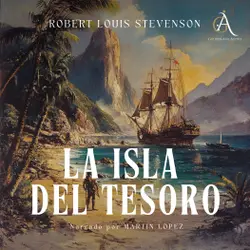
Robert Louis Stevenson (Edimburgo, Gran Bretaña, 1850 – Vailima, Samoa, 1894), hijo de un dominante constructor de faros, tuvo desde niño varias crisis pulmonares que le llevaron a una constante y nostálgica peregrinación en busca de climas más cálidos, hasta que en 1888 embarca hacia los mares del Sur y se establece en Samoa con su mujer, cumpliendo así el sueño de su corta vida. Sus estudios de náutica, que más tarde abandonaría por los de derecho, le permitieron entrar en contacto con las gentes y costumbres marineras, ingredientes fundamentales en algunas de sus obras más conocidas, como La isla del tesoro, La flecha negra o El extraño caso del Dr. Jekyll y Mr. Hyde.