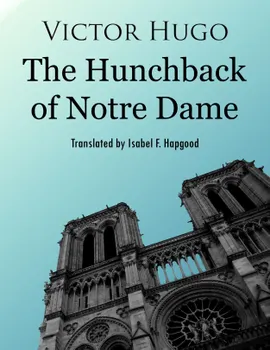
In the vaulted Gothic towers of Notre-Dame lives Quasimodo, the hunchbacked bellringer. Mocked and shunned for his appearance, he is pitied only by Esmerelda, a beautiful gypsy dancer to whom he becomes completely devoted. Esmerelda, however, has also attracted the attention of the sinister archdeacon Claude Frollo, and when she rejects his lecherous approaches, Frollo hatches a plot to destroy her that only Quasimodo can prevent. Victor Hugo's sensational, evocative novel brings life to the medieval Paris he loved, and mourns its passing in one of the greatest historical romances of the nineteenth century.
In the vaulted Gothic towers of Notre-Dame lives Quasimodo, the hunchbacked bellringer. Mocked and shunned for his appearance, he is pitied only by Esmerelda, a beautiful gypsy dancer to whom he becomes completely devoted. Esmerelda, however, has also attracted the attention of the sinister archdeacon Claude Frollo, and when she rejects his lecherous approaches, Frollo hatches a plot to destroy her that only Quasimodo can prevent. Victor Hugo's sensational, evocative novel brings life to the medieval Paris he loved, and mourns its passing in one of the greatest historical romances of the nineteenth century.
Empieza este libro hoy por 0 €
Disfruta de acceso completo a todos los libros de la app durante el periodo de prueba
Victor Hugo (Besançon, 1802-París, 1885) es quizá el escritor más representativo de las letras francesas del siglo xix. De vocación temprana, comenzó su andadura literaria con Odas y poesías diversas (1822), su primera obra poética. Muy pronto fue considerado el jefe de las filas del Romanticismo francés y sus obras encontraron un reconocimiento generalizado debido, fundamentalmente, al virtuosismo de su prosa y a la elección de unos argumentos en los que se entremezclan a la perfección lo misterioso y sobrenatural con la denuncia social más inteligente y certera. Entre sus obras más destacadas se encuentran Las orientales (1829), Nuestra señora de París (1830), Ruy Blas (1838), Los miserables (1862) o Los trabajadores del mar (1866), además de un buen número de obras teatrales, poemas, ensayos históricos y discursos políticos. Victor Hugo murió el 22 de mayo de 1885 a causa de una pulmonía. Su ataúd permaneció durante varios días bajo el arco del triunfo, donde se dice que fue visitado por cerca de tres millones de personas.