The Idea of Progress

When we say that ideas rule the world, or exercise a decisive power in history, we are generally thinking of those ideas which express human aims and depend for their realisation on the human will, such as liberty, toleration, equality of opportunity, socialism. Some of these have been partly realised, and there is no reason why any of them should not be fully realised, in a society or in the world, if it were the united purpose of a society or of the world to realise it. They are approved or condemned because they are held to be good or bad, not because they are true or false. But there is another order of ideas that play a great part in determining and directing the course of man's conduct but do not depend on his will—ideas which bear upon the mystery of life, such as Fate, Providence, or personal immortality. Such ideas may operate in important ways on the forms of social action, but they involve a question of fact and they are accepted or rejected not because they are believed to be useful or injurious, but because they are believed to be true or false.

The idea of the progress of humanity is an idea of this kind, and it is important to be quite clear on the point. We now take it so much for granted, we are so conscious of constantly progressing in knowledge, arts, organising capacity, utilities of all sorts, that it is easy to look upon Progress as an aim, like liberty or a world-federation, which it only depends on our own efforts and good-will to achieve. But though all increases of power and knowledge depend on human effort, the idea of the Progress of humanity, from which all these particular progresses derive their value, raises a definite question of fact, which man's wishes or labours cannot affect any more than his wishes or labours can prolong life beyond the grave...
Sobre este libro

When we say that ideas rule the world, or exercise a decisive power in history, we are generally thinking of those ideas which express human aims and depend for their realisation on the human will, such as liberty, toleration, equality of opportunity, socialism. Some of these have been partly realised, and there is no reason why any of them should not be fully realised, in a society or in the world, if it were the united purpose of a society or of the world to realise it. They are approved or condemned because they are held to be good or bad, not because they are true or false. But there is another order of ideas that play a great part in determining and directing the course of man's conduct but do not depend on his will—ideas which bear upon the mystery of life, such as Fate, Providence, or personal immortality. Such ideas may operate in important ways on the forms of social action, but they involve a question of fact and they are accepted or rejected not because they are believed to be useful or injurious, but because they are believed to be true or false.

The idea of the progress of humanity is an idea of this kind, and it is important to be quite clear on the point. We now take it so much for granted, we are so conscious of constantly progressing in knowledge, arts, organising capacity, utilities of all sorts, that it is easy to look upon Progress as an aim, like liberty or a world-federation, which it only depends on our own efforts and good-will to achieve. But though all increases of power and knowledge depend on human effort, the idea of the Progress of humanity, from which all these particular progresses derive their value, raises a definite question of fact, which man's wishes or labours cannot affect any more than his wishes or labours can prolong life beyond the grave...
Empieza este libro hoy por 0 €

  • Disfruta de acceso completo a todos los libros de la app durante el periodo de prueba
  • Sin compromiso, cancela cuando quieras
Pruébalo gratis ahora
Más de 52 000 clientes han dado a Nextory 5 estrellas en la App Store y Google Play.

  1. Nuevo

    The Cambridge Modern History

    J. B. Bury, Mandell Creighton, R. Nisbet Bain, George Walter Prothero, Adolphus William Ward, Lord Acton

  2. Nuevo

    The Dark Ages Collection

    J. B. Bury, Edward Creasy, Henry Bradley, Edward Gibbon, David Hume, Charles Oman

  3. The Cambridge Modern History

    J. B. Bury, Mandell Creighton, R. Nisbet Bain, George Walter Prothero, Adolphus William Ward, Lord Acton

  4. The Dark Ages Collection

    J. B. Bury, Edward Creasy, Henry Bradley, Edward Gibbon, David Hume, Charles Oman

  5. The Cambridge Modern History

    J. B. Bury, R. Nisbet, Mandell Creighton, Adolphus William Ward, Lord Acton

  6. The Dark Ages Collection  : The Complete Writings of J. B. Bury on Medieval Civilization and History

    J. B. Bury

  7. The Dark Ages Collection : Medieval History, Fall of Rome, Viking Raids, Crusades & More – A Compelling Anthology of Europe's Lost Centuries

    J. B. Bury, Edward Creasy, Henry Bradley, Edward Gibbon

  8. The Cambridge Modern History : The Complete Multi-Volume Collection – From the Renaissance to the 20th Century by Leading Historians

    J. B. Bury, Mandell Creighton, Robert Nisbet Bain, G. W. Prothero, Sir Adolphus William Ward

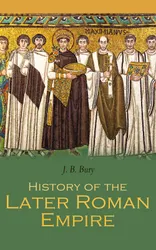
  9. History of the Later Roman Empire : From Arcadius to Irene (395 A.D. to 800 A.D)

    J. B. Bury

  10. The Dark Ages Collection : Epic Tales and Historical Writings from the Fall of Rome to the Dawn of the Renaissance

    J. B. Bury, Edward Creasy, Henry Bradley, Edward Gibbon

  11. The Cambridge Modern History Collection : A Comprehensive Scholarly Survey of Global Events from the Renaissance to the Twentieth Century

    J. B. Bury, Mandell Creighton, Robert Nisbet Bain, George Gordon Byron, Adolphus Ward

  12. A History of the Later Roman Empire (Vol. 1&2) : Enriched edition. From the Death of Theodosius I to the Death of Justinian - German Conquest of Western Europe & the Age of Justinian

    J. B. Bury