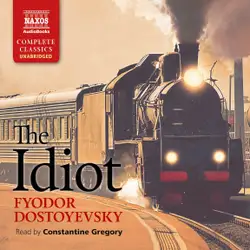
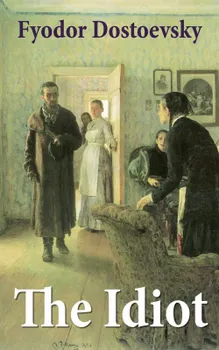
The Idiot (The Unabridged Eva Martin Translation)

This carefully crafted ebook: "The Idiot (The Unabridged Eva Martin Translation)" is formatted for your eReader with a functional and detailed table of contents. This is the version based on the unabridged Eva Martin translation. The Idiot is a novel written by Fyodor Dostoyevsky. It was first published serially in The Russian Messenger between 1868 and 1869. In The Idiot Dostoevsky hoped to portray the ideal of a man who wishes to sacrifice himself for others. Prince Myshkin is a sort of Russian Christ who represents the values Dostoevsky deemed the highest and most noble: altruism, meekness, kindness, and brotherly love. As Dostoevsky saw sexual passion as inherently selfish, it is not surprising that Prince Myshkin is a completely asexual character. Though he develops romantic feelings toward Aglaya, he subordinates them to a higher ideal of pity and compassion that he expresses in his relationship with Nastassya Filippovna. Facing the "dark world" of corruption and moral decay that he meets in society, he inevitably perishes. Fyodor Mikhailovich Dostoyevsky ( 1821 – 1881) was a Russian novelist, short story writer, essayist and philosopher. Dostoyevsky's literary works explore human psychology in the context of the troubled political, social, and spiritual atmosphere of 19th-century Russia. Many literary critics rate him as one of the greatest and most prominent psychologists in world literature. The Idiot is ranked beside some of Dostoyevsky's other works as one of the most brilliant literary achievements of the "Golden Age" of Russian literature.
Sobre este libro

This carefully crafted ebook: "The Idiot (The Unabridged Eva Martin Translation)" is formatted for your eReader with a functional and detailed table of contents. This is the version based on the unabridged Eva Martin translation. The Idiot is a novel written by Fyodor Dostoyevsky. It was first published serially in The Russian Messenger between 1868 and 1869. In The Idiot Dostoevsky hoped to portray the ideal of a man who wishes to sacrifice himself for others. Prince Myshkin is a sort of Russian Christ who represents the values Dostoevsky deemed the highest and most noble: altruism, meekness, kindness, and brotherly love. As Dostoevsky saw sexual passion as inherently selfish, it is not surprising that Prince Myshkin is a completely asexual character. Though he develops romantic feelings toward Aglaya, he subordinates them to a higher ideal of pity and compassion that he expresses in his relationship with Nastassya Filippovna. Facing the "dark world" of corruption and moral decay that he meets in society, he inevitably perishes. Fyodor Mikhailovich Dostoyevsky ( 1821 – 1881) was a Russian novelist, short story writer, essayist and philosopher. Dostoyevsky's literary works explore human psychology in the context of the troubled political, social, and spiritual atmosphere of 19th-century Russia. Many literary critics rate him as one of the greatest and most prominent psychologists in world literature. The Idiot is ranked beside some of Dostoyevsky's other works as one of the most brilliant literary achievements of the "Golden Age" of Russian literature.

Empieza este libro hoy por 0 €

  • Disfruta de acceso completo a todos los libros de la app durante el periodo de prueba
  • Sin compromiso, cancela cuando quieras
Pruébalo gratis ahora
Más de 52 000 clientes han dado a Nextory 5 estrellas en la App Store y Google Play.

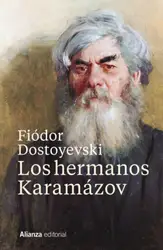
  1. Los hermanos Karamázov

    Fiódor Dostoyevski

  2. 4.1

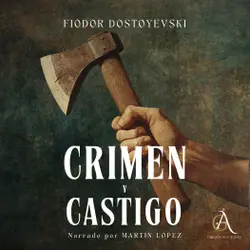
    Crimen y castigo- Audiolibro

    Fiódor Dostoyevski, Audiolibros Clásicos, Audiolibros de Clásicos

  3. 4.3
    #26

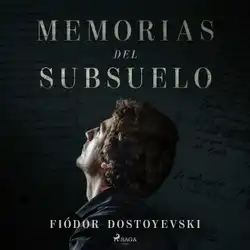
    Memorias del subsuelo

    Fiódor Dostoyevski

  4. Los hermanos Karamazov

    Fiódor Dostoyevski

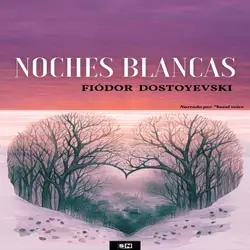
  5. NOCHES BLANCAS

    Fiódor Dostoyevski

  6. 100 Obras Maestras de la Literatura Universal : Edición enriquecida. Explorando la diversidad literaria a lo largo de los siglos

    Johann Wolfgang Goethe, Gustave Flaubert, Franz Kafka, Lewis Carroll, Sigmund Freud, Henrik Ibsen, Charles Dickens, Honoré de Balzac, Mark Twain, Immanuel Kant, Friedrich Schiller, Harriet Beecher Stowe, Oscar Wilde, Robert Louis Stevenson, Edgar Allan Poe, William Shakespeare, Dante Alighieri, Giovanni Boccaccio, Bram Stoker, Charlotte Brontë, Emily Brontë, Jack London, Henry James, Louisa May Alcott, Victor Hugo, Arthur Conan Doyle, Joseph Conrad, Jane Austen, José Rizal, Edgar Rice Burroughs, Herman Melville, Jonathan Swift, Gustavo Adolfo Bécquer, Vicente Blasco Ibáñez, Benito Pérez Galdós, Jean-Jacques Rousseau, Daniel Defoe, Pedro Calderón Barca, Virginia Woolf, Washington Irving, Juan Valera, Horacio Quiroga, Nathaniel Hawthorne, Charles Baudelaire, Wilkie Collins, William Makepeace Thackeray, Voltaire, Apuleius, Leopoldo Alas, John Milton, José Martí, Lope de Vega, Emilio Salgari, Francisco de Quevedo, Rubén Darío, Antonio Machado, José Zorrilla, Tirso de Molina, Emilia Pardo Bazán, Fernando de Rojas, L. Frank Baum, H.G. Wells, J.M. Barrie, H. Rider Haggard, H.P. Lovecraft, Seneca, Hans Christian Andersen, Friedrich Nietzsche, Mary Shelley, Baltasar Gracián, Sófocles, Sun Tzu, Fiódor Dostoyevski, Antón Chéjov, León Tolstoi, Tomás Moro, San Agustín, Nikolái Gógol, Julio Verne, Homero, Platón, Alejandro Dumas, Aristóteles, Hermanos Grimm, Jorge Isaacs, Ignacio De Loyola, Nicolás Maquiavelo, Miguel Cervantes, Teresa de Jesús, Alejandro Dumas hijo, Mijaíl Bakunin, Miguel De Unamuno, Duque de Rivas, Ramón María Valle-Inclán, Federico García Lorca, Gibrán Jalil Gibrán

  7. La sumisa

    Fiódor Dostoyevski

  8. 5.0

    El pequeño héroe

    Fiódor Dostoyevski

  9. 4.3
    #9

    El gran inquisidor

    Fiódor Dostoyevski

  10. 2.8

    Pobre Gente :

    Fiódor Dostoyevski

  11. 4.3

    Los Hermanos Karamázov

    Fiódor Dostoyevski

  12. 4.4
    #26

    Memorias del subsuelo : Explorando la psique humana en la Rusia del siglo XIX

    Fiódor Dostoyevski