The Vicar Of Wakefield

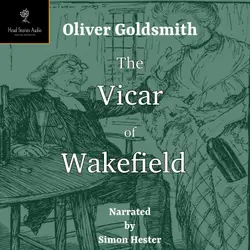
Though published in 1766, The Vicar of Wakefield was one of the most popular and widely read books of the Victorian era. References to Vicar in Victorian literature abound: George Eliot, Austen, Dickens, Mary Shelly, Charlotte Brontë, Alcott, Goethe, and many more famous writers all mention Vicar in their books. The plot concerns the titular vicar, Charles Primrose, a mild-mannered and forgiving man who lives with his family in a country parish. His prosperity comes from careful investments of his inheritance—but when one of his business partners goes bankrupt, the vicar finds himself suddenly impoverished. Perhaps the reason for Vicar 's long-lasting appeal is its careful balance between its being interpreted as either a sincere sentimental novel, or a satire of sentimental novels. Primrose is an oblivious protagonist, totally helpless against the evil forces of the world that constantly buffet him and his family. Despite this, the almost-ridiculous plot always manages to find a deus ex machina to save him from his latest calamity. The plot is so unbelievable that the reader is led to think that Goldsmith must have meant Vicar as a satire—and yet the novel is so earnest that the reader is left wondering. In the end, Primrose and his family serve as warnings to the reader to not be as heedless and powerless as they. The family's constant deliverance from the disasters they blunder in to are Goldsmith's way of saying that life is really not so Panglossian as one might want to believe, and that bad things can and do happen to good people—though in real life, rarely does a hero appear for a last-minute rescue. This worldview, which is so contrary to the Victorian's ideals of romance and sentimentalism, may be what made it so popular as a satire in that era.
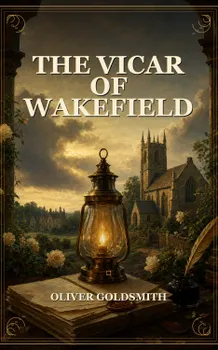
Sobre este libro

Though published in 1766, The Vicar of Wakefield was one of the most popular and widely read books of the Victorian era. References to Vicar in Victorian literature abound: George Eliot, Austen, Dickens, Mary Shelly, Charlotte Brontë, Alcott, Goethe, and many more famous writers all mention Vicar in their books. The plot concerns the titular vicar, Charles Primrose, a mild-mannered and forgiving man who lives with his family in a country parish. His prosperity comes from careful investments of his inheritance—but when one of his business partners goes bankrupt, the vicar finds himself suddenly impoverished. Perhaps the reason for Vicar 's long-lasting appeal is its careful balance between its being interpreted as either a sincere sentimental novel, or a satire of sentimental novels. Primrose is an oblivious protagonist, totally helpless against the evil forces of the world that constantly buffet him and his family. Despite this, the almost-ridiculous plot always manages to find a deus ex machina to save him from his latest calamity. The plot is so unbelievable that the reader is led to think that Goldsmith must have meant Vicar as a satire—and yet the novel is so earnest that the reader is left wondering. In the end, Primrose and his family serve as warnings to the reader to not be as heedless and powerless as they. The family's constant deliverance from the disasters they blunder in to are Goldsmith's way of saying that life is really not so Panglossian as one might want to believe, and that bad things can and do happen to good people—though in real life, rarely does a hero appear for a last-minute rescue. This worldview, which is so contrary to the Victorian's ideals of romance and sentimentalism, may be what made it so popular as a satire in that era.
Empieza este libro hoy por 0 €

  • Disfruta de acceso completo a todos los libros de la app durante el periodo de prueba
  • Sin compromiso, cancela cuando quieras
Pruébalo gratis ahora
Más de 52 000 clientes han dado a Nextory 5 estrellas en la App Store y Google Play.

  1. The Complete Harvard Classics Collection (Golden Deer Classics) : [51 Volumes + The Harvard Classic Shelf Of Fiction]

    Charles W. Eliot, Golden Deer Classics, John Milton, Plato, Benjamin Franklin, Adam Smith, Charles Darwin, Miguel de Cervantes, Virgil, Anonymous, Grimm Brothers, Hans Christian Andersen, Oliver Goldsmith, Dante Alighieri, Pierre Corneille, Jean Racine, Molière, Michel de Montaigne, Voltaire, Niccolò Machiavelli, Confucius, William Shakespeare

  2. The Harvard Classics & Fiction Collection [180 Books]

    Charles W. Eliot, Golden Deer Classics, John Milton, Plato, Benjamin Franklin, Adam Smith, Charles Darwin, Miguel de Cervantes, Virgil, Anonymous, Grimm Brothers, Hans Christian Andersen, Oliver Goldsmith, Dante Alighieri, Pierre Corneille, Jean Racine, Molière, Michel de Montaigne, Voltaire, Niccolò Machiavelli, Confucius, William Shakespeare, Eireann Press

  3. 4.0

    The Vicar of Wakefield

    Oliver Goldsmith

  4. 3.0

    The Vicar of Wakefield

    Oliver Goldsmith

  5. The Gift of Friendship : What the Wisest Minds Said About Our Deepest Bonds Across Two Thousand Years

    Alfred H. Hyatt, Henry David Thoreau, Thomas Carlyle, Henry Mackenzie, Oliver Goldsmith, Samuel Johnson, George Berkeley, Richard Steele, Joseph Addison, Francis Bacon, Michel de Montaigne, Anthusa, Aristotle

  6. Little Goody Two Shoes : A Modern Retelling

    Oliver Goldsmith

  7. Dalziels' Illustrated Goldsmith

    Oliver Goldsmith

  8. An Elegy on the Glory of Her Sex, Mrs. Mary Blaize

    Oliver Goldsmith

  9. She Stoops to Conquer

    Oliver Goldsmith

  10. The Complete Poetical Works of Oliver Goldsmith : Enriched edition.

    Oliver Goldsmith

  11. She Stoops to Conquer

    Oliver Goldsmith