oder

Finde dein nächstes Lieblingsbuch

  1. 3.0

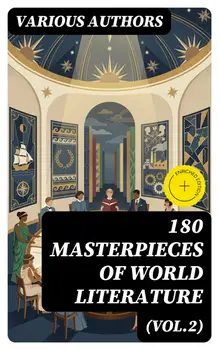
    200 Meisterwerke der Literaturgeschichte (Kommentiert) : Erweiterte Ausgabe. Die größten Klassiker der Weltliteratur

    Franz Kafka, Victor Hugo, Fjodor Michailowitsch Dostojewski, Lord Byron, Giacomo Leopardi, Marcel Proust, Henrik Ibsen, Percy Bysshe Shelley, Charles Dickens, Jane Austen, Mary Shelley, Emily Brontë, Charlotte Brontë, Anne Brontë, William Makepeace Thackeray, Bram Stoker, Henry Fielding, George Eliot, William Shakespeare, D. H. Lawrence, Walt Whitman, Herman Melville, Thomas Wolfe, Virginia Woolf, Joseph Conrad, Sinclair Lewis, Lewis Carrol, Edgar Allan Poe, Edward Bulwer-Lytton, Oscar Wilde, H.G. Wells, Daniel Defoe, James Fenimore Cooper, Lew Wallace, Jonathan Swift, Mark Twain, Walter Scott, Nathaniel Hawthorne, Harriet Beecher Stowe, Laurence Sterne, Frances Hodgson Burnett, Arthur Conan Doyle, Wilkie Collins, Edgar Wallace, Robert Louis Stevenson, Jack London, Henry David Thoreau, John Galsworthy, F. Scott Fitzgerald, Rudyard Kipling, G.K. Chesterton, Washington Irvin, O.Henry, Ambrose Bierce, Alexander Sergejewitsch Puschkin, Michail Lermontow, Iwan Sergejewitsch Turgenew, Leo Tolstoi, Nikolai Gogol, Iwan Gontscharow, Nikolai Leskow, Anton Pawlowitsch Tschechow, Maxim Gorki, François Rabelais, Jean De Fontaine, Blaise Pascal, Pierre Corneille, Moliere, Jean Baptiste Racine, Charles Perrault, Voltaire, Denis Diderot, Jean-Jacques Rousseau, Pierre Ambroise Laclos, Antoine-François Prévost, Marquis De Sade, François René Chateaubriand, Stendhal, Honoré de Balzac, Alexandre Dumas, Alphonse de Lamartine, George Sand, Gustave Flaubert, Emile Zola, Guy De Maupassant, Alphonse Daudet, Jules Verne, Joris-Karl Huysmans, Prosper Mérimée, Charles Baudelaire, Stéphane Mallarmé, Arthur Rimbaud, André Gide, Arthur Schopenhauer, Heinrich Heine, Friedrich Schiller, Johann Wolfgang Goethe, Jacob Grimm, Gottfried von Straßburg, Wolfram von Eschenbach, E. T. Hoffmann, Annette von Droste-Hülshoff, Heinrich von Kleist, Friedrich Hölderlin, Theodor Fontane, Gustav Freytag, Gottfried Keller, Theodor Storm, Stefan Zweig, Joseph von Eichendorff, Klaus Mann, Rainer Maria Rilke, Johanna Spyri, Joseph Roth, Karl May, Robert Musil, Heinrich Mann, Sigmund Freud, Friedrich Nietzsche, Dante Alighieri, Giovanni Boccaccio, Giacomo Casanova, Luigi Pirandello, Giosuè Carducci, Gabriele D’Annunzio, Niccolo Machiavelli, Miguel Cervantes Saavedra, Pedro Calderón Barca, Vicente Blasco Ibañez, Knut Hamsun, Homer, Äsop, Herodot, Thukydides, Xenophon, Platon, - Aristoteles, - Sophokles, Euripides, - Aristophanes, Lao Tse, - Konfuzius, Siddhartha Gautama Buddha, Titus Livius, Tacitus, Marcus Tullius Cicero, Vergil, Ovid, Lukian, Petronius, Apuleius, Longos von Lesbos, Mark Aurel, Aurelius Augustinus

  2. 100 Klassiker der Romantik - Meisterwerke, die man kennen muss : Liebes-, Bildungs- und Gesellschaftsromane der europäischen Literaturgeschichte

    Jane Austen, Louisa May Alcott, D. H. Lawrence, Fjodor Dostojewski, William Shakespeare, Hedwig Courths-Mahler, Frances Burney, Charlotte Brontë, Alexandre Dumas, Margaret Mitchell, Charles Dickens, L.M. Montgomery, Eugenie Marlitt, Wilhelmine Heimburg, Elisabeth Bürstenbinder, Stendhal, Johann Wolfgang Goethe, Walter Scott, Guy De Maupassant, Victor Hugo, George Sand, Leo Tolstoi, Gabriele D’Annunzio, Rudyard Kipling, Gustave Flaubert, Nathaniel Hawthorne, Jean-Jacques Rousseau, Bernardin de Saint-Pierre, F. Scott Fitzgerald, Prosper Mérimée, Edith Wharton, Lena Christ, François-René de Chateaubriand, Stefan Zweig, Alexander Sergejewitsch Puschkin, Ida Boy-Ed, Arthur Schnitzler, Anatole France, Johanna Spyri, George Eliot, Gaston Leroux, Nataly von Eschstruth, Gottfried von Straßburg, Sophie Mereau, Caroline von Wolzogen, Benedikte Naubert, Henry De Stacpoole, Levin Schücking

  3. 1.0

    100 Meisterwerke der Weltliteratur - Klassiker die man kennen muss : Bereicherte Ausgabe. Ein literarisches Panorama: Meisterwerke, Klassiker und Autoren der Weltliteratur

    Johann Wolfgang Goethe, Jules Verne, Gustave Flaubert, Franz Kafka, Lewis Carroll, Selma Lagerlöf, Sigmund Freud, Johanna Spyri, Theodor Storm, Rainer Maria Rilke, Charles Dickens, Stefan Zweig, Heinrich Heine, Honoré de Balzac, Theodor Fontane, Karl May, Gottfried Keller, Mark Twain, Heinrich Mann, Else Lasker-Schüler, Robert Musil, Walt Whitman, Oscar Wilde, Annette von Droste-Hülshoff, Arthur Schopenhauer, Robert Louis Stevenson, Gustav Freytag, James Fenimore Cooper, Edgar Allan Poe, Heinrich von Kleist, William Shakespeare, Dante Alighieri, Charlotte Brontë, Emily Brontë, Jack London, Arthur Conan Doyle, Joseph Conrad, Jane Austen, Herman Melville, Guy De Maupassant, Walter Scott, Jonathan Swift, Jacob Grimm, Wilhelm Grimm, Alexandre Dumas, Rudyard Kipling, Nathaniel Hawthorne, Homer, O.Henry, Voltaire, Lew Wallace, John Galsworthy, E. T. Hoffmann, Marcus Aurelius, Hans Christian Andersen, Anton Pawlowitsch Tschechow, Platon, Friedrich Nietzsche, Iwan Sergejewitsch Turgenew, Tacitus, Nikolai Gogol, Miguel de Cervantes, Mary Shelley, Thomas Wolfe, Emile Zola, Fjodor Michailowitsch Dostojewski, Leo Tolstoi, Joseph Roth, Joseph von Eichendorff, Kurt Tucholsky, Iwan Alexandrowitsch Gontscharow, Oswald Spengler, Moliere, Alfred Adler, Sophie von Roche, Klaus Mann, Rumi

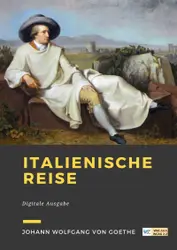
  4. Italienische Reise

    Johann Wolfgang Goethe

  5. Die 100 schönsten Liebesromane zu Weihnachten : Eine Weihnachtsanthologie großer Liebesklassiker von Romantik bis zur frühen Moderne

    Louisa May Alcott, Jane Austen, Hedwig Courths-Mahler, Lucy Maud Montgomery, Emily Brontë, Victor Hugo, F. Scott Fitzgerald, Frances Burney, Charlotte Brontë, Anne Brontë, Alexandre Dumas, Charles Dickens, Eugenie Marlitt, Wilhelmine Heimburg, Elisabeth Bürstenbinder, Stendhal, Johann Wolfgang Goethe, Pierre Choderlos Laclos, Walter Scott, Guy De Maupassant, George Sand, Gabriele D’Annunzio, Leo Tolstoi, Rudyard Kipling, Gustave Flaubert, Nathaniel Hawthorne, Jean-Jacques Rousseau, Bernardin de Saint-Pierre, Prosper Mérimée, François-René de Chateaubriand, Stefan Zweig, Eufemia von Adlersfeld-Ballestrem, Hermann Stehr, Sophie von Roche, William Shakespeare, Gottfried von Straßburg, Alexander Sergejewitsch Puschkin, Hermann Heiberg, D. H. Lawrence, Fjodor Dostojewski, Ida Boy-Ed, Arthur Schnitzler, Anatole France, Johanna Spyri, George Eliot, Nataly von Eschstruth, Marianne Ehrmann, Sophie Albrecht, Sophie Mereau, Caroline von Wolzogen, Christian August Vulpius, Benedikte Naubert, Johanna Schopenhauer, Frau von W., Levin Schücking, Hermann Stegemann

  6. Zwischen Religion und Rationalität : Erweiterte Ausgabe. Die Brüder Karamasow, Rot und Schwarz, Väter und Söhne, Der versiegelte Engel, Auferstehung, Faust

    Fjodor M Dostojewski, Klaus Mann, Robert Louis Stevenson, Lew Tolstoi, William Beckford, Nikolai Semjonowitsch Leskow, Charles Dickens, Johann Wolfgang Goethe, E. T. Hoffmann, Jeremias Gotthelf, Victor Hugo, Nikolai Gogol, Stendhal, Iwan Sergejewitsch Turgenew

  7. Die größten Gedichte der deutschen Literatur : Ein Panorama deutscher Lyrik von Klassik und Romantik bis zu Natur-, Liebes- und politischer Dichtung

    Heinrich Heine, Rainer Maria Rilke, Johann Wolfgang Goethe, Friedrich Schiller, Annette von Droste-Hülshoff, Joachim Ringelnatz, Christian Morgenstern, Georg Herwegh, Gotthold Ephraim Lessing, Achim von Arnim, Theodor Fontane, Wilhelm Hauff, Bettina von Arnim, Clemens Brentano, Eduard Mörike, Joseph von Eichendorff, Franz Werfel, Leopold Schefer, Gottfried Keller, Wilhelm Busch, Theodor Storm, Hermann Löns, Peter Rosegger, Erich Mühsam

  8. Klassiker der Lyrik : Eine Lyrikanthologie von Aufklärung und Klassik bis Romantik, Realismus und Moderne

    Rainer Maria Rilke, Johann Wolfgang Goethe, Friedrich Schiller, Annette von Droste-Hülshoff, Joachim Ringelnatz, Heinrich Heine, Christian Morgenstern, Georg Herwegh, Gotthold Ephraim Lessing, Achim von Arnim, Theodor Fontane, Wilhelm Hauff, Bettina von Arnim, Clemens Brentano, Eduard Mörike, Joseph von Eichendorff, Franz Werfel, Leopold Schefer, Gottfried Keller, Wilhelm Busch, Theodor Storm, Hermann Löns, Peter Rosegger, Erich Mühsam

  9. Die größten Regency-Liebesromane : Europäische Liebesromane zwischen Gesellschaftssatire, Standesunterschieden und weiblicher Bildung

    Frances Burney, Jane Austen, Marianne Ehrmann, Sophie Albrecht, Caroline von Wolzogen, Christian August Vulpius, Johanna Schopenhauer, Selma Lagerlöf, Benedikte Naubert, Anne Brontë, Charlotte Brontë, Emily Brontë, Johann Wolfgang Goethe, Hermann Stegemann, Stendhal, Levin Schücking, Gabriele D’Annunzio, Victor Hugo, Eufemia von Adlersfeld-Ballestrem, Bernardin de Saint-Pierre

  10. Italienische Reise (Ein Reisetagebuch) : Bereicherte Ausgabe. Eine poetische Reise durch das Italien des 18. Jahrhunderts

    Johann Wolfgang Goethe

  11. Unvergessliche Reisen der Selbstfindung : Klassiker des Entwicklungsromans über Selbstfindung, Bildung und Identität

    Voltaire, Jean-Jacques Rousseau, Johann Wolfgang Goethe, Christoph Martin Wieland, Robert Musil, Charlotte Brontë, Stendhal, Charles Dickens, Fjodor Michailowitsch Dostojewski, Jack London, Gottfried Keller, Daniel Defoe, Gustave Flaubert, Alessandro Manzoni, Frances Hodgson Burnett, Mark Twain, Henry Fielding, John Cleland, Lou Andreas-Salomé, Adalbert Stifter, Emile Zola, Waldemar Bonsels, Rudyard Kipling, Laurence Sterne, Selma Lagerlöf, Paul Scheerbart, Andre Gide, D. H. Lawrence, Charles-Louis Philippe

  12. Die größten Meister der deutschen Lyrik : Eine Anthologie deutscher Dichtung von Klassik und Romantik bis zur Moderne und politischen Lyrik

    Johann Wolfgang Goethe, Friedrich Schiller, Annette von Droste-Hülshoff, Rainer Maria Rilke, Joachim Ringelnatz, Christian Morgenstern, Georg Herwegh, Gotthold Ephraim Lessing, Achim von Arnim, Theodor Fontane, Frank Wedekind, Wilhelm Hauff, lhelm Hauff, Karl May, Bettina von Arnim, Clemens Brentano, Eduard Mörike, Joseph von Eichendorff, Gustav Freytag, Franz Werfel, Willibald Alexis, Leopold Schefer, Gottfried Keller, Wilhelm Busch, Theodor Storm, Hermann Löns, Peter Rosegger, Louise Otto, Erich Mühsam

Über dieses Buch

180 Masterpieces of World Literature (Vol. 2) assembles an ambitious transnational canon, tracing literature's enduring concerns with love, power, faith, social injustice, exploration, crime, memory, and the formation of the self. Its range is striking: epic and philosophical reflection stand beside Gothic sensation, realist social observation, romance, satire, adventure, detective fiction, drama, and modernist experimentation. The volume's most compelling juxtapositions emerge where mythic imagination meets psychological depth and where intimate domestic narratives illuminate vast historical change. The contributors span classical antiquity, East Asian intellectual traditions, the European Enlightenment and Romanticism, nineteenth-century realism and naturalism, colonial and postcolonial encounter, and early twentieth-century modernism. Philosophers, poets, dramatists, and novelists from Europe, Asia, and the Americas bring distinct cultural inheritances to shared questions of morality, authority, desire, and social responsibility. Collectively, these voices reveal world literature not as a fixed hierarchy but as an evolving conversation among forms, languages, and historical experiences. This volume is especially recommended for readers seeking both breadth and serious literary encounter in a single book. It offers an educational gateway to major traditions while inviting comparison across genres and eras. Read consecutively or selectively, the collection rewards attention to the productive dialogue—sometimes harmonious, sometimes unsettling—among its many perspectives.

This enriched edition has been carefully crafted to add value to your reading experience.

- An Introduction draws the threads together, discussing why these diverse authors and texts belong in one collection.

- Historical Context explores the cultural and intellectual currents that shaped these works, offering insight into the shared (or contrasting) eras that influenced each writer.

- A combined Synopsis (Selection) briefly outlines the key plots or arguments of the included pieces, helping readers grasp the anthology's overall scope without giving away essential twists.

- A collective Analysis highlights common themes, stylistic variations, and significant crossovers in tone and technique, tying together writers from different backgrounds.

- Reflection questions encourage readers to compare the different voices and perspectives within the collection, fostering a richer understanding of the overarching conversation.