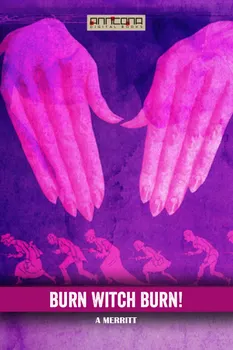
Burn, Witch, Burn! is a classic fantasy/horror and mystery novel by A. Merritt. Originally published as a magazine serial in 1924, and subtitled The Mystery of the Death Dolls - Was it Black Magic? It soon appeared as a book and by 1936 was used as a basis for the 1936 film The Devil Doll, directed by Tod Browning.Known for his science fiction here A. Merritt explores the world of supernatural horror. Dr. Lowell is a neurologist specializing in abnormal psychology. He is investigating a series of horrible deaths in New York. Then he meets Madame Mandilip, a doll shop owner, and her dolls from hell. “The man in the hospital room died a terrible death, slowly and in agony. His eyes were open, and on his face was an extraordinary expression of torror, a fear mixed with horror. There was nothing all the resources of medical science could do for him, not even diagnose his disease. There was no wound, nomarkn, nothing – except little globes of phosphorescence in his blood. And suddenly, at the last moment, a low chuckling sound came from his throat, inhuman, the laughter of a devil. And he was dead, dead with the face of a grinning, triumphant fiend - all humanity wiped from it.”Abraham Merritt (1884-1943), is one of the forgotten masters of weird fiction. His work ranges from horror (Burn Witch Burn) to epic fantasy (The Ship of Ishtar). His writing could be described as a blend of dark fantasy and the 19th century tale of adventure in the style of H. Rider Haggard, with a dash of the Conan Doyle of the Professor Challenger stories. Merritt's stories typically revolve around conventional pulp magazine themes: lost civilizations, hideous monsters, etc. His heroes are gallant Irishmen or Scandinavians, his villains treacherous Germans or Russians and his heroines often virginal, mysterious and scantily clad. What sets Merritt apart from the typical pulp author, however, is his lush, florid prose style and his exhaustive, at times exhausting, penchant for adjective-laden detail. Abraham Grace Merritt was inducted in The Science Fiction and Fantasy Hall of Fame in 1999, its fourth class of two deceased and two living writers.