Über dieses Buch

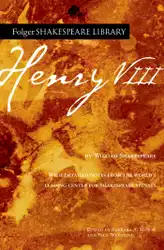
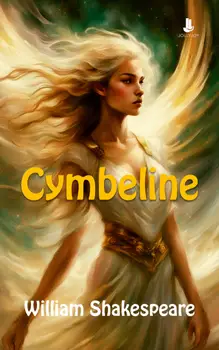
The sweethearts have traded gems as tokens: Imogen now with an armband, and Posthumus with a ring. Cymbeline denies the marriage and exiles, Posthumus, since Imogen, as Cymbeline's lone kid, should create a completely regal blooded beneficiary to prevail to the British lofty position. Meanwhile, Cymbeline's Queen is plotting to have Cloten, her cloddish and pompous child by a prior marriage wedded to Imogen, to get her bloodline. The Queen is likewise plotting to kill both Imogen and Cymbeline, securing what she accepts to be a lethal toxic substance from the court specialist, Cornelius, who, dubious, switches the toxin with a sleeping chemical. The Queen passes the "poison" along to Pisanio, Posthumus and Imogen's caring worker, who is persuaded to think it is a restorative medication. At this point not ready to be with her expelled Posthumus, Imogen segregates herself in her chambers, away from Cloten's forceful advances. Posthumus now resides in Italy, where he meets Iachimo (or Giacomo), who challenges the prideful Posthumus to a bet that he, Iachimo, can lure Imogen, who Posthumus has adulated for her purity, and afterward bring Posthumus proof of Imogen's infidelity. Assuming Iachimo wins, he will get Posthumus' symbolic ring. In the event, that Posthumus wins, not exclusively should Iachimo pay him but will battle him in a duel with blades. Iachimo heads to Britain where he forcefully endeavors to allure the loyal Imogen, who boots him out. Iachimo then stows away in a chest in Imogen's bedchamber and, when the princess dozes off, he arises to take Posthumus' wristband from her. He likewise observes the room and Imogen's incompletely exposed body to have the option to introduce misleading proof to Posthumus that he has enticed his lady. Getting back to Italy, Iachimo persuades Posthumus that he has effectively enticed Imogen. In his anger, Posthumus sends two letters to Britain: one to Imogen, advising her to meet him at Milford Haven, on the Welsh coast; the other to the worker Pisanio, requesting him to kill Imogen at the Haven. Notwithstanding, Pisanio won't kill Imogen and uncovers her Posthumus plot. He has Imogen mask herself as a boy and proceed to Milford Haven to look for work. He additionally gives her the Queen's "poison," accepting it will lighten her mental misery. In the pretense of a boy, Imogen takes on the name "Fidele," signifying "unwavering."Two arrangements of twins are isolated upon entering the world by a tempest adrift: a couple of bosses (both named Antipholus) and a couple of workers (both named Dromio). Years after the fact, the Antipholus-and-Dromio pair brought up in Syracuse end up visiting Ephesus, where the individual twins dwell - giving the premise to progressing occurrences of mixed-up personality, inside an energetic plot of fights, captures, and an excellent court result.
Starte noch heute mit diesem Buch für 0 €

  • Hole dir während der Testphase vollen Zugriff auf alle Bücher in der App
  • Keine Verpflichtungen, jederzeit kündbar
Jetzt kostenlos testen
Mehr als 52 000 Menschen haben Nextory im App Store und auf Google Play 5 Sterne gegeben.

Mehr von William Shakespeare

  1. 3.0

    200 Meisterwerke der Literaturgeschichte (Kommentiert) : Erweiterte Ausgabe. Die größten Klassiker der Weltliteratur

    Franz Kafka, Victor Hugo, Fjodor Michailowitsch Dostojewski, Lord Byron, Giacomo Leopardi, Marcel Proust, Henrik Ibsen, Percy Bysshe Shelley, Charles Dickens, Jane Austen, Mary Shelley, Emily Brontë, Charlotte Brontë, Anne Brontë, William Makepeace Thackeray, Bram Stoker, Henry Fielding, George Eliot, William Shakespeare, D. H. Lawrence, Walt Whitman, Herman Melville, Thomas Wolfe, Virginia Woolf, Joseph Conrad, Sinclair Lewis, Lewis Carrol, Edgar Allan Poe, Edward Bulwer-Lytton, Oscar Wilde, H.G. Wells, Daniel Defoe, James Fenimore Cooper, Lew Wallace, Jonathan Swift, Mark Twain, Walter Scott, Nathaniel Hawthorne, Harriet Beecher Stowe, Laurence Sterne, Frances Hodgson Burnett, Arthur Conan Doyle, Wilkie Collins, Edgar Wallace, Robert Louis Stevenson, Jack London, Henry David Thoreau, John Galsworthy, F. Scott Fitzgerald, Rudyard Kipling, G.K. Chesterton, Washington Irvin, O.Henry, Ambrose Bierce, Alexander Sergejewitsch Puschkin, Michail Lermontow, Iwan Sergejewitsch Turgenew, Leo Tolstoi, Nikolai Gogol, Iwan Gontscharow, Nikolai Leskow, Anton Pawlowitsch Tschechow, Maxim Gorki, François Rabelais, Jean De Fontaine, Blaise Pascal, Pierre Corneille, Moliere, Jean Baptiste Racine, Charles Perrault, Voltaire, Denis Diderot, Jean-Jacques Rousseau, Pierre Ambroise Laclos, Antoine-François Prévost, Marquis De Sade, François René Chateaubriand, Stendhal, Honoré de Balzac, Alexandre Dumas, Alphonse de Lamartine, George Sand, Gustave Flaubert, Emile Zola, Guy De Maupassant, Alphonse Daudet, Jules Verne, Joris-Karl Huysmans, Prosper Mérimée, Charles Baudelaire, Stéphane Mallarmé, Arthur Rimbaud, André Gide, Arthur Schopenhauer, Heinrich Heine, Friedrich Schiller, Johann Wolfgang Goethe, Jacob Grimm, Gottfried von Straßburg, Wolfram von Eschenbach, E. T. Hoffmann, Annette von Droste-Hülshoff, Heinrich von Kleist, Friedrich Hölderlin, Theodor Fontane, Gustav Freytag, Gottfried Keller, Theodor Storm, Stefan Zweig, Joseph von Eichendorff, Klaus Mann, Rainer Maria Rilke, Johanna Spyri, Joseph Roth, Karl May, Robert Musil, Heinrich Mann, Sigmund Freud, Friedrich Nietzsche, Dante Alighieri, Giovanni Boccaccio, Giacomo Casanova, Luigi Pirandello, Giosuè Carducci, Gabriele D’Annunzio, Niccolo Machiavelli, Miguel Cervantes Saavedra, Pedro Calderón Barca, Vicente Blasco Ibañez, Knut Hamsun, Homer, Äsop, Herodot, Thukydides, Xenophon, Platon, - Aristoteles, - Sophokles, Euripides, - Aristophanes, Lao Tse, - Konfuzius, Siddhartha Gautama Buddha, Titus Livius, Tacitus, Marcus Tullius Cicero, Vergil, Ovid, Lukian, Petronius, Apuleius, Longos von Lesbos, Mark Aurel, Aurelius Augustinus

  2. 100 Klassiker der Romantik - Meisterwerke, die man kennen muss : Liebes-, Bildungs- und Gesellschaftsromane der europäischen Literaturgeschichte

    Jane Austen, Louisa May Alcott, D. H. Lawrence, Fjodor Dostojewski, William Shakespeare, Hedwig Courths-Mahler, Frances Burney, Charlotte Brontë, Alexandre Dumas, Margaret Mitchell, Charles Dickens, L.M. Montgomery, Eugenie Marlitt, Wilhelmine Heimburg, Elisabeth Bürstenbinder, Stendhal, Johann Wolfgang Goethe, Walter Scott, Guy De Maupassant, Victor Hugo, George Sand, Leo Tolstoi, Gabriele D’Annunzio, Rudyard Kipling, Gustave Flaubert, Nathaniel Hawthorne, Jean-Jacques Rousseau, Bernardin de Saint-Pierre, F. Scott Fitzgerald, Prosper Mérimée, Edith Wharton, Lena Christ, François-René de Chateaubriand, Stefan Zweig, Alexander Sergejewitsch Puschkin, Ida Boy-Ed, Arthur Schnitzler, Anatole France, Johanna Spyri, George Eliot, Gaston Leroux, Nataly von Eschstruth, Gottfried von Straßburg, Sophie Mereau, Caroline von Wolzogen, Benedikte Naubert, Henry De Stacpoole, Levin Schücking

  3. 1.0

    100 Meisterwerke der Weltliteratur - Klassiker die man kennen muss : Bereicherte Ausgabe. Ein literarisches Panorama: Meisterwerke, Klassiker und Autoren der Weltliteratur

    Johann Wolfgang Goethe, Jules Verne, Gustave Flaubert, Franz Kafka, Lewis Carroll, Selma Lagerlöf, Sigmund Freud, Johanna Spyri, Theodor Storm, Rainer Maria Rilke, Charles Dickens, Stefan Zweig, Heinrich Heine, Honoré de Balzac, Theodor Fontane, Karl May, Gottfried Keller, Mark Twain, Heinrich Mann, Else Lasker-Schüler, Robert Musil, Walt Whitman, Oscar Wilde, Annette von Droste-Hülshoff, Arthur Schopenhauer, Robert Louis Stevenson, Gustav Freytag, James Fenimore Cooper, Edgar Allan Poe, Heinrich von Kleist, William Shakespeare, Dante Alighieri, Charlotte Brontë, Emily Brontë, Jack London, Arthur Conan Doyle, Joseph Conrad, Jane Austen, Herman Melville, Guy De Maupassant, Walter Scott, Jonathan Swift, Jacob Grimm, Wilhelm Grimm, Alexandre Dumas, Rudyard Kipling, Nathaniel Hawthorne, Homer, O.Henry, Voltaire, Lew Wallace, John Galsworthy, E. T. Hoffmann, Marcus Aurelius, Hans Christian Andersen, Anton Pawlowitsch Tschechow, Platon, Friedrich Nietzsche, Iwan Sergejewitsch Turgenew, Tacitus, Nikolai Gogol, Miguel de Cervantes, Mary Shelley, Thomas Wolfe, Emile Zola, Fjodor Michailowitsch Dostojewski, Leo Tolstoi, Joseph Roth, Joseph von Eichendorff, Kurt Tucholsky, Iwan Alexandrowitsch Gontscharow, Oswald Spengler, Moliere, Alfred Adler, Sophie von Roche, Klaus Mann, Rumi

  4. 100 Meisterwerke der englischen Literatur - Klassiker, die man kennen muss (Kommentiert) : Erweiterte Ausgabe. Hamlet, 1984, Ulysses...

    George Orwell, Charles Dickens, Jane Austen, Katherine Mansfield, H.P. Lovecraft, William Wordsworth, John Keats, Percy Bysshe Shelley, Robert Burns, John Milton, William Shakespeare, Christopher Marlowe, Geoffrey Chaucer, Laurence Sterne, Henry Fielding, Mary Shelley, Emily Brontë, Charlotte Brontë, Anne Brontë, William Makepeace Thackeray, George Eliot, D. H. Lawrence, Herman Melville, Thomas Wolfe, Virginia Woolf, Joseph Conrad, Sinclair Lewis, Walt Whitman, Edgar Allan Poe, Oscar Wilde, Jerome K Jerome, Washington Irving, Bram Stoker, H.G. Wells, Daniel Defoe, Lew Wallace, James Fenimore Cooper, Jonathan Swift, Robert Louis Stevenson, Mark Twain, Lewis Carrol, Edward Bulwer-Lytton, F. Scott Fitzgerald, Arthur Conan Doyle, Jack London, Henry David Thoreau, G.K. Chesterton, Edith Wharton, Henry James, Thomas Hardy, Margaret Mitchell, Kate Chopin, Willa Cather, Charlotte Perkins Gilman, James Joyce, John Galsworthy, Francis Hodgson Burnett, Lucy Maud Montgomery, Louisa May Alcott, Rudyard Kipling

  5. 4.1

    Hamlet

    William Shakespeare

  6. 2.7

    A Midsummer Night’s Dream

    William Shakespeare

  7. William Shakespeare: Meisterwerke der Erzählkunst : Klassiker der Weltliteratur: Dramen, Komödien und Sonette

    William Shakespeare

  8. 3.8

    Macbeth

    William Shakespeare

  9. 4.0

    Patrick Stewart Performs the Complete Sonnets of William Shakespeare : With Original Commentary by Patrick Stewart

    William Shakespeare, Patrick Stewart

  10. Viel Lärm um nichts. Eine Komödie. : Hörbuchzeit: Klassiker der Weltliteratur

    Hörbuchzeit, William Shakespeare

  11. 4.0
    #6

    Much Ado About Nothing

    William Shakespeare

  12. 5.0

    Hamlet

    William Shakespeare