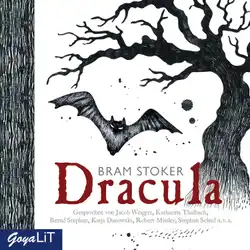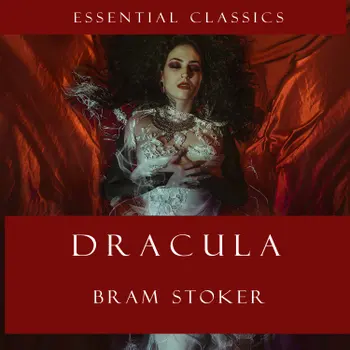
Dracula

Dracula is a Gothic horror novel by Bram Stoker, considered to be one of the most enduring and skillful examples of the modern vampire genre. It tells the story of Count Dracula, and of Professor Abraham Van Helsing, who attempts to thwart the vampire in his attempt to move from Transylvania to London, in order to find new blood and spread the undead curse. This Essential Classics edition includes a new introduction by Professor Vivian Heller, Ph.D. in literature and modern studies from Yale University.

Bram Stoker was a 19th-century Irish writer best known for Dracula. During his lifetime, Stoker was also the business manager of the Lyceum Theater in London. In order to write Dracula, Stoker spent years researching European folklore and vampire mythology, and the product was the book that would become a classic of horror fiction.

Vivian Heller received her Ph.D. in English Literature and Modern Studies from Yale University. She is author of Joyce, Decadence, and Emancipation(University of Illinois Press) and of The City Beneath Us (W.W. Norton & Company), a history of the building of the New York City subway system. She is an associate at Columbia's School of Professional Studies and is the writing tutor for the Center for Curatorial Studies at Bard College. She is also a long-standing member of the non-fiction committee of the PEN Prison-Writing Committee, which awards prizes to inmates from across the country.

Essential Classics publishes the most crucial literary works throughout history, with a unique introduction to each, making them the perfect treasure for any reader's shelf.

Starte noch heute mit diesem Buch für 0 €

  • Hole dir während der Testphase vollen Zugriff auf alle Bücher in der App
  • Keine Verpflichtungen, jederzeit kündbar
Jetzt kostenlos testen
Mehr als 52 000 Menschen haben Nextory im App Store und auf Google Play 5 Sterne gegeben.

  1. 100 Meisterwerke der englischen Literatur - Klassiker, die man kennen muss

    George Orwell, Charles Dickens, Jane Austen, Katherine Mansfield, H.P. Lovecraft, William Wordsworth, John Keats, Percy Bysshe Shelley, Robert Burns, John Milton, William Shakespeare, Christopher Marlowe, Geoffrey Chaucer, Laurence Sterne, Henry Fielding, Mary Shelley, Emily Brontë, Charlotte Brontë, Anne Brontë, William Makepeace Thackeray, George Eliot, D. H. Lawrence, Herman Melville, Thomas Wolfe, Virginia Woolf, Joseph Conrad, Sinclair Lewis, Walt Whitman, Edgar Allan Poe, Oscar Wilde, Jerome K Jerome, Washington Irving, Bram Stoker, H.G. Wells, Daniel Defoe, Lew Wallace, James Fenimore Cooper, Jonathan Swift, Robert Louis Stevenson, Mark Twain, Lewis Carrol, Edward Bulwer-Lytton, F. Scott Fitzgerald, Arthur Conan Doyle, Jack London, Henry David Thoreau, G.K. Chesterton, Edith Wharton, Henry James, Thomas Hardy, Margaret Mitchell, Kate Chopin, Willa Cather, Charlotte Perkins Gilman, James Joyce, John Galsworthy, Francis Hodgson Burnett, Lucy Maud Montgomery, Louisa May Alcott, Rudyard Kipling

  2. 3.0

    200 Meisterwerke der Literaturgeschichte : Die größten Klassiker der Weltliteratur

    Franz Kafka, Victor Hugo, Fjodor Michailowitsch Dostojewski, Lord Byron, Giacomo Leopardi, Marcel Proust, Henrik Ibsen, Percy Bysshe Shelley, Charles Dickens, Jane Austen, Mary Shelley, Emily Brontë, Charlotte Brontë, Anne Brontë, William Makepeace Thackeray, Bram Stoker, Henry Fielding, George Eliot, William Shakespeare, D. H. Lawrence, Walt Whitman, Herman Melville, Thomas Wolfe, Virginia Woolf, Joseph Conrad, Sinclair Lewis, Lewis Carrol, Edgar Allan Poe, Edward Bulwer-Lytton, Oscar Wilde, H.G. Wells, Daniel Defoe, James Fenimore Cooper, Lew Wallace, Jonathan Swift, Robert Louis Stevenson, Mark Twain, Walter Scott, Nathaniel Hawthorne, Harriet Beecher Stowe, Laurence Sterne, Frances Hodgson Burnett, Arthur Conan Doyle, Wilkie Collins, Edgar Wallace, Jack London, Henry David Thoreau, John Galsworthy, F. Scott Fitzgerald, Rudyard Kipling, G.K. Chesterton, Washington Irvin, O.Henry, Ambrose Bierce, Alexander Sergejewitsch Puschkin, Michail Lermontow, Iwan Sergejewitsch Turgenew, Leo Tolstoi, Nikolai Gogol, Iwan Gontscharow, Nikolai Leskow, Anton Pawlowitsch Tschechow, Maxim Gorki, François Rabelais, Jean de la Fontaine, Blaise Pascal, Pierre Corneille, Moliere, Jean Baptiste Racine, Charles Perrault, Voltaire, Denis Diderot, Jean-Jacques Rousseau, Pierre-Ambroise Choderlos de Laclos, Antoine-François Prévost, Marquis De Sade, François René Chateaubriand, Stendhal, Honoré de Balzac, Alexandre Dumas, Alphonse de Lamartine, George Sand, Gustave Flaubert, Emile Zola, Guy De Maupassant, Alphonse Daudet, Jules Verne, Joris-Karl Huysmans, Prosper Mérimée, Charles Baudelaire, Stéphane Mallarmé, Arthur Rimbaud, André Gide, Arthur Schopenhauer, Heinrich Heine, Friedrich Schiller, Johann Wolfgang von Goethe, Jacob Grimm, Gottfried von Straßburg, Wolfram von Eschenbach, E T A Hoffmann, Annette von Droste-Hülshoff, Heinrich von Kleist, Friedrich Hölderlin, Theodor Fontane, Gustav Freytag, Gottfried Keller, Theodor Storm, Stefan Zweig, Joseph von Eichendorff, Klaus Mann, Rainer Maria Rilke, Johanna Spyri, Joseph Roth, Karl May, Robert Musil, Heinrich Mann, Sigmund Freud, Friedrich Nietzsche, Dante Alighieri, Giovanni Boccaccio, Giacomo Casanova, Luigi Pirandello, Giosuè Carducci, Gabriele D’Annunzio, Niccolo Machiavelli, Miguel Cervantes de Saavedra, Pedro Calderón de la Barca, Vicente Blasco Ibañez, Knut Hamsun, Homer, Äsop, Herodot, Thukydides, Xenophon, Platon, - Aristoteles, - Sophokles, Euripides, - Aristophanes, Lao Tse, - Konfuzius, Siddhartha Gautama Buddha, Titus Livius, Tacitus, Marcus Tullius Cicero, Vergil, Ovid, Lukian, Petronius, Apuleius, Longos von Lesbos, Mark Aurel, Aurelius Augustinus

  3. 4.8

    Dracula Hörbuch

    Bram Stoker

  4. Gekürzt
    4.3

    Dracula

    Bram Stoker

  5. Dracula

    Bram Stoker

  6. 3.9

    Dracula Audiobook

    Bram Stoker

  7. 4.3

    Dracula :

    Bram Stoker

  8. 200 Literarische Meisterwerke der Weltgeschichte : Die größten Klassiker aus Deutschland, England, den USA, Russland und Frankreich

    Lew Tolstoi, Virginia Woolf, Henrik Ibsen, Franz Kafka, Fjodor Michailowitsch Dostojewski, Lord Byron, Victor Hugo, Giacomo Leopardi, Marcel Proust, Percy Bysshe Shelley, Charles Dickens, Jane Austen, Mary Shelley, Emily Brontë, Charlotte Brontë, Anne Brontë, William Makepeace Thackeray, Bram Stoker, Henry Fielding, George Eliot, William Shakespeare, D. H. Lawrence, Walt Whitman, Herman Melville, Thomas Wolfe, Joseph Conrad, Sinclair Lewis, Lewis Carrol, Edgar Allan Poe, Edward Bulwer-Lytton, Oscar Wilde, H.G. Wells, Daniel Defoe, James Fenimore Cooper, Lew Wallace, Jonathan Swift, Robert Louis Stevenson, Mark Twain, Walter Scott, Nathaniel Hawthorne, Harriet Beecher Stowe, Laurence Sterne, Frances Hodgson Burnett, Arthur Conan Doyle, Wilkie Collins, Edgar Wallace, Jack London, Henry David Thoreau, John Galsworthy, F. Scott Fitzgerald, Rudyard Kipling, G.K. Chesterton, Alexander Sergejewitsch Puschkin, Leo Tolstoi, Nikolai Gogol, Charles Baudelaire, Arthur Rimbaud, Edmond Rostand, Jean Giraudoux, André Gide, Arthur Schopenhauer, Heinrich Heine, Friedrich Schiller, Johann Wolfgang von Goethe, Jacob Grimm, Wilhelm Grimm, Gottfried von Straßburg, Wolfram von Eschenbach, E T A Hoffmann, Annette von Droste-Hülshoff, Dante Alighieri, Giovanni Boccaccio, Luigi Pirandello, Niccolo Machiavelli, Miguel Cervantes de Saavedra, Pedro Calderón de la Barca, Vicente Blasco Ibañez, Knut Hamsun, Friedrich Nietzsche, Homer, Äsop, Herodot, Thukydides, Xenophon, Platon, - Aristoteles, Tacitus, - Konfuzius, Siddhartha Gautama Buddha, Marcus Tullius Cicero, Vergil, Ovid, Mark Aurel, Aurelius Augustinus

  9. Die großen Meister des Horrors, 6 Hörspiele

    Edgar Allan, Bram Stoker, Mary Shelley, E T A Hoffmann

  10. Dracula

    Bram Stoker

  11. 4.0

    Dracula and Carmilla (Unabridged)

    Bram Stoker, Joseph Sheridan

  12. 4.3
    #2

    Gruselkabinett, Folge 2: Das Amulett der Mumie

    Bram Stoker