Über dieses Buch

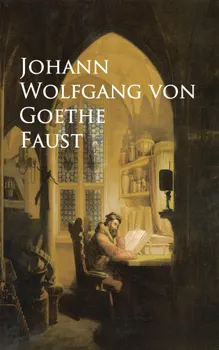
Faust: The First Part of the Tragedy is the first part of Goethe's Faust and is considered by many as the greatest work of German literature. It was first published in 1808. The first part of Faust is not divided into acts, but is structured as a sequence of scenes in a variety of settings. After a dedicatory poem and a prelude in the theater, the actual plot begins with a prologue in Heaven, where the Lord challenges Mephistopheles, the Devil, that Mephistopheles cannot lead astray the Lord's favourite striving scholar, Dr. Faust. We then see Faust in his study, who, disappointed of science with natural means, attempts and fails to gain knowledge of nature and the universe by magical ones. The dejected Faust contemplates suicide, but is held back by the sounds of the beginning Easter celebrations. He joins his assistant Wagner for an Easter walk in the countryside, among the celebrating people, and is followed home by a poodle. Back in the study, the poodle transforms itself into Mephistopheles, who offers Faust a contract: he will do Faust's bidding on earth, and Faust will do the same for him in hell (if, as Faust adds in an important side clause, Mephisto can get him to be satisfied and to want a moment to last forever). Faust signs in blood, and Mephisto first takes him to Auerbach's tavern in Leipzig, where the devil plays tricks on some drunken revellers. Having then been transformed into a young man by a witch, Faust encounters Margaret (Gretchen) and she excites his desires. Through a scheme involving jewellery and Gretchen's neighbour Marthe, Mephisto brings about Faust's and Gretchen's liaison. After a period of separation, Faust seduces Gretchen, who accidentally kills her mother with a sleeping potion Faust had given her. Gretchen is pregnant, and her torment is further increased when Faust and Mephisto kill her enraged brother in a sword fight.

Starte noch heute mit diesem Buch für 0 €

  • Hole dir während der Testphase vollen Zugriff auf alle Bücher in der App
  • Keine Verpflichtungen, jederzeit kündbar
Jetzt kostenlos testen
Mehr als 52 000 Menschen haben Nextory im App Store und auf Google Play 5 Sterne gegeben.

Ähnliche Bücher

  1. 3.8
    #2

    Die Leiden des jungen Werther - Hörbuch Klassiker

    Johann Wolfgang von Goethe, Hörbuch Klassiker

  2. Lyrikalische Bibliothek

    Heinrich Heine, Annette von Droste-Hülshoff, Charles Baudelaire, John Keats, Rainer Maria Rilke, Georg Heym, Wilhelm Busch, Arno Holz, Johann Wolfgang von Goethe, Christian Morgenstern, Joachim Ringelnatz, Georg Trakl, Ludwig Tieck, Stefan Zweig, Hugo von Hoffmannsthal, Edgar Allan Poe, Frank Wedekind, Franz Werfel, Wolfgang Borchert, Karl Kraus, Kurt Tucholsky, Friedrich Nietzsche, Else Lasker-Schüler, Ludwig Kalisch, Jakob van Hoddis, Joseph von Eichendorff, Gotthold Ephraim Lessing

  3. #3

    Dramen erleben!, Folge 3: Faust I - Eine Tragödie - Schauspiel mit Erläuterungen (ungekürzt)

    Johann Wolfgang von Goethe

  4. Wilhelm Meisters Lehrjahre - Hörbuch Klassiker

    Johann Wolfgang von Goethe, Hörbuch Klassiker

  5. Die Wahlverwandtschaften - Hörbuch Klassiker

    Johann Wolfgang von Goethe, Hörbuch Klassiker

  6. 3.0

    Hermann und Dorothea - Hörbuch Klassiker

    Johann Wolfgang von Goethe, Hörbuch Klassiker

  7. Wilhelm Meisters Wanderjahre - Hörbuch Klassiker

    Johann Wolfgang von Goethe, Hörbuch Klassiker

  8. Johann Wolfgang von Goethe: Faust. Die komplette Hörbuch Edition : Der Tragödier erster und zweiter Teil. Vollständig und ungekürzt vorgetragen.

    Johann Wolfgang von Goethe

  9. 10 Masterpieces You Have to Read Before You Die, Vol.5 : The Odyssey, The Republic, Meditations, The Divine Comedy, Faust and others

    Homer, Plato, Aristotle, Marcus Aurelius, Niccolo Machiavelli, Dante Alighieri, Johann Wolfgang von Goethe, Leo Tolstoy

  10. 5.0
    #3

    Faust 1 und Faust 2 - Hörbuch Klassiker

    Johann Wolfgang von Goethe, Hörbuch Klassiker

  11. 5.0

    Faust von J. W. von Goethe - Weltliteratur für Kinder (ungekürzt)

    Johann Wolfgang von Goethe, Barbara Kindermann

  12. Italienische Reise

    Johann Wolfgang von Goethe