Über dieses Buch

Freshwater: A Comedy presents Virginia Woolf's playful dramatization of the Victorian artistic circle gathered around her great-aunt, the photographer Julia Margaret Cameron, on the Isle of Wight. In both the 1923 and revised 1935 versions, Woolf transforms family legend, aesthetic debate, and theatrical farce into a compact comic experiment. Its witty dialogue, exaggerated characterization, and self-conscious artificiality place it beside modernist parodies of biography and history, while its treatment of art, marriage, reputation, and female eccentricity anticipates Woolf's broader challenges to Victorian cultural authority. Woolf's intimate connection to the Stephen and Cameron families gave her unusual access to the myths she satirizes. As the daughter of Leslie Stephen and a central figure in the Bloomsbury Group, she inherited both the burden of Victorian seriousness and the freedom to mock it. Freshwater reflects her fascination with biography, performance, and the instability of historical memory, concerns central to works such as Orlando and Flush. This edition is recommended for readers interested in Woolf beyond the novel: her humor, theatrical intelligence, and irreverent modernism. It is especially valuable for students of Bloomsbury, feminist literary history, and the afterlife of Victorian art.

This enriched edition has been carefully crafted to add value to your reading experience.

- A comprehensive Introduction outlines these selected works' unifying features, themes, or stylistic evolutions.

- The Author Biography highlights personal milestones and literary influences that shape the entire body of writing.

- A Historical Context section situates the works in their broader era—social currents, cultural trends, and key events that underpin their creation.

- A concise Synopsis (Selection) offers an accessible overview of the included texts, helping readers navigate plotlines and main ideas without revealing critical twists.

- A unified Analysis examines recurring motifs and stylistic hallmarks across the collection, tying the stories together while spotlighting the different work's strengths.

- Reflection questions inspire deeper contemplation of the author's overarching message, inviting readers to draw connections among different texts and relate them to modern contexts.

- Lastly, our hand‐picked Memorable Quotes distill pivotal lines and turning points, serving as touchstones for the collection's central themes.
Starte noch heute mit diesem Buch für 0 €

  • Hole dir während der Testphase vollen Zugriff auf alle Bücher in der App
  • Keine Verpflichtungen, jederzeit kündbar
Jetzt kostenlos testen
Mehr als 52 000 Menschen haben Nextory im App Store und auf Google Play 5 Sterne gegeben.

Mehr von Virginia Woolf

  1. Orlando - Hörbuch Klassiker

    Virginia Woolf, Hörbuch Klassiker

  2. Die größten Heldinnen der Literatur (50 Romane in einem Band) : 50 Romane über weibliche Selbstbehauptung, Bildung und gesellschaftliche Grenzen

    Charlotte Brontë, Jane Austen, Louisa May Alcott, Leo Tolstoi, Virginia Woolf, Thomas Hardy, Sinclair Lewis, Hedwig Dohm, Charlotte Perkins Gilman, Elizabeth Burgoyne Corbett, Daniel Defoe, Anne Brontë, L.M. Montgomery, Victor Hugo, Wilhelmine von Hillern, Adalbert Stifter, Luise Ahlborn, George Eliot, Lou Andreas-Salomé, Stefan Zweig, D. H. Lawrence, Henry James, Margaret Mitchell, Edith Wharton, Miles Franklin, Willa Cather, Elizabeth Gaskell, Nikolai Semjonowitsch Leskow, Theodore Dreiser, Elizabeth von Arnim, Colette, Honoré de Balzac, William Makepeace Thackeray, Gustave Flaubert, Emile Zola, Theodor Fontane, Ada Langworthy Collier, Joseph Sheridan Fanu, Johanna Schopenhauer, Nathaniel Hawthorne, Charles Dickens

  3. 3.0

    200 Meisterwerke der Literaturgeschichte (Kommentiert) : Erweiterte Ausgabe. Die größten Klassiker der Weltliteratur

    Franz Kafka, Victor Hugo, Fjodor Michailowitsch Dostojewski, Lord Byron, Giacomo Leopardi, Marcel Proust, Henrik Ibsen, Percy Bysshe Shelley, Charles Dickens, Jane Austen, Mary Shelley, Emily Brontë, Charlotte Brontë, Anne Brontë, William Makepeace Thackeray, Bram Stoker, Henry Fielding, George Eliot, William Shakespeare, D. H. Lawrence, Walt Whitman, Herman Melville, Thomas Wolfe, Virginia Woolf, Joseph Conrad, Sinclair Lewis, Lewis Carrol, Edgar Allan Poe, Edward Bulwer-Lytton, Oscar Wilde, H.G. Wells, Daniel Defoe, James Fenimore Cooper, Lew Wallace, Jonathan Swift, Mark Twain, Walter Scott, Nathaniel Hawthorne, Harriet Beecher Stowe, Laurence Sterne, Frances Hodgson Burnett, Arthur Conan Doyle, Wilkie Collins, Edgar Wallace, Robert Louis Stevenson, Jack London, Henry David Thoreau, John Galsworthy, F. Scott Fitzgerald, Rudyard Kipling, G.K. Chesterton, Washington Irvin, O.Henry, Ambrose Bierce, Alexander Sergejewitsch Puschkin, Michail Lermontow, Iwan Sergejewitsch Turgenew, Leo Tolstoi, Nikolai Gogol, Iwan Gontscharow, Nikolai Leskow, Anton Pawlowitsch Tschechow, Maxim Gorki, François Rabelais, Jean De Fontaine, Blaise Pascal, Pierre Corneille, Moliere, Jean Baptiste Racine, Charles Perrault, Voltaire, Denis Diderot, Jean-Jacques Rousseau, Pierre Ambroise Laclos, Antoine-François Prévost, Marquis De Sade, François René Chateaubriand, Stendhal, Honoré de Balzac, Alexandre Dumas, Alphonse de Lamartine, George Sand, Gustave Flaubert, Emile Zola, Guy De Maupassant, Alphonse Daudet, Jules Verne, Joris-Karl Huysmans, Prosper Mérimée, Charles Baudelaire, Stéphane Mallarmé, Arthur Rimbaud, André Gide, Arthur Schopenhauer, Heinrich Heine, Friedrich Schiller, Johann Wolfgang Goethe, Jacob Grimm, Gottfried von Straßburg, Wolfram von Eschenbach, E. T. Hoffmann, Annette von Droste-Hülshoff, Heinrich von Kleist, Friedrich Hölderlin, Theodor Fontane, Gustav Freytag, Gottfried Keller, Theodor Storm, Stefan Zweig, Joseph von Eichendorff, Klaus Mann, Rainer Maria Rilke, Johanna Spyri, Joseph Roth, Karl May, Robert Musil, Heinrich Mann, Sigmund Freud, Friedrich Nietzsche, Dante Alighieri, Giovanni Boccaccio, Giacomo Casanova, Luigi Pirandello, Giosuè Carducci, Gabriele D’Annunzio, Niccolo Machiavelli, Miguel Cervantes Saavedra, Pedro Calderón Barca, Vicente Blasco Ibañez, Knut Hamsun, Homer, Äsop, Herodot, Thukydides, Xenophon, Platon, - Aristoteles, - Sophokles, Euripides, - Aristophanes, Lao Tse, - Konfuzius, Siddhartha Gautama Buddha, Titus Livius, Tacitus, Marcus Tullius Cicero, Vergil, Ovid, Lukian, Petronius, Apuleius, Longos von Lesbos, Mark Aurel, Aurelius Augustinus

  4. 4.2

    Ein Zimmer für sich allein

    Virginia Woolf

  5. Vom Kranksein

    Virginia Woolf

  6. 20 Feministische Klassiker für junge Aktivistinnen : Klassische Texte zu Frauenrechten, Bildung, Ehekritik und sozialer Emanzipation

    Virginia Woolf, Rosa Luxemburg, Kate Chopin, Charlotte Perkins Gilman, Mary Wollstonecraft, Elizabeth Cady Stanton, Matilda Joslyn Gage, John Stuart Mill, Louise Otto, Clara Zetkin, Rosa Mayreder, Bertha Pappenheim, Charlotte Brontë, George Sand, Louisa May Alcott, Sinclair Lewis, Henrik Ibsen, Elizabeth Burgoyne Corbett, Miles Franklin

  7. Zum Leuchtturm - Virginia Woolf (ungekürzt)

    Virginia Woolf

  8. 3.7

    Mrs Dalloway

    Virginia Woolf

  9. Neu

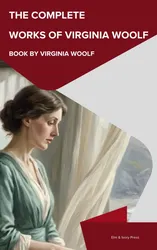
    The Complete Works of Virginia Woolf

    Virginia Woolf

  10. 4.0

    The Waves

    Virginia Woolf

  11. 4.3

    A Room of One's Own

    Virginia Woolf

  12. Ein eigenes Zimmer

    Virginia Woolf