Über dieses Buch

'There will be a resurrection – a resurrection that should not be imagined politically… but it will be a resurrection. Goetheanism still rests in the grave as far as external culture is concerned. But Goetheanism must rise again.' In the first winter following the Great War, Rudolf Steiner appealed to the spirit of Central Europe – which he characterized as Goetheanism – that had been languishing for decades. Only such a spiritual force could provide answers to the pressing social, national and international questions of the time. A new constellation of polar, hostile opposition had emerged after the war, with the East and Bolshevism on one side, and the victorious West and Americanism on the other. In the middle, with no apparent role or hope for the future, was the defeated Central Europe. But this 'centre', beseeched Steiner, should not become a vacuum. Rather, it needs to discover its true, world-historical task.In this context, with deep seriousness and urgency, Rudolf Steiner speaks of the work of Goetheanism, which begins with understanding the threefold human being and leads to threefolding the social organism. Steiner goes on to describe the decisive role of the consciousness soul in the present epoch, and how Schiller's Aesthetic Letters and Goethe's Fairy Tale relate to contemporary challenges. He discusses a multitude of seemingly diverse but interrelated themes, such as the migration of peoples in the past and present, the thinking of John of the Cross, and the modern path of spirit cognition. The first English publication of these lectures features an introduction by Christian von Arnim, notes and an index. Twelve lectures, Dornach, Jan.–Feb. 1919, GA 188

Starte noch heute mit diesem Buch für 0 €

  • Hole dir während der Testphase vollen Zugriff auf alle Bücher in der App
  • Keine Verpflichtungen, jederzeit kündbar
Jetzt kostenlos testen
Mehr als 52 000 Menschen haben Nextory im App Store und auf Google Play 5 Sterne gegeben.

  1. Neu

    Rudolf Steiner : Ausgesprochenes und Unausgesprochenes im Denken, Schauen, Sinnen einer Reihe deutscher und österreichischer Persönlichkeiten. Ein Grundlagenwerk der Anthroposophie

    Rudolf Steiner

  2. #21

    Die geistige Führung des Menschen und der Menschheit : Geisteswissenschaftliche Ergebnisse über die Menschheits-Entwicklung

    Rudolf Steiner

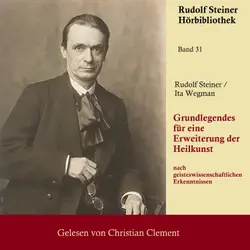
  3. #31

    Grundlegendes für eine Erweiterung der Heilkunst : nach geisteswissenschaftlichen Erkenntnissen

    Rudolf Steiner, Ita Wegman

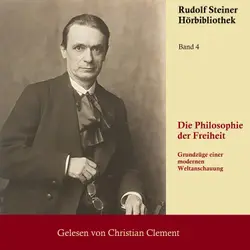
  4. #4

    Die Philosophie der Freiheit : Grundzüge einer modernen Weltanschauung

    Rudolf Steiner

  5. Die vergängliche Wahrheit in der Metaphysik : Erweiterte Ausgabe. Metaphysische Anfangsgründe der Naturwissenschaft, Träume eines Geistersehers, Grundzüge der Philosophie, Götzen-Dämmerung

    Platon, - Aristoteles, Plotin, Thomas von Aquin, René Descartes, Baruch Spinoza, Thomas Hobbes, Immanuel Kant, Gottfried Wilhelm Leibniz, Friedrich Wilhelm Schelling, Georg Wilhelm Hegel, Arthur Schopenhauer, Moses Mendelssohn, Friedrich Nietzsche, Rudolf Steiner

  6. Die Philosophie der Freiheit : Bereicherte Ausgabe. Grundzüge einer modernen Weltanschauung - seelische Beobachtungsresultate nach naturwissenschaftlicher Methode: die Vorbereitung der Anthroposophie

    Rudolf Steiner

  7. Der Seelen Erwachen : Bereicherte Ausgabe. Seelische und geistige Vorgänge in szenischen Bildern

    Rudolf Steiner

  8. Klassiker des philosophischen Denkens: Die große Hörbuch Box : Ein Grundlagenwerk der Philosophie

    Francesco Petrarca, Rudolf Steiner, - Konfuzius, Marc Aurel, Lao Tse, - Aristoteles, Platon, Lucius Annaeus Seneca, Voltaire, Max Stirner, Henry David Thoreau, Friedrich Nietzsche, Étienne de La Boétie, Epiktet, Blaise Pascal

  9. 5.0

    Rudolf Steiner: Philosophie der Freiheit : Grundzüge einer modernen Weltanschauung

    Rudolf Steiner

  10. Die Philosophie der Freiheit: Grundzüge einer modernen Weltanschauung - Seelische Beobachtungsresultate nach naturwissenschaftlicher Methode

    Rudolf Steiner

  11. Die Nebenübungen: Sechs Schritte zur Selbsterziehung

    Rudolf Steiner

  12. Stichwort Karma

    Rudolf Steiner