Über dieses Buch

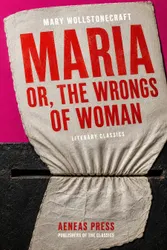
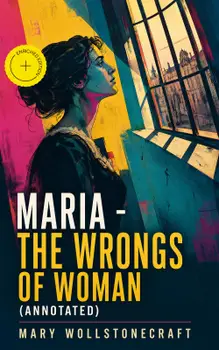
Mary Wollstonecraft's Maria; or, The Wrongs of Woman is an unfinished but powerful philosophical novel that exposes the legal, sexual, and economic oppression of women in late eighteenth-century Britain. Centered on Maria, confined to a madhouse by a tyrannical husband, the narrative blends Gothic confinement, sentimental intensity, and radical social critique. Through Maria's testimony and the story of Jemima, Wollstonecraft transforms fiction into an indictment of marriage laws, class hierarchy, and the moral hypocrisy governing female desire. Wollstonecraft, best known for A Vindication of the Rights of Woman, wrote from the intellectual ferment of the 1790s, when debates over revolution, reason, education, and citizenship reshaped European thought. Her own experiences of precarious independence, unconventional love, and social judgment inform the novel's urgency. Published posthumously in 1798 by William Godwin, the fragment reveals her developing effort to unite political argument with imaginative narrative. This book is essential for readers interested in feminist literary history, Romantic-era radicalism, and the origins of the social-protest novel. Though incomplete, it remains intellectually fierce, emotionally compelling, and strikingly modern in its analysis of gendered injustice.

This enriched edition has been carefully crafted to add value to your reading experience.

- A succinct Introduction situates the work's timeless appeal and themes.

- The Synopsis outlines the central plot, highlighting key developments without spoiling critical twists.

- A detailed Historical Context immerses you in the era's events and influences that shaped the writing.

- An Author Biography reveals milestones in the author's life, illuminating the personal insights behind the text.

- A thorough Analysis dissects symbols, motifs, and character arcs to unearth underlying meanings.

- Reflection questions prompt you to engage personally with the work's messages, connecting them to modern life.

- Hand‐picked Memorable Quotes shine a spotlight on moments of literary brilliance.

- Interactive footnotes clarify unusual references, historical allusions, and archaic phrases for an effortless, more informed read.

Starte noch heute mit diesem Buch für 0 €

  • Hole dir während der Testphase vollen Zugriff auf alle Bücher in der App
  • Keine Verpflichtungen, jederzeit kündbar
Jetzt kostenlos testen
Mehr als 52 000 Menschen haben Nextory im App Store und auf Google Play 5 Sterne gegeben.

Mehr von Mary Wollstonecraft

  1. 50 Klassiker des Feminismus - Bücher, die man kennen muss : Schlüsseltexte zu Frauenbildung, Ehekritik und Selbstbestimmung

    Kate Chopin, Charlotte Perkins Gilman, Virginia Woolf, Charlotte Brontë, George Sand, Louisa May Alcott, Jane Austen, L.M. Montgomery, Victor Hugo, Daniel Defoe, Nathaniel Hawthorne, Wilhelmine von Hillern, Adalbert Stifter, Luise Ahlborn, George Eliot, Lou Andreas-Salomé, D. H. Lawrence, Henry James, Margaret Mitchell, Edith Wharton, Miles Franklin, Willa Cather, Leo Tolstoi, Henrik Ibsen, Elizabeth Gaskell, Nikolai Semjonowitsch Leskow, Theodore Dreiser, Elizabeth von Arnim, Colette, Emmeline Pankhurst, Louise Aston, Bertha von Suttner, Hedwig Dohm, Mary Wollstonecraft, Elizabeth Cady Stanton, Matilda Joslyn Gage, John Stuart Mill, Thomas Hardy, Sinclair Lewis, Elizabeth Burgoyne Corbett, Anne Brontë

  2. 20 Feministische Klassiker für junge Aktivistinnen : Klassische Texte zu Frauenrechten, Bildung, Ehekritik und sozialer Emanzipation

    Virginia Woolf, Rosa Luxemburg, Kate Chopin, Charlotte Perkins Gilman, Mary Wollstonecraft, Elizabeth Cady Stanton, Matilda Joslyn Gage, John Stuart Mill, Louise Otto, Clara Zetkin, Rosa Mayreder, Bertha Pappenheim, Charlotte Brontë, George Sand, Louisa May Alcott, Sinclair Lewis, Henrik Ibsen, Elizabeth Burgoyne Corbett, Miles Franklin

  3. 50 Regency-Romantik-Romane : Europäische Liebes-, Gesellschafts- und Schauerromane über Stand, Ehe und weibliche Selbstbestimmung

    Jane Austen, Susan Ferrier, Frances Burney, Eliza Haywood, Jeffery Farnol, Walter Scott, Mary Wollstonecraft, Johanna Schopenhauer, Victor Hugo, Lew Tolstoi, Pierre Ambroise Laclos, Sophie Mereau, Emily Brontë, Marianne Ehrmann, Germaine de Staël, Caroline von Wolzogen, Benedikte Naubert, Sophie von Roche, Dorothea Schlegel, Bernardin de Saint-Pierre, Charlotte Brontë, Anne Brontë, Rafael Sabatini, Christian August Vulpius, Hermann Stegemann

  4. The Essential Feminist Collection – 60 Powerful Classics in One Volume : Sixty Classics of Women's Rights, Intellectual Freedom, and Social Change

    Jane Austen, Charlotte Brontë, Fanny Burney, Mary Wollstonecraft, Nathaniel Hawthorne, Rebecca Harding Davis, Louisa May Alcott, Henry James, Leo Tolstoy, Thomas Hardy, Elizabeth Gaskell, Charlotte Perkins Gilman, Henrik Ibsen, Kate Chopin, Grant Allen, Elizabeth Burgoyne Corbett, H.G. Wells, Gene Stratton-Porter, Willa Cather, Edith Wharton, Theodore Dreiser, Ada Cambridge, Mary Johnston, Marietta Holley, Elia Wilkinson Peattie, Virginia Woolf, Zona Gale, Elizabeth von Arnim, D. H. Lawrence, Margaret Oliphant, Lucy Maud Montgomery, Margaret Mitchell, Harriet Martineau, Nikolai Leskov, Margaret Deland, Sojourner Truth, Mary Ware Dennett, John Stuart Mill, Sarah H. Bradford, Julia Ward Howe, Elizabeth Cady Stanton, Margaret Fuller

  5. Neu

    The Love Letters of Mary Wollstonecraft to Gilbert Imlay

    Mary Wollstonecraft

  6. 2.7

    A Vindication of the Rights of Woman

    Mary Wollstonecraft

  7. 2.7

    A Vindication of the Rights of Woman

    Mary Wollstonecraft

  8. Una doble vindicación : Textos seleccionados

    Mary Wollstonecraft

  9. 4.0

    Mary (Nórdica Clásicos)

    Mary Wollstonecraft

  10. Maria : or, The Wrongs of Woman

    Mary Wollstonecraft

  11. 2.7

    A Vindication of the Rights of Woman

    Mary Wollstonecraft

  12. A Vindication of the Rights of Woman : The 1792 Argument That Women Deserve an Education, Not Just Admiration

    Mary Wollstonecraft