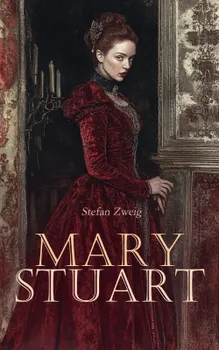
Mary Stuart : Historical Novel: A Dramatic Exploration of Power, Betrayal, and the Feminine Struggle in Scotland's Royal Court

In "Mary Stuart," Stefan Zweig masterfully navigates the tumultuous life of the iconic Scottish queen, weaving a narrative that pulsates with drama and psychological depth. Zweig employs a lyrical and empathetic literary style, combining rich character portraits with historical accuracy to explore the themes of power, betrayal, and the tragic fate of a misunderstood monarch. Set against the backdrop of the 16th-century political intrigues, the book illuminates the complexities of Mary's relationships, particularly with her cousin Elizabeth I, revealing the intricate web of loyalties and enmities that shaped their destinies. Stefan Zweig, an Austrian writer of significant acclaim during the early 20th century, is known for his profound psychological insight into historical figures. His experiences as a Jewish intellectual during the rise of Nazism likely fueled his interest in Mary Stuart; he sought to understand the motivations behind historical events and individual actions. Zweig's own exile and dislocation parallels Mary's struggle for identity and legitimacy, making this work a poignant reflection on power and vulnerability. "Mary Stuart" is essential reading for anyone interested in history, psychology, or political drama. Zweig's ability to draw readers into the emotional and ethical dilemmas faced by his protagonist makes this book not just a historical account, but a timeless exploration of the human condition. Highly recommended for both scholars and casual readers alike, it is a profound meditation on the nature of sovereignty and the costs of ambition. This translation has been assisted by artificial intelligence.

Starte noch heute mit diesem Buch für 0 €

  • Hole dir während der Testphase vollen Zugriff auf alle Bücher in der App
  • Keine Verpflichtungen, jederzeit kündbar
Jetzt kostenlos testen
Mehr als 52 000 Menschen haben Nextory im App Store und auf Google Play 5 Sterne gegeben.

  1. Die größten Heldinnen der Literatur (50 Romane in einem Band)

    Charlotte Brontë, Jane Austen, Louisa May Alcott, Leo Tolstoi, Virginia Woolf, Thomas Hardy, Sinclair Lewis, Hedwig Dohm, Charlotte Perkins Gilman, Elizabeth Burgoyne Corbett, Daniel Defoe, Anne Brontë, L.M. Montgomery, Victor Hugo, Wilhelmine von Hillern, Adalbert Stifter, Luise Ahlborn, George Eliot, Lou Andreas-Salomé, Stefan Zweig, D. H. Lawrence, Henry James, Margaret Mitchell, Edith Wharton, Miles Franklin, Willa Cather, Elizabeth Gaskell, Nikolai Semjonowitsch Leskow, Theodore Dreiser, Elizabeth von Arnim, Colette, Honoré de Balzac, William Makepeace Thackeray, Gustave Flaubert, Emile Zola, Theodor Fontane, Ada Langworthy Collier, Joseph Sheridan Le Fanu, Johanna Schopenhauer, Nathaniel Hawthorne, Charles Dickens

  2. 5.0

    Die Welt von gestern - Hörbuch Klassiker

    Stefan Zweig, Hörbuch Klassiker

  3. 3.0

    200 Meisterwerke der Literaturgeschichte : Die größten Klassiker der Weltliteratur

    Franz Kafka, Victor Hugo, Fjodor Michailowitsch Dostojewski, Lord Byron, Giacomo Leopardi, Marcel Proust, Henrik Ibsen, Percy Bysshe Shelley, Charles Dickens, Jane Austen, Mary Shelley, Emily Brontë, Charlotte Brontë, Anne Brontë, William Makepeace Thackeray, Bram Stoker, Henry Fielding, George Eliot, William Shakespeare, D. H. Lawrence, Walt Whitman, Herman Melville, Thomas Wolfe, Virginia Woolf, Joseph Conrad, Sinclair Lewis, Lewis Carrol, Edgar Allan Poe, Edward Bulwer-Lytton, Oscar Wilde, H.G. Wells, Daniel Defoe, James Fenimore Cooper, Lew Wallace, Jonathan Swift, Robert Louis Stevenson, Mark Twain, Walter Scott, Nathaniel Hawthorne, Harriet Beecher Stowe, Laurence Sterne, Frances Hodgson Burnett, Arthur Conan Doyle, Wilkie Collins, Edgar Wallace, Jack London, Henry David Thoreau, John Galsworthy, F. Scott Fitzgerald, Rudyard Kipling, G.K. Chesterton, Washington Irvin, O.Henry, Ambrose Bierce, Alexander Sergejewitsch Puschkin, Michail Lermontow, Iwan Sergejewitsch Turgenew, Leo Tolstoi, Nikolai Gogol, Iwan Gontscharow, Nikolai Leskow, Anton Pawlowitsch Tschechow, Maxim Gorki, François Rabelais, Jean de la Fontaine, Blaise Pascal, Pierre Corneille, Moliere, Jean Baptiste Racine, Charles Perrault, Voltaire, Denis Diderot, Jean-Jacques Rousseau, Pierre-Ambroise Choderlos de Laclos, Antoine-François Prévost, Marquis De Sade, François René Chateaubriand, Stendhal, Honoré de Balzac, Alexandre Dumas, Alphonse de Lamartine, George Sand, Gustave Flaubert, Emile Zola, Guy De Maupassant, Alphonse Daudet, Jules Verne, Joris-Karl Huysmans, Prosper Mérimée, Charles Baudelaire, Stéphane Mallarmé, Arthur Rimbaud, André Gide, Arthur Schopenhauer, Heinrich Heine, Friedrich Schiller, Johann Wolfgang von Goethe, Jacob Grimm, Gottfried von Straßburg, Wolfram von Eschenbach, E T A Hoffmann, Annette von Droste-Hülshoff, Heinrich von Kleist, Friedrich Hölderlin, Theodor Fontane, Gustav Freytag, Gottfried Keller, Theodor Storm, Stefan Zweig, Joseph von Eichendorff, Klaus Mann, Rainer Maria Rilke, Johanna Spyri, Joseph Roth, Karl May, Robert Musil, Heinrich Mann, Sigmund Freud, Friedrich Nietzsche, Dante Alighieri, Giovanni Boccaccio, Giacomo Casanova, Luigi Pirandello, Giosuè Carducci, Gabriele D’Annunzio, Niccolo Machiavelli, Miguel Cervantes de Saavedra, Pedro Calderón de la Barca, Vicente Blasco Ibañez, Knut Hamsun, Homer, Äsop, Herodot, Thukydides, Xenophon, Platon, - Aristoteles, - Sophokles, Euripides, - Aristophanes, Lao Tse, - Konfuzius, Siddhartha Gautama Buddha, Titus Livius, Tacitus, Marcus Tullius Cicero, Vergil, Ovid, Lukian, Petronius, Apuleius, Longos von Lesbos, Mark Aurel, Aurelius Augustinus

  4. 4.5

    Schachnovelle (Ungekürzte Fassung)

    Stefan Zweig

  5. Grusel, Horror und noch mehr Schauer - Die große Hörbuch Box : Klassiker der Weltliteratur

    Rudolf von Rüts, Jack London, E T A Hoffmann, Ambrose Bierce, H.G. Wells, Robert Louis Stevenson, Edgar Allan Poe, Stefan Zweig, Guy De Maupassant, Jeremias Gotthelf, H.P. Lovecraft, Nathaniel Hawthorne, Friedrich Glauser, Frédéric Boutet

  6. Auf den Spuren des Unbewussten: : Meilensteine der österreichischen Literatur
    Stefan Zweig, Hugo Bettauer, Robert Musil, Hugo von Hofmannsthal, Joseph Roth, Arthur Schnitzler, Felix Salten

  7. 4.0

    Ungeduld des Herzens - Hörbuch Klassiker
    Stefan Zweig, Hörbuch Klassiker

  8. 4.0

    Schachnovelle - Hörbuch Klassiker

    Stefan Zweig, Hörbuch Klassiker

  9. 100 Klassiker der Romantik - Meisterwerke, die man kennen muss : Epische Liebesdramen und große Erwartungen in zeitlosen Geschichten

    Jane Austen, Louisa May Alcott, D. H. Lawrence, Fjodor Dostojewski, William Shakespeare, Hedwig Courths-Mahler, Frances Burney, Charlotte Brontë, Alexandre Dumas, Margaret Mitchell, Charles Dickens, L.M. Montgomery, Eugenie Marlitt, Wilhelmine Heimburg, Elisabeth Bürstenbinder, Stendhal, Johann Wolfgang von Goethe, Walter Scott, Guy De Maupassant, Victor Hugo, George Sand, Leo Tolstoi, Gabriele D’Annunzio, Rudyard Kipling, Gustave Flaubert, Nathaniel Hawthorne, Jean-Jacques Rousseau, Bernardin de Saint-Pierre, F. Scott Fitzgerald, Prosper Mérimée, Edith Wharton, Lena Christ, François-René de Chateaubriand, Stefan Zweig, Alexander Sergejewitsch Puschkin, Ida Boy-Ed, Arthur Schnitzler, Anatole France, Johanna Spyri, George Eliot, Gaston Leroux, Nataly von Eschstruth, Gottfried von Straßburg, Sophie Mereau, Caroline von Wolzogen, Benedikte Naubert, Henry De Vere Stacpoole, Levin Schücking

  10. Deutschland: Das große Hörbuch der deutschen Literatur : Bibliothek der Klassiker
    Marie von Ebner-Eschenbach, Joseph von Eichendorff, Stefan Zweig, Rainer Maria Rilke, Friedrich Schiller, Joseph Roth, Jakob Wassermann, Hans Fallada, Franz Kafka

  11. Rezensionen 6 : Eulenspiegel Redivivus, Lord Byron, Walt Whitman, Ulysses von James Joyce, Oblomow, Triumph der Kathedrale.
    Stefan Zweig

  12. Die Geschichten der Konquistadoren: Historische Werke : Der letzte Sonnensohn, Geschichte der Entdeckung und Eroberung Perus, Francisco Pizarro, Magellan

    Francisco de Xerez, Stefan Zweig, Jules Verne, Jakob Wassermann, Wilhelm Cremer, Arthur Schurig, Johannes Scherr