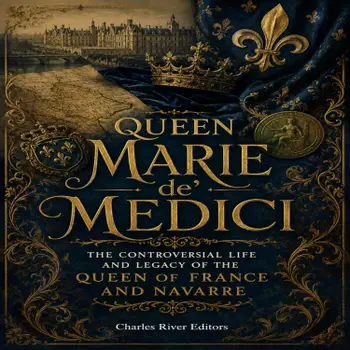
Queen Marie de' Medici: The Controversial Life and Legacy of the Queen of France and Navarre

In the summer of 1642, an old woman died in a rented house in Cologne, far from the country she had once ruled, attended by a small and shabby household and pressed by debts she could not pay. She had been a French queen, the regent of the kingdom, the wife of one of the greatest French kings, the mother of another, a daughter of the Medici, and a granddaughter of emperors. She had commanded armies, reversed the policy of a dead king, married her children into the royal houses of Europe, and raised from obscurity the most formidable minister in France’s long history. At the end, she died in exile and near poverty, abandoned by her son and broken by the very statesman she had made. She was a queen with no court and a mother with no welcome in her own land. Her name was Marie de’ Medici, and her death closed one of the strangest and most cautionary tales of the 17th century.

At the start, it seemed she had been born to have a different destiny. A century after her family seized the reins in Florence, and two generations after another Florentine Medici, Catherine de’ Medici, had governed France as queen mother through its wars of religion, Marie de’ Medici followed the same path from the banks of the Arno River to the throne of the Bourbons. She came to France as a bride bought with a fortune, intended to mend the finances of a king who needed her dowry more than he desired her as a person. She bore him the heir he required, endured his mistresses and his coldness, and was crowned at last the day before an assassin’s knife made her a widow and a ruler. For seven years, she governed France in her young son’s name, and for years after that she fought him and his minister for the power she had lost, until the long struggle ended in her ruin.

History has not been kind to her, and much of the unkindness is deserved. As a ruler, Queen Marie de’ Medici was stubborn, shortsighted, and easily led, and she squandered much of the strength her murdered husband labored to build.

Über dieses Buch

In the summer of 1642, an old woman died in a rented house in Cologne, far from the country she had once ruled, attended by a small and shabby household and pressed by debts she could not pay. She had been a French queen, the regent of the kingdom, the wife of one of the greatest French kings, the mother of another, a daughter of the Medici, and a granddaughter of emperors. She had commanded armies, reversed the policy of a dead king, married her children into the royal houses of Europe, and raised from obscurity the most formidable minister in France’s long history. At the end, she died in exile and near poverty, abandoned by her son and broken by the very statesman she had made. She was a queen with no court and a mother with no welcome in her own land. Her name was Marie de’ Medici, and her death closed one of the strangest and most cautionary tales of the 17th century.

At the start, it seemed she had been born to have a different destiny. A century after her family seized the reins in Florence, and two generations after another Florentine Medici, Catherine de’ Medici, had governed France as queen mother through its wars of religion, Marie de’ Medici followed the same path from the banks of the Arno River to the throne of the Bourbons. She came to France as a bride bought with a fortune, intended to mend the finances of a king who needed her dowry more than he desired her as a person. She bore him the heir he required, endured his mistresses and his coldness, and was crowned at last the day before an assassin’s knife made her a widow and a ruler. For seven years, she governed France in her young son’s name, and for years after that she fought him and his minister for the power she had lost, until the long struggle ended in her ruin.

History has not been kind to her, and much of the unkindness is deserved. As a ruler, Queen Marie de’ Medici was stubborn, shortsighted, and easily led, and she squandered much of the strength her murdered husband labored to build.
Starte noch heute mit diesem Buch für 0 €

  • Hole dir während der Testphase vollen Zugriff auf alle Bücher in der App
  • Keine Verpflichtungen, jederzeit kündbar
Jetzt kostenlos testen
Mehr als 52 000 Menschen haben Nextory im App Store und auf Google Play 5 Sterne gegeben.

  1. The Iranian Revolution and Iran Hostage Crisis: The History of the Events that Broke American Relations with Iran

    Charles River Editors

  2. 4.3

    The Sentinelese: The History of the Uncontacted People on North Sentinel Island

    Charles River Editors

  3. 3.4

    Mustafa Kemal Atatürk and the Republic of Turkey: The History of the Ottoman Empire’s Collapse and the Establishment of a New State

    Charles River Editors

  4. Das mittelalterliche Russland: Die Geschichte und das Erbe der Gruppen, die den russischen Staat im Mittelalter entwickelten

    Charles River Editors

  5. 2.0

    Die Panzer: Die Geschichte und das Vermächtnis von Nazideutschlands berühmtesten Panzern des Zweiten Weltkriegs

    Charles River Editors

  6. Die Han-Dynastie: Geschichte und Erbe des einflussreichsten Reiches des alten China

    Charles River Editors

  7. Japan in the World Wars: The History of the Imperial Japanese Empire during World War I and World War II

    Charles River Editors

  8. 4.0

    The Empires of India: The History of the Dynasties that Ruled India Before the British

    Charles River Editors

  9. Imperial Germany’s Colonization in Africa: The History of the German Efforts and Conflicts to Colonize Parts of Africa

    Charles River Editors

  10. The Ancient Kingdoms of Africa: The History and Legacy of the African Continent’s Most Prominent Kingdoms in Antiquity

    Charles River Editors

  11. The Spanish Empire in the Americas: The History of Spain’s Colonization across Central America and South America

    Charles River Editors

  12. Neu

    Cosimo de' Medici: The Life and Legacy of the Politician Who Established Florence’s Most Famous Family

    Charles River Editors