2.0(1)

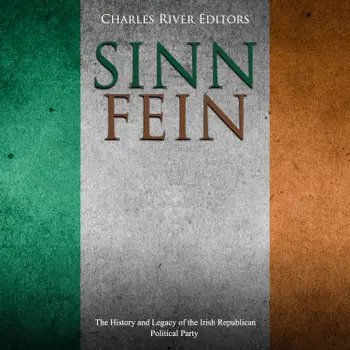
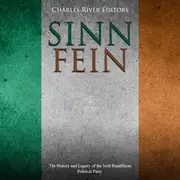
Sinn Féin: The History and Legacy of the Irish Republican Political Party

From Gaelic, the words Sinn Féin translate loosely into English as “We Ourselves,” or “Ourselves Alone.” The implications of this are that Ireland, historically subject to the political domination of England, could look to none but itself for liberation.

By the 18th century, the Irish Parliament and all of the institutions of the state were dominated by Protestants, with Catholics almost entirely excluded. In 1798, a rebellion was launched by the “United Irishmen,” one of the first underground nationalist Republican organizations with the stated objective of overthrowing English rule and replacing it with an Irish republic based on the precepts of the recent French Revolution. The rebellion failed, but the English response was to dissolve the Irish Parliament and integrate Ireland directly into the United Kingdom. Ireland then became integral to the United Kingdom of Great Britain and Ireland which was ruled directly from Whitehall under the terms of the 1800 Act of Union. A certain number of Irish members were granted seats in the Parliament of Westminster, and, for all intents and purposes, Ireland existed as a province of the United Kingdom.

Thereafter, the tone of Irish political dialogue shifted somewhat, with the objective of moderate Irish nationalists no longer absolute independence from England, but the restoration of an Irish Parliament and a degree of self-government while remaining on some level a dependency of the British Empire. The two signature names in this process were Daniel O’Connell, Member of the Westminster Parliament who campaigned on a platform of repealing the Act of Union, and Charles Stewart Parnell, also a member of the British Parliament, who, between 1880 and 1891, called for “Home Rule.”

Über dieses Buch

From Gaelic, the words Sinn Féin translate loosely into English as “We Ourselves,” or “Ourselves Alone.” The implications of this are that Ireland, historically subject to the political domination of England, could look to none but itself for liberation.

By the 18th century, the Irish Parliament and all of the institutions of the state were dominated by Protestants, with Catholics almost entirely excluded. In 1798, a rebellion was launched by the “United Irishmen,” one of the first underground nationalist Republican organizations with the stated objective of overthrowing English rule and replacing it with an Irish republic based on the precepts of the recent French Revolution. The rebellion failed, but the English response was to dissolve the Irish Parliament and integrate Ireland directly into the United Kingdom. Ireland then became integral to the United Kingdom of Great Britain and Ireland which was ruled directly from Whitehall under the terms of the 1800 Act of Union. A certain number of Irish members were granted seats in the Parliament of Westminster, and, for all intents and purposes, Ireland existed as a province of the United Kingdom.

Thereafter, the tone of Irish political dialogue shifted somewhat, with the objective of moderate Irish nationalists no longer absolute independence from England, but the restoration of an Irish Parliament and a degree of self-government while remaining on some level a dependency of the British Empire. The two signature names in this process were Daniel O’Connell, Member of the Westminster Parliament who campaigned on a platform of repealing the Act of Union, and Charles Stewart Parnell, also a member of the British Parliament, who, between 1880 and 1891, called for “Home Rule.”
Starte noch heute mit diesem Buch für 0 €

  • Hole dir während der Testphase vollen Zugriff auf alle Bücher in der App
  • Keine Verpflichtungen, jederzeit kündbar
Jetzt kostenlos testen
Mehr als 52 000 Menschen haben Nextory im App Store und auf Google Play 5 Sterne gegeben.

  1. 2.0

    Die Panzer: Die Geschichte und das Vermächtnis von Nazideutschlands berühmtesten Panzern des Zweiten Weltkriegs

    Charles River Editors

  2. The Christianization of Rome: The History of the Roman Empire’s Religious Conversion

    Charles River Editors

  3. Kublai Khan and Marco Polo: The History of a Unique Partnership at the Court of the Mongol Empire

    Charles River Editors

  4. Imperial Germany’s Colonization in Africa: The History of the German Efforts and Conflicts to Colonize Parts of Africa

    Charles River Editors

  5. Ada Lovelace: The Life and Legacy of the Math Prodigy Who Pioneered Computer Science

    Charles River Editors

  6. 4.5

    The Great Schism: The History and Legacy of the Split Between the Catholic and Eastern Orthodox Churches in 1054

    Charles River Editors

  7. Byzantium and Constantinople: The History of the Ancient Greek City that Became the Byzantine Empire’s Capital

    Charles River Editors

  8. The Native Americans of the Great Plains: The History of the Region’s Biggest Indigenous Tribes

    Charles River Editors

  9. The Texas Revolution and Mexican-American War: The History and Legacy of the Conflicts that Led to Mexico’s Cession of the American Southwest

    Charles River Editors

  10. The Moors of Andalusia: The History of the Muslims in the Iberian Peninsula during the Middle Ages

    Charles River Editors

  11. Das mittelalterliche Russland: Die Geschichte und das Erbe der Gruppen, die den russischen Staat im Mittelalter entwickelten

    Charles River Editors

  12. 3.0

    Byzantium: The History of the Ancient Greek City Before It Became Constantinople

    Charles River Editors