Über dieses Buch

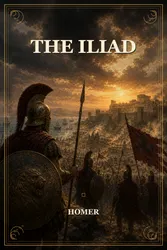
Although the story covers only a few weeks in the final year of the war, the Iliad mentions or alludes to many of the Greek legends about the siege; the earlier events, such as the gathering of warriors for the siege, the cause of the war, and related concerns tend to appear near the beginning. Then the epic narrative takes up events prophesied for the future, such as Achilles' looming death and the sack of Troy, although the narrative ends before these events take place. However, as these events are prefigured and alluded to more and more vividly, when it reaches an end the poem has told a more or less complete tale of the Trojan War.

The Iliad is paired with something of a sequel, the Odyssey, also attributed to Homer. Along with the Odyssey, the Iliad is among the oldest extant works of Western literature, and its written version is usually dated to around the 8th century BC. Recent statistical modelling based on language evolution gives a date of 760–710 BC. In the modern vulgate (the standard accepted version), the Iliad contains 15,693 lines; it is written in Homeric Greek, a literary amalgam of Ionic Greek and other dialects.

Starte noch heute mit diesem Buch für 0 €

  • Hole dir während der Testphase vollen Zugriff auf alle Bücher in der App
  • Keine Verpflichtungen, jederzeit kündbar
Jetzt kostenlos testen
Mehr als 52 000 Menschen haben Nextory im App Store und auf Google Play 5 Sterne gegeben.

Mehr von Homer

  1. 3.3

    Ilias

    Homer

  2. 5.0

    Die Odyssee - Hörbuch

    Homer

  3. 4.0

    The Odyssey

    Homer

  4. 3.0

    200 Meisterwerke der Literaturgeschichte (Kommentiert) : Erweiterte Ausgabe. Die größten Klassiker der Weltliteratur

    Franz Kafka, Victor Hugo, Fjodor Michailowitsch Dostojewski, Lord Byron, Giacomo Leopardi, Marcel Proust, Henrik Ibsen, Percy Bysshe Shelley, Charles Dickens, Jane Austen, Mary Shelley, Emily Brontë, Charlotte Brontë, Anne Brontë, William Makepeace Thackeray, Bram Stoker, Henry Fielding, George Eliot, William Shakespeare, D. H. Lawrence, Walt Whitman, Herman Melville, Thomas Wolfe, Virginia Woolf, Joseph Conrad, Sinclair Lewis, Lewis Carrol, Edgar Allan Poe, Edward Bulwer-Lytton, Oscar Wilde, H.G. Wells, Daniel Defoe, James Fenimore Cooper, Lew Wallace, Jonathan Swift, Mark Twain, Walter Scott, Nathaniel Hawthorne, Harriet Beecher Stowe, Laurence Sterne, Frances Hodgson Burnett, Arthur Conan Doyle, Wilkie Collins, Edgar Wallace, Robert Louis Stevenson, Jack London, Henry David Thoreau, John Galsworthy, F. Scott Fitzgerald, Rudyard Kipling, G.K. Chesterton, Washington Irvin, O.Henry, Ambrose Bierce, Alexander Sergejewitsch Puschkin, Michail Lermontow, Iwan Sergejewitsch Turgenew, Leo Tolstoi, Nikolai Gogol, Iwan Gontscharow, Nikolai Leskow, Anton Pawlowitsch Tschechow, Maxim Gorki, François Rabelais, Jean De Fontaine, Blaise Pascal, Pierre Corneille, Moliere, Jean Baptiste Racine, Charles Perrault, Voltaire, Denis Diderot, Jean-Jacques Rousseau, Pierre Ambroise Laclos, Antoine-François Prévost, Marquis De Sade, François René Chateaubriand, Stendhal, Honoré de Balzac, Alexandre Dumas, Alphonse de Lamartine, George Sand, Gustave Flaubert, Emile Zola, Guy De Maupassant, Alphonse Daudet, Jules Verne, Joris-Karl Huysmans, Prosper Mérimée, Charles Baudelaire, Stéphane Mallarmé, Arthur Rimbaud, André Gide, Arthur Schopenhauer, Heinrich Heine, Friedrich Schiller, Johann Wolfgang Goethe, Jacob Grimm, Gottfried von Straßburg, Wolfram von Eschenbach, E. T. Hoffmann, Annette von Droste-Hülshoff, Heinrich von Kleist, Friedrich Hölderlin, Theodor Fontane, Gustav Freytag, Gottfried Keller, Theodor Storm, Stefan Zweig, Joseph von Eichendorff, Klaus Mann, Rainer Maria Rilke, Johanna Spyri, Joseph Roth, Karl May, Robert Musil, Heinrich Mann, Sigmund Freud, Friedrich Nietzsche, Dante Alighieri, Giovanni Boccaccio, Giacomo Casanova, Luigi Pirandello, Giosuè Carducci, Gabriele D’Annunzio, Niccolo Machiavelli, Miguel Cervantes Saavedra, Pedro Calderón Barca, Vicente Blasco Ibañez, Knut Hamsun, Homer, Äsop, Herodot, Thukydides, Xenophon, Platon, - Aristoteles, - Sophokles, Euripides, - Aristophanes, Lao Tse, - Konfuzius, Siddhartha Gautama Buddha, Titus Livius, Tacitus, Marcus Tullius Cicero, Vergil, Ovid, Lukian, Petronius, Apuleius, Longos von Lesbos, Mark Aurel, Aurelius Augustinus

  5. 3.7

    Odyssee

    Homer

  6. 1.0

    100 Meisterwerke der Weltliteratur - Klassiker die man kennen muss : Bereicherte Ausgabe. Ein literarisches Panorama: Meisterwerke, Klassiker und Autoren der Weltliteratur

    Johann Wolfgang Goethe, Jules Verne, Gustave Flaubert, Franz Kafka, Lewis Carroll, Selma Lagerlöf, Sigmund Freud, Johanna Spyri, Theodor Storm, Rainer Maria Rilke, Charles Dickens, Stefan Zweig, Heinrich Heine, Honoré de Balzac, Theodor Fontane, Karl May, Gottfried Keller, Mark Twain, Heinrich Mann, Else Lasker-Schüler, Robert Musil, Walt Whitman, Oscar Wilde, Annette von Droste-Hülshoff, Arthur Schopenhauer, Robert Louis Stevenson, Gustav Freytag, James Fenimore Cooper, Edgar Allan Poe, Heinrich von Kleist, William Shakespeare, Dante Alighieri, Charlotte Brontë, Emily Brontë, Jack London, Arthur Conan Doyle, Joseph Conrad, Jane Austen, Herman Melville, Guy De Maupassant, Walter Scott, Jonathan Swift, Jacob Grimm, Wilhelm Grimm, Alexandre Dumas, Rudyard Kipling, Nathaniel Hawthorne, Homer, O.Henry, Voltaire, Lew Wallace, John Galsworthy, E. T. Hoffmann, Marcus Aurelius, Hans Christian Andersen, Anton Pawlowitsch Tschechow, Platon, Friedrich Nietzsche, Iwan Sergejewitsch Turgenew, Tacitus, Nikolai Gogol, Miguel de Cervantes, Mary Shelley, Thomas Wolfe, Emile Zola, Fjodor Michailowitsch Dostojewski, Leo Tolstoi, Joseph Roth, Joseph von Eichendorff, Kurt Tucholsky, Iwan Alexandrowitsch Gontscharow, Oswald Spengler, Moliere, Alfred Adler, Sophie von Roche, Klaus Mann, Rumi

  7. Odyssee

    Homer

  8. 100 Meisterwerke der griechischen Antike - Klassiker, die man kennen muss : Ilias, Odyssee, Anabasis des Alexander des Großen, Der Staat, König Ödipus, Medea, Geschichte des peloponnesischen Kriegs

    Homer, Sappho -, Herodot, - Sophokles, Platon, Anakreon, Aischylos, Hesiod, Euripides, - Aristophanes, Thukydides, Xenophon, - Aristoteles, Epikur, Lukian, Epiktet, Alkiphron, Longos von Lesbos, Polybios, Plutarch, Eusebius, Arrian, Diogenes Laërtios

  9. 3.0

    HOMER: The Iliad & the Odyssey

    Homer

  10. 2.0

    The Odyssey

    Homer

  11. Homer: Ilias und Odyssee : Der Epen jeweils erster Gesang

    Homer

  12. Die größten Abenteuerromane aller Zeiten : Klassiker-Sammlung mit Seefahrten, Schatzsuche, Detektivfällen und Fantastik der Weltliteratur

    Jules Verne, Jack London, Karl May, Mark Twain, Alexandre Dumas, James Fenimore Cooper, Herman Melville, Jonathan Swift, Homer, Daniel Defoe, Robert Louis Stevenson, Walter Scott, Max Brand, Emilio Salgari, Victor Hugo, Edgar Allan Poe, Rudyard Kipling, Lewis Carroll, Charles Dickens, Carlo Collodi, Friedrich Gerstäcker, Sophie Wörishöffer, Amalie Schoppe, Joseph Conrad, Bram Stoker, Pierre Loti, Friedrich Wilhelm Mader, G.K. Chesterton, Arthur Conan Doyle, H.G. Wells, Gerhart Hauptmann, Robert Kraft, Lew Wallace, Maurice Leblanc, Zane Grey, Walther Kabel, Georg Engel, John Retcliffe, Bret Harte, Johannes Kaltenboeck, Kurt Floericke, Ann Stephens, Franz Treller, Charles Sealsfield, Friedrich Armand Strubberg, Jakob Wassermann, Miguel de Cervantes, Heinrich Zschokke, James Morier, Frederick Marryat