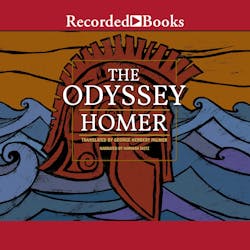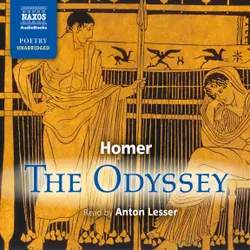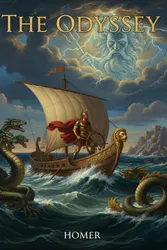
The Odyssey

The Odyssey, attributed to the ancient Greek poet Homer, is an exhilarating epic that follows the perilous, wonder-filled journey of Odysseus, king of Ithaca, as he struggles to return home after the Trojan War. Known for his wit, resourcefulness, and at times troublesome pride, Odysseus becomes the center of a sweeping adventure that moves across seas haunted by gods, monsters, and temptations that test his resolve at every turn. The story opens not with Odysseus himself, but with his household in turmoil. His wife, Penelope—renowned for her intelligence and steadfast loyalty—fends off relentless suitors who pressure her to abandon hope of Odysseus's return. Meanwhile, their son, Telemachus, steps hesitantly into adulthood, searching for news of his father and struggling to assert his place in a kingdom on the brink of collapse. His journey mirrors his father's in quieter ways, filled with lessons in honor, courage, and the responsibilities of leadership. Odysseus's own path is far harsher. As he attempts to sail home, he encounters the enchanting yet dangerous nymph Calypso, the hypnotic songs of the Sirens, the brutal force of the Cyclops Polyphemus, and the supernatural whims of gods like Athena and Poseidon—each shaping his fate in powerful ways. Through storms, shipwrecks, and divine interventions, Odysseus must rely on his cunning mind as much as his physical strength, while the tension of whether he will reach Ithaca—and what awaits him there—drives the story forward with gripping suspense.

The Odyssey stands as a cornerstone of Western literature, influencing centuries of storytelling, from epic fantasy to modern adventure narratives. Its exploration of identity, perseverance, and the longing for home resonates across cultures. The poem's enduring legacy continues to shape literary tradition, mythic imagination, and our understanding of the ancient world.

Über dieses Buch

The Odyssey, attributed to the ancient Greek poet Homer, is an exhilarating epic that follows the perilous, wonder-filled journey of Odysseus, king of Ithaca, as he struggles to return home after the Trojan War. Known for his wit, resourcefulness, and at times troublesome pride, Odysseus becomes the center of a sweeping adventure that moves across seas haunted by gods, monsters, and temptations that test his resolve at every turn. The story opens not with Odysseus himself, but with his household in turmoil. His wife, Penelope—renowned for her intelligence and steadfast loyalty—fends off relentless suitors who pressure her to abandon hope of Odysseus's return. Meanwhile, their son, Telemachus, steps hesitantly into adulthood, searching for news of his father and struggling to assert his place in a kingdom on the brink of collapse. His journey mirrors his father's in quieter ways, filled with lessons in honor, courage, and the responsibilities of leadership. Odysseus's own path is far harsher. As he attempts to sail home, he encounters the enchanting yet dangerous nymph Calypso, the hypnotic songs of the Sirens, the brutal force of the Cyclops Polyphemus, and the supernatural whims of gods like Athena and Poseidon—each shaping his fate in powerful ways. Through storms, shipwrecks, and divine interventions, Odysseus must rely on his cunning mind as much as his physical strength, while the tension of whether he will reach Ithaca—and what awaits him there—drives the story forward with gripping suspense.

The Odyssey stands as a cornerstone of Western literature, influencing centuries of storytelling, from epic fantasy to modern adventure narratives. Its exploration of identity, perseverance, and the longing for home resonates across cultures. The poem's enduring legacy continues to shape literary tradition, mythic imagination, and our understanding of the ancient world.

Starte noch heute mit diesem Buch für 0 €

  • Hole dir während der Testphase vollen Zugriff auf alle Bücher in der App
  • Keine Verpflichtungen, jederzeit kündbar
Jetzt kostenlos testen
Mehr als 52 000 Menschen haben Nextory im App Store und auf Google Play 5 Sterne gegeben.

  1. Homer: Ilias und Odyssee : Der Epen jeweils erster Gesang

    Homer

  2. 4.0

    The Odyssey

    Homer

  3. 3.8

    The Iliad

    Homer

  4. 4.5

    The Odyssey

    Homer

  5. 3.7

    Odyssee (Ungekürzte Lesung)

    Homer

  6. 4.0

    The Odyssey

    Homer

  7. 1.0

    100 Meisterwerke der Weltliteratur - Klassiker die man kennen muss : Bereicherte Ausgabe. Ein literarisches Panorama: Meisterwerke, Klassiker und Autoren der Weltliteratur

    Johann Wolfgang Goethe, Jules Verne, Gustave Flaubert, Franz Kafka, Lewis Carroll, Selma Lagerlöf, Sigmund Freud, Johanna Spyri, Theodor Storm, Rainer Maria Rilke, Charles Dickens, Stefan Zweig, Heinrich Heine, Honoré de Balzac, Theodor Fontane, Karl May, Gottfried Keller, Mark Twain, Heinrich Mann, Else Lasker-Schüler, Robert Musil, Walt Whitman, Oscar Wilde, Annette von Droste-Hülshoff, Arthur Schopenhauer, Robert Louis Stevenson, Gustav Freytag, James Fenimore Cooper, Edgar Allan Poe, Heinrich von Kleist, William Shakespeare, Dante Alighieri, Charlotte Brontë, Emily Brontë, Jack London, Arthur Conan Doyle, Joseph Conrad, Jane Austen, Herman Melville, Guy De Maupassant, Walter Scott, Jonathan Swift, Jacob Grimm, Wilhelm Grimm, Alexandre Dumas, Rudyard Kipling, Nathaniel Hawthorne, Homer, O.Henry, Voltaire, Lew Wallace, John Galsworthy, E. T. Hoffmann, Marcus Aurelius, Hans Christian Andersen, Anton Pawlowitsch Tschechow, Platon, Friedrich Nietzsche, Iwan Sergejewitsch Turgenew, Tacitus, Nikolai Gogol, Miguel de Cervantes, Mary Shelley, Thomas Wolfe, Emile Zola, Fjodor Michailowitsch Dostojewski, Leo Tolstoi, Joseph Roth, Joseph von Eichendorff, Kurt Tucholsky, Iwan Alexandrowitsch Gontscharow, Oswald Spengler, Moliere, Alfred Adler, Sophie von Roche, Klaus Mann, Rumi

  8. 3.0

    200 Meisterwerke der Literaturgeschichte : Die größten Klassiker der Weltliteratur

    Franz Kafka, Victor Hugo, Fjodor Michailowitsch Dostojewski, Lord Byron, Giacomo Leopardi, Marcel Proust, Henrik Ibsen, Percy Bysshe Shelley, Charles Dickens, Jane Austen, Mary Shelley, Emily Brontë, Charlotte Brontë, Anne Brontë, William Makepeace Thackeray, Bram Stoker, Henry Fielding, George Eliot, William Shakespeare, D. H. Lawrence, Walt Whitman, Herman Melville, Thomas Wolfe, Virginia Woolf, Joseph Conrad, Sinclair Lewis, Lewis Carrol, Edgar Allan Poe, Edward Bulwer-Lytton, Oscar Wilde, H.G. Wells, Daniel Defoe, James Fenimore Cooper, Lew Wallace, Jonathan Swift, Robert Louis Stevenson, Mark Twain, Walter Scott, Nathaniel Hawthorne, Harriet Beecher Stowe, Laurence Sterne, Frances Hodgson Burnett, Arthur Conan Doyle, Wilkie Collins, Edgar Wallace, Jack London, Henry David Thoreau, John Galsworthy, F. Scott Fitzgerald, Rudyard Kipling, G.K. Chesterton, Washington Irvin, O.Henry, Ambrose Bierce, Alexander Sergejewitsch Puschkin, Michail Lermontow, Iwan Sergejewitsch Turgenew, Leo Tolstoi, Nikolai Gogol, Iwan Gontscharow, Nikolai Leskow, Anton Pawlowitsch Tschechow, Maxim Gorki, François Rabelais, Jean de la Fontaine, Blaise Pascal, Pierre Corneille, Moliere, Jean Baptiste Racine, Charles Perrault, Voltaire, Denis Diderot, Jean-Jacques Rousseau, Pierre-Ambroise Choderlos de Laclos, Antoine-François Prévost, Marquis De Sade, François René Chateaubriand, Stendhal, Honoré de Balzac, Alexandre Dumas, Alphonse de Lamartine, George Sand, Gustave Flaubert, Emile Zola, Guy De Maupassant, Alphonse Daudet, Jules Verne, Joris-Karl Huysmans, Prosper Mérimée, Charles Baudelaire, Stéphane Mallarmé, Arthur Rimbaud, André Gide, Arthur Schopenhauer, Heinrich Heine, Friedrich Schiller, Johann Wolfgang von Goethe, Jacob Grimm, Gottfried von Straßburg, Wolfram von Eschenbach, E T A Hoffmann, Annette von Droste-Hülshoff, Heinrich von Kleist, Friedrich Hölderlin, Theodor Fontane, Gustav Freytag, Gottfried Keller, Theodor Storm, Stefan Zweig, Joseph von Eichendorff, Klaus Mann, Rainer Maria Rilke, Johanna Spyri, Joseph Roth, Karl May, Robert Musil, Heinrich Mann, Sigmund Freud, Friedrich Nietzsche, Dante Alighieri, Giovanni Boccaccio, Giacomo Casanova, Luigi Pirandello, Giosuè Carducci, Gabriele D’Annunzio, Niccolo Machiavelli, Miguel Cervantes de Saavedra, Pedro Calderón de la Barca, Vicente Blasco Ibañez, Knut Hamsun, Homer, Äsop, Herodot, Thukydides, Xenophon, Platon, - Aristoteles, - Sophokles, Euripides, - Aristophanes, Lao Tse, - Konfuzius, Siddhartha Gautama Buddha, Titus Livius, Tacitus, Marcus Tullius Cicero, Vergil, Ovid, Lukian, Petronius, Apuleius, Longos von Lesbos, Mark Aurel, Aurelius Augustinus

  9. Anti-Helden der Literatur: Klassiker, die man kennen muss : Moby Dick, Faust, Das Bildnis des Dorian Gray, Frankenstein, Jahrmarkt der Eitelkeit, Othello, Die Abenteuer des Huckleberry Finn

    Fjodor Dostojewski, Herman Melville, Jack London, Andre Gide, Emily Brontë, Nathaniel Hawthorne, Charles Dickens, Mark Twain, Oscar Wilde, Mary Shelley, Arthur Conan Doyle, Miguel de Cervantes Saavedra, Joseph Conrad, William Makepeace Thackeray, Euripides, William Shakespeare, Johann Wolfgang von Goethe, Homer

  10. Die größten Sagen der Weltgeschichte : Ilias, Odyssee, Die Edda, Deutsche Mythologie, Legenden der Gralssuche, Gilgamesch-Epos, Kalevala

    Homer, Äsop, Ovid, Friedrich de la Motte Fouqué, Selma Lagerlöf, Peter Christen Asbjørnsen, Alois Essigmann, Ludovico Ariosto, Wolfram von Eschenbach, Gottfried von Straßburg, Gustav Schwab, Ludwig Preller, Karl Friedrich Becker, Theodor Birt, Heinrich Smidt, Alexander von Ungern-Sternberg, Jacob Grimm, Jodocus Temme, Ernst Moritz Arndt, Bernhard Baader, Clemens Brentano, Theodor Storm, Josef Müller, Ignaz Zingerle, Benedikte Naubert, Johann Karl Christoph Nachtigal, Rosalie Koch

  11. Die schönste Zeit - Weihnachten mit Meisterwerken der Weltliteratur : Bereicherte Ausgabe. Eine literarische Reise durch die Weihnachtszeit

    Franz Kafka, Sigmund Freud, Charles Dickens, Stefan Zweig, Karl May, Walt Whitman, Arthur Schopenhauer, Robert Louis Stevenson, James Fenimore Cooper, Edgar Allan Poe, Arthur Conan Doyle, Joseph Conrad, Jacob Grimm, Wilhelm Grimm, Alexandre Dumas, Homer, O.Henry, Marcus Aurelius, Hans Christian Andersen, Platon, Friedrich Nietzsche, Tacitus, Mary Shelley, Fjodor Michailowitsch Dostojewski, Oswald Spengler, Alfred Adler, Rumi

  12. Die Meisterwerke der Weltliterature : Bereicherte Ausgabe. 100 Klassiker die man kennen muss

    Johann Wolfgang Goethe, Jules Verne, Gustave Flaubert, Franz Kafka, Lewis Carroll, Selma Lagerlöf, Sigmund Freud, Johanna Spyri, Theodor Storm, Rainer Maria Rilke, Charles Dickens, Stefan Zweig, Heinrich Heine, Honoré de Balzac, Theodor Fontane, Karl May, Gottfried Keller, Mark Twain, Heinrich Mann, Else Lasker-Schüler, Robert Musil, Walt Whitman, Oscar Wilde, Annette von Droste-Hülshoff, Arthur Schopenhauer, Robert Louis Stevenson, Gustav Freytag, James Fenimore Cooper, Edgar Allan Poe, Heinrich von Kleist, William Shakespeare, Dante Alighieri, Charlotte Brontë, Emily Brontë, Jack London, Arthur Conan Doyle, Joseph Conrad, Jane Austen, Herman Melville, Guy De Maupassant, Walter Scott, Jonathan Swift, Jacob Grimm, Wilhelm Grimm, Alexandre Dumas, Rudyard Kipling, Nathaniel Hawthorne, Homer, O.Henry, Voltaire, Lew Wallace, John Galsworthy, E. T. Hoffmann, Marcus Aurelius, Hans Christian Andersen, Anton Pawlowitsch Tschechow, Platon, Friedrich Nietzsche, Iwan Sergejewitsch Turgenew, Tacitus, Nikolai Gogol, Miguel de Cervantes, Mary Shelley, Thomas Wolfe, Emile Zola, Fjodor Michailowitsch Dostojewski, Leo Tolstoi, Joseph Roth, Joseph von Eichendorff, Kurt Tucholsky, Iwan Alexandrowitsch Gontscharow, Oswald Spengler, Moliere, Alfred Adler, Sophie von Roche, Klaus Mann, Rumi