Über dieses Buch

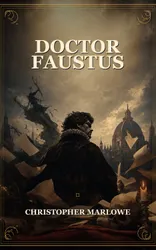
Christopher Marlowe's The Tragical History of the Life and Death of Doctor Faustus is one of the most powerful and enduring works of Elizabethan drama, a haunting exploration of ambition, knowledge, and the cost of overreaching desire. Blending tragedy, philosophy, and dark spectacle, the play tells the story of a man who dares to challenge the limits of human potential—with devastating consequences.

At the center of the drama is Doctor Faustus, a brilliant scholar dissatisfied with the boundaries of traditional learning. Driven by an insatiable hunger for power and ultimate knowledge, he turns to forbidden practices and makes a fateful pact with demonic forces, trading his soul for a set number of years filled with limitless abilities and worldly pleasures. What begins as a triumphant ascent soon reveals itself as a tragic descent, as Faustus becomes increasingly aware of the true cost of his bargain.

Throughout the play, Faustus is torn between repentance and despair, guided and tempted by opposing forces that represent his inner moral struggle. Marlowe masterfully portrays the complexity of Faustus's character—his brilliance, arrogance, doubt, and fear—creating a deeply human figure whose choices resonate with universal themes of temptation, free will, and redemption.

The play is rich in poetic language, dramatic imagery, and philosophical depth. Marlowe explores the Renaissance spirit of inquiry alongside the dangers of hubris, raising timeless questions about the pursuit of knowledge and the limits of human ambition. The presence of supernatural elements adds both spectacle and symbolic weight, enhancing the play's exploration of morality and consequence.

Doctor Faustus remains a cornerstone of English literature and theatre, celebrated for its emotional intensity, intellectual richness, and enduring relevance. It is a compelling and cautionary tale of aspiration and downfall, offering readers a profound reflection on the price of ambition and the eternal struggle between desire and conscience.

Starte noch heute mit diesem Buch für 0 €

  • Hole dir während der Testphase vollen Zugriff auf alle Bücher in der App
  • Keine Verpflichtungen, jederzeit kündbar
Jetzt kostenlos testen
Mehr als 52 000 Menschen haben Nextory im App Store und auf Google Play 5 Sterne gegeben.

Mehr von Christopher Marlowe

  1. 1.5

    The Tragical History of Doctor Faustus

    Christopher Marlowe

  2. 100 Meisterwerke der englischen Literatur - Klassiker, die man kennen muss (Kommentiert) : Erweiterte Ausgabe. Hamlet, 1984, Ulysses...

    George Orwell, Charles Dickens, Jane Austen, Katherine Mansfield, H.P. Lovecraft, William Wordsworth, John Keats, Percy Bysshe Shelley, Robert Burns, John Milton, William Shakespeare, Christopher Marlowe, Geoffrey Chaucer, Laurence Sterne, Henry Fielding, Mary Shelley, Emily Brontë, Charlotte Brontë, Anne Brontë, William Makepeace Thackeray, George Eliot, D. H. Lawrence, Herman Melville, Thomas Wolfe, Virginia Woolf, Joseph Conrad, Sinclair Lewis, Walt Whitman, Edgar Allan Poe, Oscar Wilde, Jerome K Jerome, Washington Irving, Bram Stoker, H.G. Wells, Daniel Defoe, Lew Wallace, James Fenimore Cooper, Jonathan Swift, Robert Louis Stevenson, Mark Twain, Lewis Carrol, Edward Bulwer-Lytton, F. Scott Fitzgerald, Arthur Conan Doyle, Jack London, Henry David Thoreau, G.K. Chesterton, Edith Wharton, Henry James, Thomas Hardy, Margaret Mitchell, Kate Chopin, Willa Cather, Charlotte Perkins Gilman, James Joyce, John Galsworthy, Francis Hodgson Burnett, Lucy Maud Montgomery, Louisa May Alcott, Rudyard Kipling

  3. Harvard Classics : The Five-Foot Shelf of Books

    Aesop, Dante Alighieri, Hans Christian Andersen, Augustine of Hippo, Marcus Aurelius, Jane Austen, Francis Bacon, Honoré de Balzac, Francis Beaumont, Bjørnstjerne Bjørnson, Thomas Browne, Robert Browning, John Bunyan, EDMUND BURKE, Robert Burns, Lord Byron, Thomas Carlyle, Benvenuto Cellini, Miguel de Cervantes, Marcus Tullius Cicero, Richard Henry Jr., Charles Darwin, Alphonse Daudet, Thomas Dekker, Charles Dickens, Fyodor Dostoevsky, John Dryden, Charles W. Eliot, George Eliot, Ralph Waldo Emerson, Epictetus, John Fletcher, Theodor Fontane, Benjamin Franklin, Johann Wolfgang Goethe, Oliver Goldsmith, Jacob Grimm, Edward Everett Hale, Bret Harte, Nathaniel Hawthorne, Homer, Victor Hugo, Washington Irving, Henry James, Ben Jonson, Gottfried Keller, Thomas à Kempis, Alexander L. Kielland, Martin Luther, Niccolò Machiavelli, Alessandro Manzoni, Christopher Marlowe, Philip Massinger, Guy De Maupassant, John Stuart Mill, John Milton, Thomas More, William Morris, Alfred de Musset, William Allan Neilson, William Penn, Plato, Pliny the Younger, Plutarch, George Sand, Percy Bysshe Shelley, Richard Brinsley Sheridan, Adam Smith, Laurence Sterne, Theodor Storm, William Makepeace Thackeray, Leo Tolstoy, Ivan Turgenev, Mark Twain, Juan Valera, Virgil, Izaak Walton, John Webster, John Woolman

  4. Doctor Faustus

    Christopher Marlowe

  5. Gekürzt

    The Jew of Malta : Studio Cast Album Recording

    Christopher Marlowe, David Serero

  6. #1

    50 Essential Classics You Must Read - British Literature : The Definitive British Literature Collection from Beowulf to the Romantic Poets

    Anonymous, The Essential Classics Library, William Langland, Jessie L. Weston, Thomas Malory, Thomas More, Christopher Marlowe, Edmund Spenser, John Milton, William Shakespeare, Ben Jonson, Daniel Defoe, Jonathan Swift, Samuel Richardson, Henry Fielding, Frances Burney, Oliver Goldsmith, M.G. Lewis, Mary Shelley, William Beckford, Jane Austen, Charlotte Brontë, Emily Brontë, Charles Dickens, George Eliot, Thomas Hardy, Robert Louis Stevenson, Oscar Wilde, H.G. Wells, H. Rider Haggard, Rudyard Kipling, William Blake, William Wordsworth, John Keats, Percy Bysshe Shelley, Various Authors, Multiple Authors

  7. 1.5

    The Tragical History of Doctor Faustus

    Christopher Marlowe

  8. 1.5

    The Tragical History of Doctor Faustus

    Christopher Marlowe

  9. 1.5

    The Tragical History of Doctor Faustus

    Christopher Marlowe

  10. Die großen Dramen der Geschichte : Erweiterte Ausgabe. Der eingebildete Kranke, Der Revisor, Drei Schwestern, Macbeth, Hamlet, Romeo und Juliette, Ein Puppenheim, Medea

    William Shakespeare, Euripides, Anton Tschechow, Jean Baptiste Molière, Nikolai Gogol, Johann Wolfgang Goethe, Friedrich Schiller, Pierre Corneille, Henrik Ibsen, Oskar Wilde, Christopher Marlowe, Aischylos, - Sophokles, - Aristophanes, Percy Bysshe Shelley, Lord Byron

  11. Die besten Dramen aller Zeiten (Kommentiert) : Erweiterte Ausgabe. Der eingebildete Kranke, Der Revisor, Drei Schwestern, Macbeth, Hamlet, Romeo und Juliette, Ein Puppenheim

    Anton Tschechow, William Shakespeare, Jean Baptiste Molière, Nikolai Gogol, Johann Wolfgang Goethe, Friedrich Schiller, Pierre Corneille, Henrik Ibsen, Oskar Wilde, Christopher Marlowe, Aischylos, - Sophokles, Euripides, - Aristophanes