Über dieses Buch

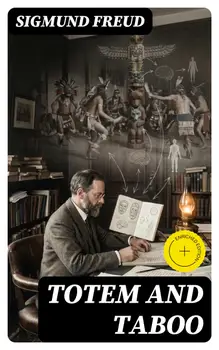
In "Totem and Taboo," Sigmund Freud explores the intersection of psychology, anthropology, and sociology to unravel the complexities of human rituals and societal norms. Written in 1913, the book posits that totemism and the taboos associated with it reveal fundamental aspects of the human psyche, revealing connections between primitive societies and the underlying mechanisms of modern civilization. Freud employs a unique blend of psychoanalytic theory and ethnographic analysis, examining the totemic practices found in various cultures and drawing parallels to neuroses in individuals, thereby illuminating the dynamics of collective and individual subconsciousness. Freud, often heralded as the father of psychoanalysis, synthesized various fields of inquiry in his quest to understand the human mind and its development. His experiences and observations, particularly regarding the interplay between culture and psychology, informed his theories on civilization's restraining influence on innate desires. "Totem and Taboo" reflects Freud's ambition to establish a scientific basis for psychoanalysis, deeply rooted in both empirical evidence and speculative reasoning. For readers interested in the psychological foundations of culture, "Totem and Taboo" offers an essential perspective on how collective beliefs shape individual behaviors and neuroses. Freud's groundbreaking ideas encourage introspection into one's own cultural influences, making this book a vital read for anyone seeking to understand the deep-seated connections between our primal instincts and civilized existence.

In this enriched edition, we have carefully created added value for your reading experience:

- A succinct Introduction situates the work's timeless appeal and themes.

- The Synopsis outlines the central plot, highlighting key developments without spoiling critical twists.

- A detailed Historical Context immerses you in the era's events and influences that shaped the writing.

- An Author Biography reveals milestones in the author's life, illuminating the personal insights behind the text.

- A thorough Analysis dissects symbols, motifs, and character arcs to unearth underlying meanings.

- Reflection questions prompt you to engage personally with the work's messages, connecting them to modern life.

- Hand‐picked Memorable Quotes shine a spotlight on moments of literary brilliance.

- Interactive footnotes clarify unusual references, historical allusions, and archaic phrases for an effortless, more informed read.

Starte noch heute mit diesem Buch für 0 €

  • Hole dir während der Testphase vollen Zugriff auf alle Bücher in der App
  • Keine Verpflichtungen, jederzeit kündbar
Jetzt kostenlos testen
Mehr als 52 000 Menschen haben Nextory im App Store und auf Google Play 5 Sterne gegeben.

Mehr von Sigmund Freud

  1. 3.0

    200 Meisterwerke der Literaturgeschichte (Kommentiert) : Erweiterte Ausgabe. Die größten Klassiker der Weltliteratur

    Franz Kafka, Victor Hugo, Fjodor Michailowitsch Dostojewski, Lord Byron, Giacomo Leopardi, Marcel Proust, Henrik Ibsen, Percy Bysshe Shelley, Charles Dickens, Jane Austen, Mary Shelley, Emily Brontë, Charlotte Brontë, Anne Brontë, William Makepeace Thackeray, Bram Stoker, Henry Fielding, George Eliot, William Shakespeare, D. H. Lawrence, Walt Whitman, Herman Melville, Thomas Wolfe, Virginia Woolf, Joseph Conrad, Sinclair Lewis, Lewis Carrol, Edgar Allan Poe, Edward Bulwer-Lytton, Oscar Wilde, H.G. Wells, Daniel Defoe, James Fenimore Cooper, Lew Wallace, Jonathan Swift, Mark Twain, Walter Scott, Nathaniel Hawthorne, Harriet Beecher Stowe, Laurence Sterne, Frances Hodgson Burnett, Arthur Conan Doyle, Wilkie Collins, Edgar Wallace, Robert Louis Stevenson, Jack London, Henry David Thoreau, John Galsworthy, F. Scott Fitzgerald, Rudyard Kipling, G.K. Chesterton, Washington Irvin, O.Henry, Ambrose Bierce, Alexander Sergejewitsch Puschkin, Michail Lermontow, Iwan Sergejewitsch Turgenew, Leo Tolstoi, Nikolai Gogol, Iwan Gontscharow, Nikolai Leskow, Anton Pawlowitsch Tschechow, Maxim Gorki, François Rabelais, Jean De Fontaine, Blaise Pascal, Pierre Corneille, Moliere, Jean Baptiste Racine, Charles Perrault, Voltaire, Denis Diderot, Jean-Jacques Rousseau, Pierre Ambroise Laclos, Antoine-François Prévost, Marquis De Sade, François René Chateaubriand, Stendhal, Honoré de Balzac, Alexandre Dumas, Alphonse de Lamartine, George Sand, Gustave Flaubert, Emile Zola, Guy De Maupassant, Alphonse Daudet, Jules Verne, Joris-Karl Huysmans, Prosper Mérimée, Charles Baudelaire, Stéphane Mallarmé, Arthur Rimbaud, André Gide, Arthur Schopenhauer, Heinrich Heine, Friedrich Schiller, Johann Wolfgang Goethe, Jacob Grimm, Gottfried von Straßburg, Wolfram von Eschenbach, E. T. Hoffmann, Annette von Droste-Hülshoff, Heinrich von Kleist, Friedrich Hölderlin, Theodor Fontane, Gustav Freytag, Gottfried Keller, Theodor Storm, Stefan Zweig, Joseph von Eichendorff, Klaus Mann, Rainer Maria Rilke, Johanna Spyri, Joseph Roth, Karl May, Robert Musil, Heinrich Mann, Sigmund Freud, Friedrich Nietzsche, Dante Alighieri, Giovanni Boccaccio, Giacomo Casanova, Luigi Pirandello, Giosuè Carducci, Gabriele D’Annunzio, Niccolo Machiavelli, Miguel Cervantes Saavedra, Pedro Calderón Barca, Vicente Blasco Ibañez, Knut Hamsun, Homer, Äsop, Herodot, Thukydides, Xenophon, Platon, - Aristoteles, - Sophokles, Euripides, - Aristophanes, Lao Tse, - Konfuzius, Siddhartha Gautama Buddha, Titus Livius, Tacitus, Marcus Tullius Cicero, Vergil, Ovid, Lukian, Petronius, Apuleius, Longos von Lesbos, Mark Aurel, Aurelius Augustinus

  2. 1.0

    100 Meisterwerke der Weltliteratur - Klassiker die man kennen muss : Bereicherte Ausgabe. Ein literarisches Panorama: Meisterwerke, Klassiker und Autoren der Weltliteratur

    Johann Wolfgang Goethe, Jules Verne, Gustave Flaubert, Franz Kafka, Lewis Carroll, Selma Lagerlöf, Sigmund Freud, Johanna Spyri, Theodor Storm, Rainer Maria Rilke, Charles Dickens, Stefan Zweig, Heinrich Heine, Honoré de Balzac, Theodor Fontane, Karl May, Gottfried Keller, Mark Twain, Heinrich Mann, Else Lasker-Schüler, Robert Musil, Walt Whitman, Oscar Wilde, Annette von Droste-Hülshoff, Arthur Schopenhauer, Robert Louis Stevenson, Gustav Freytag, James Fenimore Cooper, Edgar Allan Poe, Heinrich von Kleist, William Shakespeare, Dante Alighieri, Charlotte Brontë, Emily Brontë, Jack London, Arthur Conan Doyle, Joseph Conrad, Jane Austen, Herman Melville, Guy De Maupassant, Walter Scott, Jonathan Swift, Jacob Grimm, Wilhelm Grimm, Alexandre Dumas, Rudyard Kipling, Nathaniel Hawthorne, Homer, O.Henry, Voltaire, Lew Wallace, John Galsworthy, E. T. Hoffmann, Marcus Aurelius, Hans Christian Andersen, Anton Pawlowitsch Tschechow, Platon, Friedrich Nietzsche, Iwan Sergejewitsch Turgenew, Tacitus, Nikolai Gogol, Miguel de Cervantes, Mary Shelley, Thomas Wolfe, Emile Zola, Fjodor Michailowitsch Dostojewski, Leo Tolstoi, Joseph Roth, Joseph von Eichendorff, Kurt Tucholsky, Iwan Alexandrowitsch Gontscharow, Oswald Spengler, Moliere, Alfred Adler, Sophie von Roche, Klaus Mann, Rumi

  3. 5.0

    Vorlesungen zur Einführung in die Psychoanalyse : ungekürzte Lesung

    Sigmund Freud

  4. Massenpsychologie und Ich-Analyse. Ein Grundlagenwerk der Psychoanalyse. : Hörbuchzeit: Klassiker der Weltliteratur

    Hörbuchzeit, Sigmund Freud

  5. 3.0

    Weshalb führen wir Krieg? : Ein inspirierender Briefwechsel zwischen Albert Einstein und Sigmund Freud | Mit einer Kurzeinschätzung von Franz-Stefan Gady - Militäranalyst

    Albert Einstein, Sigmund Freud

  6. 4.2

    Über Psychoanalyse - fünf Vorlesungen

    Sigmund Freud

  7. Die größten Klassiker der jüdischen Literatur : Stimmen der jüdischen Moderne zwischen Haskala, Exil, Satire und europäischer Kulturkritik

    Walter Benjamin, Joseph Roth, Franz Kafka, Salomon An-ski, Arthur Schnitzler, Else Lasker-Schüler, Karl Kraus, Franz Werfel, Theodor Herzl, Jakob Wassermann, Stefan Zweig, Scholem Alejchem, Fritz Mauthner, Karl Emil Franzos, Ernst Toller, Berthold Auerbach, Egon Erwin Kisch, Peter Altenberg, Heinrich Heine, Marcel Proust, Sigmund Freud, Ernst Weiß, Walter Hasenclever, Hugo Salus, Oskar Baum, Edith Stein, Kurt Tucholsky, Friedrich Adler, Hermann Broch, Moses Mendelssohn, Karl Marx, Ludwig Wittgenstein, Hugo Bettauer, Leopold von Sacher-Masoch, Karl Spindler

  8. Die Traumdeutung (Hörbuch 1)

    Sigmund Freud

  9. 5.0

    Totem and Taboo

    Sigmund Freud

  10. #24

    Sigmund Freud: Das Ich und das Es

    Sigmund Freud

  11. Sigmund Freud: Vorlesungen zur Einführung in die Psychoanalyse. Teil 1 : Die Fehlleistungen

    Sigmund Freud