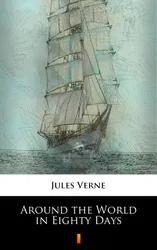
In "Around the World in Eighty Days," Jules Verne illustrates his fascination with both human ingenuity and the marvels of global exploration through the thrilling journey of Phileas Fogg. Written in 1872, this classic novel is celebrated for its fast-paced narrative and vivid descriptions, which effectively balance adventure with meticulous detail. Verne employs a blend of humor and suspense, inviting readers to engage deeply with the themes of time, technology, and cultural encounters, all framed within the broader context of the 19th-century industrial revolution and the burgeoning world of international travel. Jules Verne, often hailed as the father of science fiction, was a visionary author whose own experiences with travel and a keen interest in scientific advancements heavily influenced his work. His unique perspective on the relationship between humanity and progress is reflected in Fogg's determined quest to defy conventional limits. Verne's upbringing in Nantes, and his education in law and sciences, equipped him with the intellectual foundations necessary to weave together elements of imagination and reality, establishing a vivid narrative that captured the spirit of the age. Readers will find "Around the World in Eighty Days" to be a brilliant blend of adventure and wit, making it an essential read for those who appreciate the intricacies of exploration and the boundless possibilities of human ambition. This novel not only entertains but also prompts reflections on the nature of time and the interconnectedness of cultures, ensuring its place in the canon of literature.

100 Clásicos de la Literatura
Francis Scott Fitzgerald, Mary Shelley, Lyman Frank Baum, Louisa May Alcott, Dante Alighieri, Jane Austen, Ambrose Bierce, Emily Brontë, Edgar Rice Burroughs, Lewis Carroll, Wilkie Collins, René Descartes, Charles Dickens, Emily Dickinson, Alexandre Dumas, Gustave Flaubert, Benito Pérez Galdós, Johann Wolfgang von Goethe, Thomas Hardy, E T A Hoffmann, Washington Irving, Henry James, James Joyce, Franz Kafka, Gaston Leroux, Federico García Lorca, H.P. Lovecraft, Publio Virgilio Marón, Lucy Maud Montgomery, John William Polidori, Marco Polo, Antoine de Saint-Exupéry, Emilio Salgari, Walter Scott, Mark Twain, Jules Verne, H.G. Wells, Edith Wharton, Mary Wollstonecraft, Fernando de Rojas