Little Foxes : A Tale Of The Gihon Hunt

Joseph Rudyard Kipling (30 December 1865 – 18 January 1936) was an English short-story writer, poet, and novelist. He wrote tales and poems of British soldiers in India and stories for children. He was born in Bombay, in the Bombay Presidency of British India, and was taken by his family to England when he was five years old.

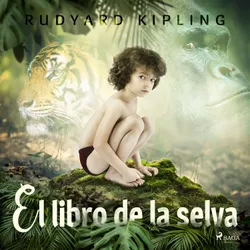
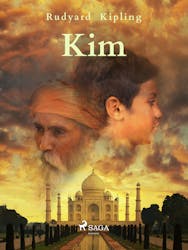
Kipling's works of fiction include "The Jungle Book" (1894), "Kim" (1901), and many short stories, including "The Man Who Would Be King" (1888). His poems include "Mandalay" (1890), "Gunga Din" (1890), "The Gods of the Copybook Headings" (1919), "The White Man's Burden" (1899), and "If—" (1910). He is regarded as a major innovator in the art of the short story; his children's books are enduring classics of children's literature; and one critic described his work as exhibiting "a versatile and luminous narrative gift".

Kipling was one of the most popular writers in England, in both prose and verse, in the late 19th and early 20th centuries. Henry James said: "Kipling strikes me personally as the most complete man of genius (as distinct from fine intelligence) that I have ever known." In 1907, he was awarded the Nobel Prize in Literature, making him the first English-language writer to receive the prize, and its youngest recipient to date. Among other honours, he was sounded out for the British Poet Laureateship and on several occasions for a knighthood, all of which he declined.

Kipling's subsequent reputation has changed according to the political and social climate of the age and the resulting contrasting views about him continued for much of the 20th century. George Orwell called him a "prophet of British imperialism". Literary critic Douglas Kerr wrote: "He [Kipling] is still an author who can inspire passionate disagreement and his place in literary and cultural history is far from settled. But as the age of the European empires recedes, he is recognised as an incomparable, if controversial, interpreter of how empire was experienced. That, and an increasing recognition of his extraordinary narrative gifts, make him a force to be reckoned with."
Sobre este libro

Joseph Rudyard Kipling (30 December 1865 – 18 January 1936) was an English short-story writer, poet, and novelist. He wrote tales and poems of British soldiers in India and stories for children. He was born in Bombay, in the Bombay Presidency of British India, and was taken by his family to England when he was five years old.

Kipling's works of fiction include "The Jungle Book" (1894), "Kim" (1901), and many short stories, including "The Man Who Would Be King" (1888). His poems include "Mandalay" (1890), "Gunga Din" (1890), "The Gods of the Copybook Headings" (1919), "The White Man's Burden" (1899), and "If—" (1910). He is regarded as a major innovator in the art of the short story; his children's books are enduring classics of children's literature; and one critic described his work as exhibiting "a versatile and luminous narrative gift".

Kipling was one of the most popular writers in England, in both prose and verse, in the late 19th and early 20th centuries. Henry James said: "Kipling strikes me personally as the most complete man of genius (as distinct from fine intelligence) that I have ever known." In 1907, he was awarded the Nobel Prize in Literature, making him the first English-language writer to receive the prize, and its youngest recipient to date. Among other honours, he was sounded out for the British Poet Laureateship and on several occasions for a knighthood, all of which he declined.

Kipling's subsequent reputation has changed according to the political and social climate of the age and the resulting contrasting views about him continued for much of the 20th century. George Orwell called him a "prophet of British imperialism". Literary critic Douglas Kerr wrote: "He [Kipling] is still an author who can inspire passionate disagreement and his place in literary and cultural history is far from settled. But as the age of the European empires recedes, he is recognised as an incomparable, if controversial, interpreter of how empire was experienced. That, and an increasing recognition of his extraordinary narrative gifts, make him a force to be reckoned with."

Empieza este libro hoy por 0 €

  • Disfruta de acceso completo a todos los libros de la app durante el periodo de prueba
  • Sin compromiso, cancela cuando quieras
Pruébalo gratis ahora
Más de 52 000 clientes han dado a Nextory 5 estrellas en la App Store y Google Play.

  1. 1 jul
    3.8

    El libro de la selva

    Rudyard Kipling

  2. Premio Nobel
    4.0

    Kim

    Rudyard Kipling

  3. Premio Nobel
    4.5

    Capitanes intrépidos

    Rudyard Kipling

  4. Premio Nobel
    3.3

    El Cuento Más Hermoso del Mundo

    Rudyard Kipling

  5. Historias de origen: sobre los animales : Los cuentos de Kipling para pequeños

    Rudyard Kipling

  6. Premio Nobel

    El Cuento Más Hermoso del Mundo :

    Rudyard Kipling

  7. #SlowBurn Classics Collection : The Light that Failed, Emma, The Story of Anne with an E & Gilbert Blythe, Great Expectations, Jane Eyre, Evelina, Middlemarch

    Elizabeth Gaskell, Charles Dickens, Charlotte Brontë, Jane Austen, George Eliot, Thomas Hardy, George Sand, Fanny Burney, Rudyard Kipling, Lucy Maud Montgomery

  8. #1

    Japón : El paisaje del alma

    Rudyard Kipling, Inazo Nitobe

  9. Premio Nobel
    3.0

    Georgie Porgie

    Rudyard Kipling

  10. The Light Has Been Broken: 560+ Macabre Classics, Supernatural Mysteries & Dark Tales : The Mark of the Beast, The Ghost Pirates, The Vampyre, Sweeney Todd, The Sleepy Hollow…

    Wilhelm Hauff, Charles Dickens, Mark Twain, Harriet Beecher Stowe, Adelbert von Chamisso, Oscar Wilde, Robert Louis Stevenson, Edgar Allan Poe, William Hope Hodgson, Joseph Sheridan Le Fanu, John Buchan, Louis Tracy, Bram Stoker, Anatole France, Charlotte Brontë, Emily Brontë, Jack London, Henry James, Théophile Gautier, Arthur Conan Doyle, Richard Le Gallienne, Jane Austen, Ralph Adams Cram, Thomas De Quincey, John Meade Falkner, Guy De Maupassant, Thomas Hardy, William Archer, Daniel Defoe, John Kendrick Bangs, Cleveland Moffett, Brander Matthews, Marie Belloc Lowndes, Horace Walpole, Rudyard Kipling, Lafcadio Hearn, Hugh Walpole, Ambrose Bierce, Frederick Marryat, Ellis Parker Butler, Washington Irving, Leonid Andreyev, David Lindsay, Nathaniel Hawthorne, Grant Allen, Arthur Machen, Wilkie Collins, William Makepeace Thackeray, Thomas Peckett Prest, James Malcolm Rymer, Fergus Hume, Edward Bellamy, Walter Hubbell, Charlotte Perkins Gilman, Leopold Kompert, Richard Marsh, Florence Marryat, Catherine Crowe, John William Polidori, Vincent O'Sullivan, H.G. Wells, Robert W. Chambers, W. Jacobs, M.P. Shiel, E F Benson, Jerome K Jerome, M. R. James, E T A Hoffmann, Stanley G. Weinbaum, George W. M. Reynolds, H.P. Lovecraft, Robert E. Howard, Edith Nesbit, Sabine Baring-Gould, William Thomas Beckford, Francis Marion Crawford, Lucy Maud Montgomery, Mary Elizabeth Braddon, Mary Louisa Molesworth, Mary E. Wilkins Freeman, Nikolai Gogol, Mary Shelley, Elizabeth Gaskell, Edward Bulwer-Lytton, Frank R. Stockton, A. T. Quiller-Couch, Ann Radcliffe, Louisa M. Alcott, Amelia B. Edwards, Leonard Kip, Matthew Gregory Lewis, Fitz-James O’Brien, Katherine Rickford, Bithia Mary Croker, Catherine L. Pirkis, Émile Erckmann, Alexandre Chatrian, Pedro De Alarçon, H. Munro (Saki), Pliny the Younger, Helena Blavatsky, Villiers de l'Isle-Adam, William F. Harvey, Fiona Macleod, William T. Stead, Gambier Bolton, Andrew Jackson Davis, Nizida, Walter F. Prince, Chester Bailey Fernando

  11. Premio Nobel

    El hombre que quiso ser rey

    Rudyard Kipling

  12. Premio Nobel
    3.5

    Capitanes valientes

    Rudyard Kipling


Categorías relacionadas