4.7(3)

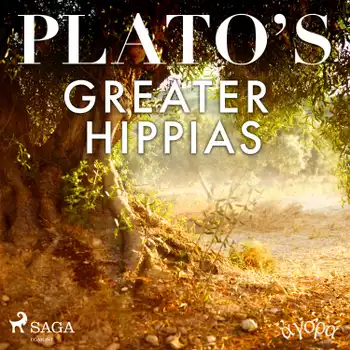
Plato’s Greater Hippias

Hippias of Elis travels throughout the Greek world practicing and teaching the art of making beautiful speeches. On a rare visit to Athens, he meets Socrates who questions him about the nature of his art. Socrates is especially curious about how Hippias would define beauty. They agree that "beauty makes all beautiful things beautiful," but when Socrates presses him to say precisely what he means, Hippias is unable to deliver such a definition. The more Socrates probes, the more absurd the responses from Hippias become. This is one of Plato’s best comedies and one of his finest efforts at posing the philosophical problem of the difference between particular things and universal qualities.

Plato lived in Athens, Greece. He wrote approximately two-dozen dialogues that explore core topics that are essential to all human beings. Although the historical Socrates was a strong influence on Plato, the character by that name that appears in many of his dialogues is a product of Plato’s fertile imagination. All of Plato’s dialogues are written in a poetic form that his student Aristotle called "Socratic dialogue." In the twentieth century, the British philosopher and logician Alfred North Whitehead characterized the entire European philosophical tradition as "a series of footnotes to Plato." Philosophy for Plato was not a set of doctrines but a goal — not the possession of wisdom but the love of wisdom. Agora Publications offers these performances based on the assumption that Plato wrote these works to be performed by actors in order to stimulate additional dialogue among those who listen to them.

Empieza hoy con este libro por 0 €

  • Disfruta de acceso completo a todos los libros de la app durante el periodo de prueba
  • Sin compromiso, cancela cuando quieras
Pruébalo gratis ahora
Más de 52 000 clientes han dado a Nextory 5 estrellas en la App Store y Google Play.

  1. Protagoras : A Dialogue on Virtue, Sophistry, and Education – Wisdom Versus Reputation in Ancient Greece

    Plato, Tim Zengerink

    audiobook
  2. 3500 Final Quotes

    Marcus Aurelius, Jane Austen, Beaumarchais, Napoleon Bonaparte, Buddha, Winston Churchill, Cicero, Confucius, Nicolas de Chamfort, Charles de Gaulle, Antoine de Saint-Exupéry, Denis Diderot, Fyodor Dostoevsky, Albert Einstein, Ralph Waldo Emerson, Anne Frank, Mahatma Gandhi, Immanuel Kant, Søren Kierkegaard, Martin Luther King, Georg Christoph Lichtenberg, Abraham Lincoln, Montesquieu, Friedrich Nietzsche, Plato, Marcel Proust, Arthur Schopenhauer, William Shakespeare, Socrates, Baruch Spinoza, Henry David Thoreau, Leonardo da Vinci, Voltaire, Oscar Wilde, Laozi

    audiobook
  3. 500 Quotes to Learn Wisdom from Classical Greek Philosophers

    Aristotle, Epictetus, – Heraclitus Of Ephesus, Plato, Socrates

    audiobook
  4. Yale Required Reading - Collected Works (Vol. 1)

    Herodotus, Sappho -, Homer, Hesiod, Alcaeus, Archilochus, Anacreon, Theognis of Megara, Simonides of Ceos, Bacchylides, Pindar, Aeschylus, Sophocles, Euripides, - Aristophanes, Thucydides, Plato, Aristotle, Lysias, Demosthenes, Apollonius, Callimachus, Theocritus, Plutarch, Epictetus, Gilbert Murray

    book
  5. Classic Philosophical Works (Thus Spoke Zarathustra, The Apology of Socrates, Tao Te Ching...)

    Plato, Friedrich Nietzsche, Herman Hesse, Leo Tolstoy, Immanuel Kant, Sun Tzu

    audiobook
  6. The Socratic Dialogues: Early Period : Volume 2: Gorgias, Protagoras, Meno, Euthydemus, Lesser Hippias, Greater Hippias

    Plato, Benjamin Jowett

    audiobook
  7. The Complete Plato

    Plato

    book
  8. The Republic

    Plato

    book
  9. Laws

    Plato

    audiobookbook
  10. Summary of The Republic

    Plato

    book
  11. Charmides : A Philosophical Discussion on Temperance – Exploring the Meaning of Inner Peace

    Plato, Tim Zengerink

    audiobook
  12. Laches : What Is Courage? – Plato’s Philosophical Exploration of Bravery and Character

    Plato, Tim Zengerink

    audiobook

Categorías relacionadas