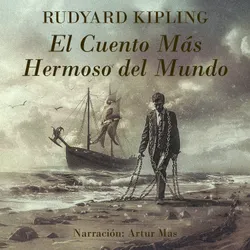
"The Finest Story in the World" is an short story by Rudyard Kipling: This story was first published in the Contemporary Review of July 1891. It includes the poem "Song of the Galley-slaves".
The narrator meets a young bank clerk, Charlie Mears, who longs to be a writer and seeks his advice. Charlie seems a commonplace and not particularly imaginative young man, but - partly written and partly in conversation - he produces strangely powerful accounts of sea voyages in the ancient world, by a Viking adventurer on a voyage to America, and by a Greek galley slave. He gives vivid details, including fragments of script which turn out to be corrupt Greek. The narrator becomes convinced that - rather than creating these stories - Charlie is remembering past lives, and that it is such recollections that feed the mysterious processes of creative 'imagination'. Another friend, a sophisticated Bengali, Grish Chunder, confirms that this must be the case, but warns that when Charlie falls in love the threads from the past will be broken. - This is exactly what happens. Charlie meets a young woman, expresses his love in banal conventional verses, and loses interest in his 'tales' of the past.
Empieza hoy con este libro por 0 €
Disfruta de acceso completo a todos los libros de la app durante el periodo de prueba
Rudyard Kipling nació en Bombay, India, pero sus padres lo trasladaron a Londres a estudiar, por lo que durante unos cuantos años vivió separado de ellos. Según su familia, Kipling gozaba leyendo en voz alta sus propias historias y él mismo se reía a carcajadas de sus bromas. Al terminar los estudios, se dedicó al periodismo y a los veintiún años escribió su primer libro, al que le siguieron muchos más, entre poemas y narraciones, inspirados, en gran parte, en los viajes que durante años hizo por todo el mundo y en su interés por las ciencias naturales. En reconocimiento, el Reino Unido nombró una nueva especie de cocodrilo prehistórico con su nombre, el Goniopholis kiplingi. También se le nombró Caballero de la Orden del Imperio Británico en tres ocasiones, honores que rechazó, y en 1907 fue el ganador del Premio Nobel de Literatura más joven hasta la fecha.