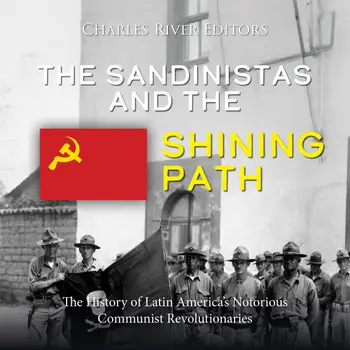
The Sandinistas and the Shining Path: The History of Latin America’s Notorious Communist Revolutionaries

For much of the 20th century, Latin American governments in large part lived under a system of military junta governments. The mixture of indigenous peoples, foreign settlers and European colonial superpowers produced cultural and social imbalances into which military forces intervened as a stabilizing influence. The proactive personalities of military heads and the rigid structures of such a hierarchy guaranteed the “strong man” commanding officer an abiding presence in the form of executive dictator. Such leaders often bore the more collaborative title of “President,” but the reality was, in most cases, identical. Likewise, the gap between rich and poor was often vast, and a disappearance of the middle class fed a frequent urge for revolution, reenergizing the military’s intent to stop it. With no stabilizing center, the ideologies most prevalent in such conflicts alternated between a federal model of industrial and social nationalization and an equally conservative structure under privatized ownership and autocratic rule drawn from the head of a junta government.

Whichever belief system was in play for the major industrial nations of Central and South America, a constant bombardment of foreign influence pushed the people of states such as Nicaragua, Chile, Brazil, Argentina, and others toward overthrow, in one direction or the other. To the left came Stalinist influences from the Soviet Union and Castro’s Cuba, while the German World War II model and an anti-communist mindset from the United States worked behind the scenes to upset any movement toward extreme liberalism. The tacit acceptance of these right-wing dictators across South America was part of an overarching effort known as Operation Condor, consisting mostly of CIA operations that are as infamous and controversial as ever, with a lasting legacy that affects current events such as reactions to the ongoing unrest in Venezuela.
Empieza hoy con este libro por 0 €

  • Disfruta de acceso completo a todos los libros de la app durante el periodo de prueba
  • Sin compromiso, cancela cuando quieras
Pruébalo gratis ahora
Más de 52 000 clientes han dado a Nextory 5 estrellas en la App Store y Google Play.

  1. American Monsters: The History of America’s Most Persistent Urban Tales about Strange Birds, Serpents and Wolfmen

    Charles River Editors

  2. 3.3

    The Zulu War and Boer War: The History and Legacy of the Conflicts that Cemented British Control of South Africa

    Charles River Editors

  3. The Moors’ Most Famous Sites in Spain: The History of Moorish Architecture in al-Andalus

    Charles River Editors

  4. Extraña Radio: Una colección de transmisiones de espionaje, estaciones no identificadas y otros misterios de las ondas radiales

    Charles River Editors

  5. 3.3

    The Mossad: The History and Legacy of Israel’s National Intelligence Agency

    Charles River Editors

  6. The Moors: The History of the Muslims Who Lived in North Africa and Europe during the Middle Ages

    Charles River Editors

  7. La Primera Guerra Mundial sobre el terreno: la historia y el legado de la vida en las trincheras

    Charles River Editors

  8. Las pirámides de Egipto: los orígenes y la historia de los monumentos más famosos del mundo

    Charles River Editors

  9. La Guerra Civil española: La historia y el legado del controversial conflicto que estableció la dictadura de Francisco Franco en España

    Charles River Editors

  10. Hispania romana: La historia de la conquista de España y la península ibérica por la antigua Roma

    Charles River Editors

  11. The Uighurs: The History and Legacy of the Turkic Muslim Minority Group in Asia

    Charles River Editors

  12. El robo nazi de arte: La historia de la confiscación y destrucción de obras de arte europeas por parte de Alemania durante la Segunda Guerra Mundial

    Charles River Editors


Categorías relacionadas