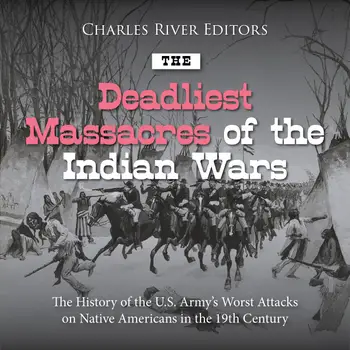
The Deadliest Massacres of the Indian Wars: The History of the U.S. Army’s Worst Attacks on Native Americans in the 19th Century

From the “Trail of Tears” to Wounded Knee and Little Bighorn, the narrative of American history is incomplete without the inclusion of the Native Americans that lived on the continent before European settlers arrived in the 16th and 17th centuries. Since the first contact between natives and settlers, tribes like the Sioux, Cherokee, and Navajo have both fascinated and perplexed outsiders with their history, language, and culture.

The Shoshone are still remembered for their assistance, especially Sacagawea, and they maintained contact with Americans throughout the 19th century, but unfortunately, the cooperation gave way to conflict as white settlers began to move westward and enter onto lands occupied by the Shoshone.

On the morning of November 29, 1864, Colonel John Chivington led 700 militiamen in a surprise attack against Cheyenne leader Black Kettle's camp at Sand Creek. Chivington was a fire and brimstone Methodist minister who had publicly advocated indiscriminately killing Native American children because “nits makes lice.” According to Cheyenne oral tradition and several surviving soldiers' accounts, as soon as Black Kettle saw Chivington’s men coming, he raised an American flag on a pole and waved it back and forth calling out that his Wutapai band was not resisting. Ignoring his cries for mercy, the soldiers commenced firing, cutting down an estimated 70-200 Cheyenne, about two-thirds of whom were women and children.

Among all the events in the strained relations between the U.S. government and Native Americans during the 19th century, the most notorious and defining one was what is today called the Wounded Knee Massacre. Technically, it was the last armed engagement between Sioux warriors and the U.S. military, and it marked the end of effective resistance by any Sioux bands, but what actually occurred is far more controversial.
Begin vandaag nog met dit boek voor € 0

  • Krijg volledige toegang tot alle boeken in de app tijdens de proefperiode
  • Geen verplichtingen, op elk moment annuleren
Probeer nu gratis
Meer dan 52.000 mensen hebben Nextory 5 sterren gegeven in de App store en op Google Play.

  1. The Most Controversial Cases of the Early 20th Century: The Murder of Stanford White, Sacco & Vanzetti, Leopold & Loeb, and the Lindbergh Baby Kidnapping

    Charles River Editors

  2. The Battle of Ain Jalut: The History and Legacy of the Decisive Mamluk Victory that Halted the Mongol Empire’s Expansion across the Middle East

    Charles River Editors

  3. Niels Bohr and J. Robert Oppenheimer: The Lives and Careers of the Physicists Who Pioneered Atomic Energy

    Charles River Editors

  4. 3.6

    The Battle of the Somme: The History and Legacy of World War I’s Biggest Battle

    Charles River Editors

  5. The Battle of Castle Itter: The History of World War II’s Strangest Skirmish

    Charles River Editors

  6. Rome’s Conquest of Western Europe: The History of the Campaigns that Expanded the Roman Empire across the Continent

    Charles River Editors

  7. 3.4

    Doggerland: The History of the Land that Once Connected Great Britain to Continental Europe

    Charles River Editors

  8. Arnold Rothstein and Meyer Lansky: The Lives and Legacies of the Gangsters Who Reformed Organized Crime in America

    Charles River Editors

  9. Nazi Art Theft: The History of Germany’s Confiscation and Destruction of European Artworks during World War II

    Charles River Editors

  10. Ivan the Terrible and Vlad Dracula: The Lives and Legacies of Medieval Europe’s Most Notorious Rulers

    Charles River Editors

  11. The Ancient World’s Most Mysterious Religious Cults: The History of the Cult of the Apis Bull, the Eleusinian Mysteries, and the Mysteries of Mithras

    Charles River Editors

  12. 3.5

    Sigmund Freud and Carl Jung: The Pioneering Lives and Works of History’s Most Influential Psychologists

    Charles River Editors