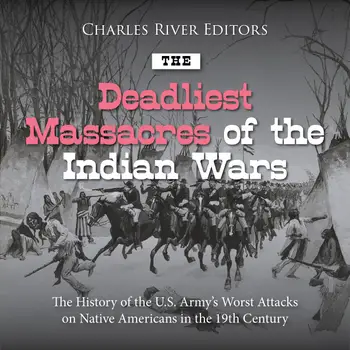
The Deadliest Massacres of the Indian Wars: The History of the U.S. Army’s Worst Attacks on Native Americans in the 19th Century

From the “Trail of Tears” to Wounded Knee and Little Bighorn, the narrative of American history is incomplete without the inclusion of the Native Americans that lived on the continent before European settlers arrived in the 16th and 17th centuries. Since the first contact between natives and settlers, tribes like the Sioux, Cherokee, and Navajo have both fascinated and perplexed outsiders with their history, language, and culture.

The Shoshone are still remembered for their assistance, especially Sacagawea, and they maintained contact with Americans throughout the 19th century, but unfortunately, the cooperation gave way to conflict as white settlers began to move westward and enter onto lands occupied by the Shoshone.

On the morning of November 29, 1864, Colonel John Chivington led 700 militiamen in a surprise attack against Cheyenne leader Black Kettle's camp at Sand Creek. Chivington was a fire and brimstone Methodist minister who had publicly advocated indiscriminately killing Native American children because “nits makes lice.” According to Cheyenne oral tradition and several surviving soldiers' accounts, as soon as Black Kettle saw Chivington’s men coming, he raised an American flag on a pole and waved it back and forth calling out that his Wutapai band was not resisting. Ignoring his cries for mercy, the soldiers commenced firing, cutting down an estimated 70-200 Cheyenne, about two-thirds of whom were women and children.

Among all the events in the strained relations between the U.S. government and Native Americans during the 19th century, the most notorious and defining one was what is today called the Wounded Knee Massacre. Technically, it was the last armed engagement between Sioux warriors and the U.S. military, and it marked the end of effective resistance by any Sioux bands, but what actually occurred is far more controversial.

Starte noch heute mit diesem Buch für 0 €

  • Hole dir während der Testphase vollen Zugriff auf alle Bücher in der App
  • Keine Verpflichtungen, jederzeit kündbar
Jetzt kostenlos testen
Mehr als 52 000 Menschen haben Nextory im App Store und auf Google Play 5 Sterne gegeben.

  1. 1.0

    Die Panzer: Die Geschichte und das Vermächtnis von Nazideutschlands berühmtesten Panzern des Zweiten Weltkriegs

    Charles River Editors

  2. The Spanish Empire in the Americas: The History of Spain’s Colonization across Central America and South America

    Charles River Editors

  3. J. Edgar Hoover and Allen Dulles: The History of 20th Century America’s Most Controversial FBI and CIA Directors

    Charles River Editors

  4. 3.5

    Sigmund Freud and Carl Jung: The Pioneering Lives and Works of History’s Most Influential Psychologists

    Charles River Editors

  5. Das mittelalterliche Russland: Die Geschichte und das Erbe der Gruppen, die den russischen Staat im Mittelalter entwickelten

    Charles River Editors

  6. The Texas Revolution and Mexican-American War: The History and Legacy of the Conflicts that Led to Mexico’s Cession of the American Southwest

    Charles River Editors

  7. The Underworld in Ancient Mesoamerica: The History and Legacy of Mesoamerican Concepts of Death

    Charles River Editors

  8. The Making of Modern China: The History of the World’s Most Populous Country from the Qing Dynasty to Today

    Charles River Editors

  9. Spain and the American Revolution: The History of the Spanish Empire’s Participation in the Revolutionary War

    Charles River Editors

  10. 4.0

    The Philippines Campaigns of World War II: The History of the Japanese Invasion in 1941-1942 and the Allied Liberation in 1944-1945

    Charles River Editors

  11. The Rise and Fall of the Third Reich: The History and Legacy of Nazi Germany under Adolf Hitler

    Charles River Editors

  12. Dr. Mary Edwards Walker: The Life and Legacy of the Civil Rights Activist Who Became the Only Woman to Receive the Medal of Honor

    Charles River Editors