3 books to know Romantic Era

Welcome to the3 Books To Knowseries, our idea is to help readers learn about fascinating topics through three essential and relevant books.

These carefully selected works can be fiction, non-fiction, historical documents or even biographies.

We will always select for you three great works to instigate your mind, this time the topic is:Romantic Era

- The Sorrows of Young Werther by Johann Wolfgang von Goethe

- Frankenstein by Mary Shelley

- The Three Musketeers by Alexandre DumasThe Sorrows of Young Werther (German: Die Leiden des jungen Werthers) is a loosely autobiographical epistolary novel by Johann Wolfgang von Goethe, first published in 1774. A revised edition followed in 1787. It was one of the most important novels in the Sturm und Drang period in German literature, and influenced the later Romantic movement. Goethe, aged 24 at the time, finished Werther in five-and-a-half weeks of intensive writing in JanuaryMarch 1774. The book's publication instantly placed the author among the foremost international literary celebrities, and remains among the best known of his works. Towards the end of Goethe's life, a personal visit to Weimar became a crucial stage in any young man's Grand Tour of Europe.

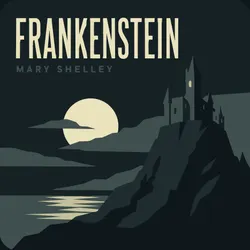
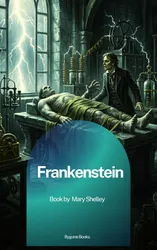
Frankenstein; or, The Modern Prometheus is a novel written by English author Mary Shelley (17971851) that tells the story of Victor Frankenstein, a young scientist who creates a hideous, sapient creature in an unorthodox scientific experiment. Shelley started writing the story when she was 18, and the first edition of the novel was published anonymously in London on 1 January 1818, when she was 20. Her name first appeared on the second edition, published in 1823.

The Three Musketeers is a historical adventure novel written in 1844 by French author Alexandre Dumas. Situated between 1625 and 1628, it recounts the adventures of a young man named D'Artagnan (based on Charles de Batz-Castelmore d'Artagnan) after he leaves home to travel to Paris, to join the Musketeers of the Guard. Although d'Artagnan is not able to join this elite corps immediately, he befriends the three most formidable musketeers of the age Athos, Porthos and Aramis, "the three inseparables," as these are called and gets involved in affairs of the state and court.

This is one of many books in the series 3 Books To Know. If you liked this book, look for the other titles in the series, we are sure you will like some of the topics
Über dieses Buch

Welcome to the3 Books To Knowseries, our idea is to help readers learn about fascinating topics through three essential and relevant books.

These carefully selected works can be fiction, non-fiction, historical documents or even biographies.

We will always select for you three great works to instigate your mind, this time the topic is:Romantic Era

- The Sorrows of Young Werther by Johann Wolfgang von Goethe

- Frankenstein by Mary Shelley

- The Three Musketeers by Alexandre DumasThe Sorrows of Young Werther (German: Die Leiden des jungen Werthers) is a loosely autobiographical epistolary novel by Johann Wolfgang von Goethe, first published in 1774. A revised edition followed in 1787. It was one of the most important novels in the Sturm und Drang period in German literature, and influenced the later Romantic movement. Goethe, aged 24 at the time, finished Werther in five-and-a-half weeks of intensive writing in JanuaryMarch 1774. The book's publication instantly placed the author among the foremost international literary celebrities, and remains among the best known of his works. Towards the end of Goethe's life, a personal visit to Weimar became a crucial stage in any young man's Grand Tour of Europe.

Frankenstein; or, The Modern Prometheus is a novel written by English author Mary Shelley (17971851) that tells the story of Victor Frankenstein, a young scientist who creates a hideous, sapient creature in an unorthodox scientific experiment. Shelley started writing the story when she was 18, and the first edition of the novel was published anonymously in London on 1 January 1818, when she was 20. Her name first appeared on the second edition, published in 1823.

The Three Musketeers is a historical adventure novel written in 1844 by French author Alexandre Dumas. Situated between 1625 and 1628, it recounts the adventures of a young man named D'Artagnan (based on Charles de Batz-Castelmore d'Artagnan) after he leaves home to travel to Paris, to join the Musketeers of the Guard. Although d'Artagnan is not able to join this elite corps immediately, he befriends the three most formidable musketeers of the age Athos, Porthos and Aramis, "the three inseparables," as these are called and gets involved in affairs of the state and court.

This is one of many books in the series 3 Books To Know. If you liked this book, look for the other titles in the series, we are sure you will like some of the topics
Starte noch heute mit diesem Buch für € 0

  • Hole dir während der Testphase vollen Zugriff auf alle Bücher in der App
  • Keine Verpflichtungen, jederzeit kündbar
Jetzt kostenlos testen
Mehr als 52 000 Menschen haben Nextory im App Store und auf Google Play 5 Sterne gegeben.

  1. 100 Meisterwerke der englischen Literatur - Klassiker, die man kennen muss

    George Orwell, Charles Dickens, Jane Austen, Katherine Mansfield, H.P. Lovecraft, William Wordsworth, John Keats, Percy Bysshe Shelley, Robert Burns, John Milton, William Shakespeare, Christopher Marlowe, Geoffrey Chaucer, Laurence Sterne, Henry Fielding, Mary Shelley, Emily Brontë, Charlotte Brontë, Anne Brontë, William Makepeace Thackeray, George Eliot, D. H. Lawrence, Herman Melville, Thomas Wolfe, Virginia Woolf, Joseph Conrad, Sinclair Lewis, Walt Whitman, Edgar Allan Poe, Oscar Wilde, Jerome K Jerome, Washington Irving, Bram Stoker, H.G. Wells, Daniel Defoe, Lew Wallace, James Fenimore Cooper, Jonathan Swift, Robert Louis Stevenson, Mark Twain, Lewis Carrol, Edward Bulwer-Lytton, F. Scott Fitzgerald, Arthur Conan Doyle, Jack London, Henry David Thoreau, G.K. Chesterton, Edith Wharton, Henry James, Thomas Hardy, Margaret Mitchell, Kate Chopin, Willa Cather, Charlotte Perkins Gilman, James Joyce, John Galsworthy, Francis Hodgson Burnett, Lucy Maud Montgomery, Louisa May Alcott, Rudyard Kipling

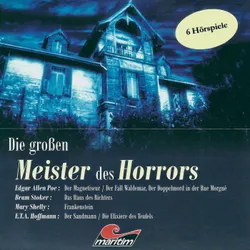
  2. Die großen Meister des Horrors, 6 Hörspiele

    Edgar Allan, Bram Stoker, Mary Shelley, E T A Hoffmann

  3. Neu

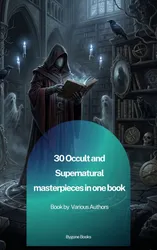
    30 Occult and Supernatural masterpieces in one book

    Washington Irving, Mary Shelley, Charles Dickens, Joseph Sheridan Fanu, Elizabeth Cleghorn Gaskell, Louisa May Alcott, Oscar Wilde, Rudyard Kipling, Edith Nesbit, John Meade Falkner, Henry James, H.G. Wells, Montague Rhodes James, Arnold Bennett, Henry Rider Haggard, William Hope Hodgson, Virginia Woolf, Master Hendrick Certain, Pastor Tappau's, Lefebvre, De Lacy

  4. Neu

    The Dawn of Science Fiction : The Visionaries Who Imagined Tomorrow First

    H.G. Wells, Mary Shelley, Voltaire, Jack London, Frank R. Stockton, Edgar Allan Poe

  5. Neu

    Tomorrow Belonged to Her : Classic Science Fiction Written by Women

    Leigh Brackett, Evelyn E. Smith, Mary Shelley, Andre Norton, Margaret St. Clair, Lynn Venable, Miriam Allen deFord, Francis Stevens, Katherine MacLean, Dorothy Quick, Mary Carlson, Gerda Rhoads

  6. Neu
    3.9

    Frankenstein

    Mary Shelley

  7. Neu

    On Ghosts

    Mary Shelley

  8. Neu
    3.9

    Frankenstein

    Mary Shelley

  9. Neu
    3.3

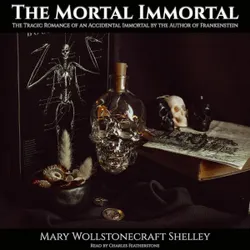
    The Mortal Immortal : The Tragic Romance of an Accidental Immortal by the Author of Frankenstein

    Mary Shelley

  10. Neu

    Mondolfos arv

    Mary Shelley

  11. 100 Clásicos de la Literatura Universal

    Francis Scott Fitzgerald, Mary Shelley, Lyman Frank Baum, Louisa May Alcott, Dante Alighieri, Jane Austen, Ambrose Bierce, Emily Brontë, Edgar Rice Burroughs, Lewis Carroll, Wilkie Collins, René Descartes, Charles Dickens, Emily Dickinson, Alexandre Dumas, Gustave Flaubert, Benito Pérez Galdós, Johann Wolfgang von Goethe, Thomas Hardy, E T A Hoffmann, Washington Irving, Henry James, James Joyce, Franz Kafka, Gaston Leroux, Federico García Lorca, H.P. Lovecraft, Publio Virgilio Marón, Lucy Maud Montgomery, John William Polidori, Marco Polo, Antoine de Saint-Exupéry, Emilio Salgari, Walter Scott, Mark Twain, Jules Verne, Julio Verne, H.G. Wells, Edith Wharton, Mary Wollstonecraft, Stefan Zweig, Sun Tzu, Bram Stoker, - Aristoteles, George Bernard Shaw, Henryk Sienkiewicz, Concepción Arenal, Charlotte Brontë, Miguel de Cervantes, G.K. Chesterton, Daniel Defoe, Fyodor Mikhailovich Dostoyevsky, Arthur Conan Doyle, Sigmund Freud, H. Rider Haggard, Homero, Immanuel Kant, Rudyard Kipling, Molière, Friedrich Nietzsche, Fernando de Rojas, Sófocles, William Makepeace Thackeray, León Tolstói, Voltaire, Ramón María del Valle-Inclán, Oscar Wilde, Virginia Woolf

  12. 100 Obras Maestras Que Debes Leer Antes De Morir

    Francis Scott Fitzgerald, Mary Shelley, Lyman Frank Baum, Edith Nesbit, Dante Alighieri, Jane Austen, Ambrose Bierce, Emily Brontë, Edgar Rice Burroughs, Lewis Carroll, Wilkie Collins, René Descartes, Charles Dickens, Emily Dickinson, Alexandre Dumas, Gustave Flaubert, Benito Pérez Galdós, Johann Wolfgang von Goethe, Thomas Hardy, E T A Hoffmann, Washington Irving, Henry James, James Joyce, Franz Kafka, Gaston Leroux, Federico García Lorca, H.P. Lovecraft, Publio Virgilio Marón, Lucy Maud Montgomery, John William Polidori, Marco Polo, Antoine de Saint-Exupéry, Emilio Salgari, Walter Scott, Mark Twain, Jules Verne, H.G. Wells, Edith Wharton, Mary Wollstonecraft, Fernando de Rojas