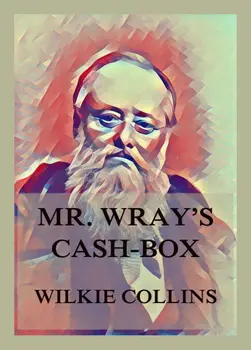
Mr. Wray's Cash Box

A good bookshelf is not complete without this charming little tale. It is founded on what was related to the author as a fact, as to the first obtaining of the well-known cast of the face of Shakespeare, by a stonemason, who was repairing the church at Stratford-on Avon. He was found out, and by the local authorities forthwith threatened with severe penalties; and not knowing how far his deed was culpable, and their threats dangerous, he thought it best to make a hasty retreat from the place with his treasure. It was only for love and admiration of the poet that he had been prompted to procure the memorial for himself, but he was advised afterwards to turn it to profitable account. His casts, neatly mounted on black marble, were soon spread far and wide through England and America. From this fact, or tradition, the story of Mr. Wray and his family is conceived. The title of the story, as of a 'Mysterious Cash-Box," arises from the opening scene, where a pretty and interesting girl comes into a chemist's shop, which is also the branch bank of a little country town. She asks leave to put a written bill in the window, advertising that "Mr. Reuben Wray, pupil of the late celebrated John Kemble, gives lessons on elocution and delivery at two-and-sixpence an hour." That pupils are prepared for the stage, and various announcements, the long advertisement also sets forth. Speculation was soon afloat in the town of Tidbury-on-the-Marsh, about this Mr. Wray and the fair stranger who had brought the announcement to the bank window. Mr. Dark, one of the partners, had seen one of the gentlemen who lodged at No. 12, with a large cash-box, and it puzzled him how a man with a cash-box needed to give lessons in reading at half-a-crown an hour. The connection between the mask and the mystery may now be guessed. The story is very pleasantly told, and what Mr. Collins calls a slight sketch, is a beautifully-drawn picture of domestic life and quite a tale for an English or American winter fireside.
Über dieses Buch

A good bookshelf is not complete without this charming little tale. It is founded on what was related to the author as a fact, as to the first obtaining of the well-known cast of the face of Shakespeare, by a stonemason, who was repairing the church at Stratford-on Avon. He was found out, and by the local authorities forthwith threatened with severe penalties; and not knowing how far his deed was culpable, and their threats dangerous, he thought it best to make a hasty retreat from the place with his treasure. It was only for love and admiration of the poet that he had been prompted to procure the memorial for himself, but he was advised afterwards to turn it to profitable account. His casts, neatly mounted on black marble, were soon spread far and wide through England and America. From this fact, or tradition, the story of Mr. Wray and his family is conceived. The title of the story, as of a 'Mysterious Cash-Box," arises from the opening scene, where a pretty and interesting girl comes into a chemist's shop, which is also the branch bank of a little country town. She asks leave to put a written bill in the window, advertising that "Mr. Reuben Wray, pupil of the late celebrated John Kemble, gives lessons on elocution and delivery at two-and-sixpence an hour." That pupils are prepared for the stage, and various announcements, the long advertisement also sets forth. Speculation was soon afloat in the town of Tidbury-on-the-Marsh, about this Mr. Wray and the fair stranger who had brought the announcement to the bank window. Mr. Dark, one of the partners, had seen one of the gentlemen who lodged at No. 12, with a large cash-box, and it puzzled him how a man with a cash-box needed to give lessons in reading at half-a-crown an hour. The connection between the mask and the mystery may now be guessed. The story is very pleasantly told, and what Mr. Collins calls a slight sketch, is a beautifully-drawn picture of domestic life and quite a tale for an English or American winter fireside.
Starte noch heute mit diesem Buch für € 0

  • Hole dir während der Testphase vollen Zugriff auf alle Bücher in der App
  • Keine Verpflichtungen, jederzeit kündbar
Jetzt kostenlos testen
Mehr als 52 000 Menschen haben Nextory im App Store und auf Google Play 5 Sterne gegeben.

  1. The New Magdalen

    Wilkie Collins

  2. Neu

    100 Clásicos de la Literatura Universal

    Francis Scott Fitzgerald, Mary Shelley, Lyman Frank Baum, Louisa May Alcott, Dante Alighieri, Jane Austen, Ambrose Bierce, Emily Brontë, Edgar Rice Burroughs, Lewis Carroll, Wilkie Collins, René Descartes, Charles Dickens, Emily Dickinson, Alexandre Dumas, Gustave Flaubert, Benito Pérez Galdós, Johann Wolfgang von Goethe, Thomas Hardy, E T A Hoffmann, Washington Irving, Henry James, James Joyce, Franz Kafka, Gaston Leroux, Federico García Lorca, H.P. Lovecraft, Publio Virgilio Marón, Lucy Maud Montgomery, John William Polidori, Marco Polo, Antoine de Saint-Exupéry, Emilio Salgari, Walter Scott, Mark Twain, Jules Verne, Julio Verne, H.G. Wells, Edith Wharton, Mary Wollstonecraft, Stefan Zweig, Sun Tzu, Bram Stoker, - Aristoteles, George Bernard Shaw, Henryk Sienkiewicz, Concepción Arenal, Charlotte Brontë, Miguel de Cervantes, G.K. Chesterton, Daniel Defoe, Fyodor Mikhailovich Dostoyevsky, Arthur Conan Doyle, Sigmund Freud, H. Rider Haggard, Homero, Immanuel Kant, Rudyard Kipling, Molière, Friedrich Nietzsche, Fernando de Rojas, Sófocles, William Makepeace Thackeray, León Tolstói, Voltaire, Ramón María del Valle-Inclán, Oscar Wilde, Virginia Woolf

  3. Neu

    100 Obras Maestras Que Debes Leer Antes De Morir

    Francis Scott Fitzgerald, Mary Shelley, Lyman Frank Baum, Edith Nesbit, Dante Alighieri, Jane Austen, Ambrose Bierce, Emily Brontë, Edgar Rice Burroughs, Lewis Carroll, Wilkie Collins, René Descartes, Charles Dickens, Emily Dickinson, Alexandre Dumas, Gustave Flaubert, Benito Pérez Galdós, Johann Wolfgang von Goethe, Thomas Hardy, E T A Hoffmann, Washington Irving, Henry James, James Joyce, Franz Kafka, Gaston Leroux, Federico García Lorca, H.P. Lovecraft, Publio Virgilio Marón, Lucy Maud Montgomery, John William Polidori, Marco Polo, Antoine de Saint-Exupéry, Emilio Salgari, Walter Scott, Mark Twain, Jules Verne, H.G. Wells, Edith Wharton, Mary Wollstonecraft, Fernando de Rojas

  4. Neu

    Gesammelte Werke

    Wilkie Collins

  5. Neu

    Eine verhängnisvolle Erbschaft

    Wilkie Collins

  6. Neu

    Der doppelte Mister Armandale - Zweiter Teil: Roman

    Wilkie Collins

  7. Neu

    Der doppelte Mister Armandale - Erster Teil: Roman

    Wilkie Collins

  8. Der Fall Basil: Roman

    Wilkie Collins

  9. 30 Mystery Investigation Masterpieces

    Ryūnosuke Akutagawa, Gilbert Keith Chesterton, Wilkie Collins, Arthur Conan Doyle, Hanns Heinz Ewers, Hollis Godfrey, Thomas Hardy, William Le Queux, Maurice Leblanc, Gaston Leroux, Catherine Louisa Pirkis, Edgar Allan Poe, Frank R. Stockton, Mark Twain, Jules Verne, Carolyn Wells, Fred Merrick White

  10. 30 Suspense and Thriller Masterpieces

    Marcel Allain, Grant Allen, John Buchan, Edgar Rice Burroughs, Gilbert Keith Chesterton, Erskine Childers, Wilkie Collins, Arthur Griffiths, Henry Rider Haggard, Thomas Hardy, Anthony Hope, William Andrew Johnston, Frederic Arnold Kummer, William Le Queux, Frank Norris, Edward Phillips Oppenheim, Mary Roberts Rinehart, Allen Upward, Louis Joseph Vance, Edgar Wallace, Fred Merrick White

  11. 4.5

    The Woman in White

    Wilkie Collins

  12. Die schwarze Robe: Kriminalroman

    Wilkie Collins