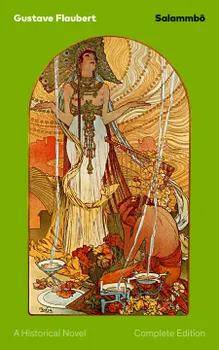
Salammbô - A Historical Novel (Complete Edition) : Ancient Tale of Blood and Thunder

This carefully crafted ebook: "Salammbô - A Historical Novel (Complete Edition)" is formatted for your eReader with a functional and detailed table of contents. Salammbô is a historical novel about a priestess and the daughter of Hamilcar Barca, an aristocratic Carthaginian general. Salammbô is the object of the obsessive lust of Matho, a leader of the mercenaries. With the help of the scheming freed slave, Spendius, Matho steals the sacred veil of Carthage, the Zaïmph, prompting Salammbô to enter the mercenaries' camp in an attempt to steal it back. The Zaïmph is an ornate bejewelled veil draped about the statue of the goddess Tanit in the sanctum sanctorum of her temple: the veil is the city's guardian and touching it will bring death to the perpetrator. The novel is set in Carthage during the 3rd century BC, immediately before and during the Mercenary Revolt which took place shortly after the First Punic War. Flaubert's main source was Book I of Polybius's Histories. It required a great deal of work from the author, who enthusiastically left behind the realism of his masterpiece Madame Bovary for this tale of blood and thunder. The book, which Flaubert researched painstakingly, is largely an exercise in sensuous and violent exoticism. It was another best-seller and sealed his reputation. The Carthaginian costumes described in it even left traces on the fashions of the time. Nevertheless, in spite of its classic status in France, it is not widely known today among English speakers. Gustave Flaubert (1821–1880) was an influential French writer who was perhaps the leading exponent of literary realism of his country. He is known especially for his first published novel, Madame Bovary and for his scrupulous devotion to his style and aesthetics. The celebrated short story writer Maupassant was a protégé of Flaubert.
Über dieses Buch

This carefully crafted ebook: "Salammbô - A Historical Novel (Complete Edition)" is formatted for your eReader with a functional and detailed table of contents. Salammbô is a historical novel about a priestess and the daughter of Hamilcar Barca, an aristocratic Carthaginian general. Salammbô is the object of the obsessive lust of Matho, a leader of the mercenaries. With the help of the scheming freed slave, Spendius, Matho steals the sacred veil of Carthage, the Zaïmph, prompting Salammbô to enter the mercenaries' camp in an attempt to steal it back. The Zaïmph is an ornate bejewelled veil draped about the statue of the goddess Tanit in the sanctum sanctorum of her temple: the veil is the city's guardian and touching it will bring death to the perpetrator. The novel is set in Carthage during the 3rd century BC, immediately before and during the Mercenary Revolt which took place shortly after the First Punic War. Flaubert's main source was Book I of Polybius's Histories. It required a great deal of work from the author, who enthusiastically left behind the realism of his masterpiece Madame Bovary for this tale of blood and thunder. The book, which Flaubert researched painstakingly, is largely an exercise in sensuous and violent exoticism. It was another best-seller and sealed his reputation. The Carthaginian costumes described in it even left traces on the fashions of the time. Nevertheless, in spite of its classic status in France, it is not widely known today among English speakers. Gustave Flaubert (1821–1880) was an influential French writer who was perhaps the leading exponent of literary realism of his country. He is known especially for his first published novel, Madame Bovary and for his scrupulous devotion to his style and aesthetics. The celebrated short story writer Maupassant was a protégé of Flaubert.

Starte noch heute mit diesem Buch für € 0

  • Hole dir während der Testphase vollen Zugriff auf alle Bücher in der App
  • Keine Verpflichtungen, jederzeit kündbar
Jetzt kostenlos testen
Mehr als 52 000 Menschen haben Nextory im App Store und auf Google Play 5 Sterne gegeben.

  1. 3.3

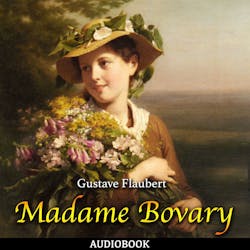
    Madame Bovary

    Gustave Flaubert

  2. Die größten Klassiker der französischen Literatur

    Victor Hugo, Marcel Proust, Voltaire, George Sand, Emile Zola, Gustave Flaubert, Honoré de Balzac, François Rabelais, Alexandre Dumas, Charles Baudelaire, Stendhal, Denis Diderot, Jean-Jacques Rousseau, Marie-Madeleine La Fayette, Alphonse Daudet

  3. 50 Clásicos que Debes Leer Antes de Morir : Un viaje literario por los tesoros de la literatura universal

    Dante Alighieri, Aristóteles, Jane Austen, Charles Baudelaire, Giovanni Boccaccio, Anne Brontë, C. Collodi, James Fenimore Cooper, Fedor Mikhaïlovitch Dostoïevski, Arthur Conan Doyle, Alexandre Dumas, José de Espronceda, Gustave Flaubert, Sigmund Freud, Benito Pérez Galdós, Kahlil Gibran, Johann Wolfgang Goethe, Johann Wolfgang von Goethe, Victor Hugo, Thomas Hardy, Nathaniel Hawthorne, Vicente Blasco Ibáñez, Washington Irving, James Joyce, Mariano José de Larra, Jack London, Federico García Lorca, H.P. Lovecraft, Antonio Machado, Gustav Meyrink, John Stuart Mill, Amado Nervo, Friedrich Nietzsche, Solomon Northup, Alexander Sergeyevich Pushkin, Francisco de Quevedo, Walter Scott, William Shakespeare, Robert Louis Stevenson, Harriet Beecher Stowe, Jonathan Swift, Mark Twain, Miguel De Unamuno, Ramón María del Valle-Inclán, Julio Verne, Virginia Woolf

  4. 100 Clásicos de la Literatura Universal

    Francis Scott Fitzgerald, Mary Shelley, Lyman Frank Baum, Louisa May Alcott, Dante Alighieri, Jane Austen, Ambrose Bierce, Emily Brontë, Edgar Rice Burroughs, Lewis Carroll, Wilkie Collins, René Descartes, Charles Dickens, Emily Dickinson, Alexandre Dumas, Gustave Flaubert, Benito Pérez Galdós, Johann Wolfgang von Goethe, Thomas Hardy, E T A Hoffmann, Washington Irving, Henry James, James Joyce, Franz Kafka, Gaston Leroux, Federico García Lorca, H.P. Lovecraft, Publio Virgilio Marón, Lucy Maud Montgomery, John William Polidori, Marco Polo, Antoine de Saint-Exupéry, Emilio Salgari, Walter Scott, Mark Twain, Jules Verne, Julio Verne, H.G. Wells, Edith Wharton, Mary Wollstonecraft, Stefan Zweig, Sun Tzu, Bram Stoker, - Aristoteles, George Bernard Shaw, Henryk Sienkiewicz, Concepción Arenal, Charlotte Brontë, Miguel de Cervantes, G.K. Chesterton, Daniel Defoe, Fyodor Mikhailovich Dostoyevsky, Arthur Conan Doyle, Sigmund Freud, H. Rider Haggard, Homero, Immanuel Kant, Rudyard Kipling, Molière, Friedrich Nietzsche, Fernando de Rojas, Sófocles, William Makepeace Thackeray, León Tolstói, Voltaire, Ramón María del Valle-Inclán, Oscar Wilde, Virginia Woolf

  5. 100 Obras Maestras Que Debes Leer Antes De Morir

    Francis Scott Fitzgerald, Mary Shelley, Lyman Frank Baum, Edith Nesbit, Dante Alighieri, Jane Austen, Ambrose Bierce, Emily Brontë, Edgar Rice Burroughs, Lewis Carroll, Wilkie Collins, René Descartes, Charles Dickens, Emily Dickinson, Alexandre Dumas, Gustave Flaubert, Benito Pérez Galdós, Johann Wolfgang von Goethe, Thomas Hardy, E T A Hoffmann, Washington Irving, Henry James, James Joyce, Franz Kafka, Gaston Leroux, Federico García Lorca, H.P. Lovecraft, Publio Virgilio Marón, Lucy Maud Montgomery, John William Polidori, Marco Polo, Antoine de Saint-Exupéry, Emilio Salgari, Walter Scott, Mark Twain, Jules Verne, H.G. Wells, Edith Wharton, Mary Wollstonecraft, Fernando de Rojas

  6. Tre fortællinger

    Gustave Flaubert

  7. 4.1

    Madame Bovary

    Gustave Flaubert

  8. Salambo

    Gustave Flaubert

  9. November

    Gustave Flaubert

  10. Ein einfältig Herz

    Gustave Flaubert

  11. 50 Masterpieces you have to read before you die vol: 2

    Louisa May Alcott, Jane Austen, Joseph Conrad, D. H. Lawrence, George Eliot, Leo Tolstoy, James Joyce, Charles Dickens, Bram Stoker, Oscar Wilde, Honoré de Balzac, Edgar Rice Burroughs, Anne Brontë, Charlotte Brontë, Emily Brontë, Lewis Carroll, Willa Cather, Miguel de Cervantes, E. Cummings, Fyodor Dostoyevsky, Daniel Defoe, Arthur Conan Doyle, Alexandre Dumas, Gustave Flaubert, Henry James, Victor Hugo

  12. 50 Masterpieces you have to read before you die vol 1

    Louisa May Alcott, Jane Austen, Joseph Conrad, Edwin Abbott, George Eliot, Leo Tolstoy, James Joyce, Charles Dickens, Bram Stoker, Oscar Wilde, Honoré de Balzac, Edgar Rice Burroughs, Anne Brontë, Charlotte Brontë, Emily Brontë, Lewis Carroll, Willa Cather, Miguel de Cervantes, E. Cummings, Fyodor Dostoyevsky, Daniel Defoe, Arthur Conan Doyle, Alexandre Dumas, Gustave Flaubert, Henry James, Victor Hugo