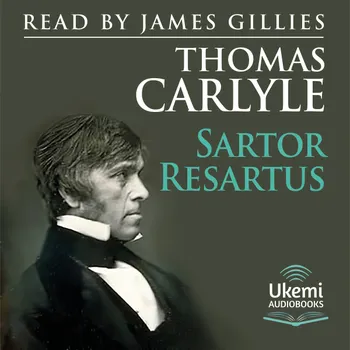
Sartor Resartus

Sartor Resartus is one of the most unusual, even quirky, British novels to emerge from the first half of the 19th century. Published in 1836, its varied heritage reflects the earlier eccentricities of Sterne and Swift, curiously mixed with influences from Goethe.

Its subject matter is strange: it concerns a book called Clothes: Their Origin and Influence by one Diogenes Teufelsdröckh, a German philosopher. And though Thomas Carlyle (1795-1881) became a household name in his lifetime, especially for his essays, and his work as an historian and philosopher, his comic novel Sartor Resartus would prove to have a lasting effect on contemporary writers. American figures in particular - Emerson, Dickinson, Melville and Twain among them - acknowledged its influence.

In addition, Jorge Luis Borges was among the 20th-century writers to salute the work, which he encountered aged 17. Borges reflects: 'I read Sartor Resartus, and I can recall many of its pages; I know them by heart.' Sartor Resartus (which means 'The Tailor Re-tailored') chronicles the struggles of an unnamed editor attempting to produce an English-language edition of a publication, which, according to the man who has sent it to him, is 'a work of philosophy which has taken all Europe by storm'.

This is the book on clothes by Teufelsdröckh, with whom the editor was briefly acquainted on his travels. However, the more vigorously the editor sets himself to his task, the more thankless and perhaps impossible it proves. In frustration, he shares fragments of the translated work with his readers, in the search for some collective insight. When a biography of the author arrives, promising to bring some context to the work, the editor finds himself even further at a loss. His trust in Teufelsdröckh begins to unravel, and he becomes suspicious that nothing about this book, not even its author, is as it appears to be. Is it a work of genius? A palimpsest with a secret hidden in its depths? Or is the editor in receipt of something completely different and wholly unexpected? Sartor Resartus may now largely exist in the shadows of On Heroes, Hero-Worship, and the Heroic in History, and his account of the French Revolution, but this early novel represents an interesting phase in Carlyle’s literary output.
Über dieses Buch

Sartor Resartus is one of the most unusual, even quirky, British novels to emerge from the first half of the 19th century. Published in 1836, its varied heritage reflects the earlier eccentricities of Sterne and Swift, curiously mixed with influences from Goethe.

Its subject matter is strange: it concerns a book called Clothes: Their Origin and Influence by one Diogenes Teufelsdröckh, a German philosopher. And though Thomas Carlyle (1795-1881) became a household name in his lifetime, especially for his essays, and his work as an historian and philosopher, his comic novel Sartor Resartus would prove to have a lasting effect on contemporary writers. American figures in particular - Emerson, Dickinson, Melville and Twain among them - acknowledged its influence.

In addition, Jorge Luis Borges was among the 20th-century writers to salute the work, which he encountered aged 17. Borges reflects: 'I read Sartor Resartus, and I can recall many of its pages; I know them by heart.' Sartor Resartus (which means 'The Tailor Re-tailored') chronicles the struggles of an unnamed editor attempting to produce an English-language edition of a publication, which, according to the man who has sent it to him, is 'a work of philosophy which has taken all Europe by storm'.

This is the book on clothes by Teufelsdröckh, with whom the editor was briefly acquainted on his travels. However, the more vigorously the editor sets himself to his task, the more thankless and perhaps impossible it proves. In frustration, he shares fragments of the translated work with his readers, in the search for some collective insight. When a biography of the author arrives, promising to bring some context to the work, the editor finds himself even further at a loss. His trust in Teufelsdröckh begins to unravel, and he becomes suspicious that nothing about this book, not even its author, is as it appears to be. Is it a work of genius? A palimpsest with a secret hidden in its depths? Or is the editor in receipt of something completely different and wholly unexpected? Sartor Resartus may now largely exist in the shadows of On Heroes, Hero-Worship, and the Heroic in History, and his account of the French Revolution, but this early novel represents an interesting phase in Carlyle’s literary output.

Starte noch heute mit diesem Buch für € 0

  • Hole dir während der Testphase vollen Zugriff auf alle Bücher in der App
  • Keine Verpflichtungen, jederzeit kündbar
Jetzt kostenlos testen
Mehr als 52 000 Menschen haben Nextory im App Store und auf Google Play 5 Sterne gegeben.

  1. Neu

    100 Klassiker der Geschichtsschreibung : Die Geschichte des Alten Ägypten, Der Alexanderzug, Römische Geschichte, Herbst des Mittelalters, Die russische Revolution,Der Kampf um Europa

    Edward Gibbon, Leopold von Ranke, J. B. Bury, Theodor Mommsen, Herodot, Thukydides, Xenophon, Arrian, Titus Livius, Tacitus, Gaius Iulius Caesar, Sueton, Polybios, Ammianus Marcellinus, Plutarch, Diogenes Laërtios, Eusebius, Prokop von Cäsarea, Anna Komnena, Agathias, Marc Bloch, L. W. King, George Rawlinson, Edward Bulwer-Lytton, Jacob Burckhardt, Joseph François Michaud, Johan Huizinga, Arthur Middleton Reeves, Niccolò Machiavelli, G.K. Chesterton, Voltaire, Friedrich Schiller, Ricarda Huch, Thomas Carlyle, Charles Downer Hazen, Egon Friedell, Walter Benjamin

  2. Neu

    100 Große Geschichtsbücher - Klassiker, die man kennen muss : Der Peloponnesische Krieg, Der Alexanderzug, Ab Urbe Condita, Napoleonische Kriege, Geschichte des Ersten und Zweiten Weltkriegs

    Tacitus, Thukydides, Plutarch, Theodor Mommsen, Edward Gibbon, Leopold von Ranke, Ricarda Huch, Helmuth von Moltke, Xenophon, Arrian, Titus Livius, Gaius Iulius Caesar, Sueton, Polybios, Ammianus Marcellinus, Diogenes Laërtios, Eusebius, Prokop von Cäsarea, Anna Komnena, Agathias, Marc Bloch, George Rawlinson, Edward Bulwer-Lytton, Jacob Burckhardt, Joseph François Michaud, Johan Huizinga, Niccolò Machiavelli, G.K. Chesterton, Voltaire, Friedrich Schiller, Thomas Carlyle, Charles Downer Hazen, Egon Friedell, Walter Benjamin

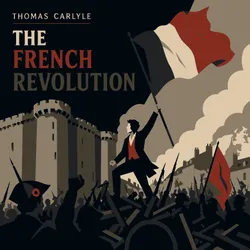
  3. The French Revolution

    Thomas Carlyle

  4. The Gift of Friendship : What the Wisest Minds Said About Our Deepest Bonds Across Two Thousand Years

    Alfred H. Hyatt, Henry David Thoreau, Thomas Carlyle, Henry Mackenzie, Oliver Goldsmith, Samuel Johnson, George Berkeley, Richard Steele, Joseph Addison, Francis Bacon, Michel de Montaigne, Anthusa, Aristotle

  5. Die größten Geschichtsbücher - Klassiker, die man kennen muss : Der Peloponnesische Krieg, Römische Geschichte, Aus Zwei Jahrtausenden Deutscher Geschichte, Die Französische Revolution

    Tacitus, Leopold von Ranke, Theodor Mommsen, Herodot, Thukydides, Titus Livius, Sueton, Jacob Burckhardt, Niccolò Machiavelli, Ricarda Huch, Thomas Carlyle, Egon Friedell, Felix Salten

  6. Die größten Klassiker der Geschichtswissenschaft : Der Peloponnesische Krieg, Römische Geschichte, Aus Zwei Jahrtausenden Deutscher Geschichte, Die Französische Revolution

    Theodor Mommsen, Herodot, Thukydides, Titus Livius, Sueton, Tacitus, Jacob Burckhardt, Niccolò Machiavelli, Ricarda Huch, Thomas Carlyle, Leopold von Ranke, Egon Friedell, Felix Salten

  7. Die Französische Revolution : Revolutionäre Analyse einer turbulenten Epoche

    Thomas Carlyle

  8. History of Friedrich II of Prussia (All 21 Volumes) : Enriched edition. Biography of the Famous Prussian King, Called Frederick the Great

    Thomas Carlyle

  9. Die Französische Revolution (Alle 3 Bände) : Bereicherte Ausgabe.

    Thomas Carlyle

  10. Die Französische Revolution : Bereicherte Ausgabe. Chaos, Leidenschaft und politische Umwälzungen: lebendige Prosa zur Geburt moderner Demokratie

    Thomas Carlyle

  11. Chartism

    Thomas Carlyle

  12. Napoleon: Von der Französischen Revolution bis Waterloo

    Egon Friedell, Jerome Bonaparte, Ricarda Huch, Thomas Carlyle, Alexandre Dumas, August Wilhelm Grube