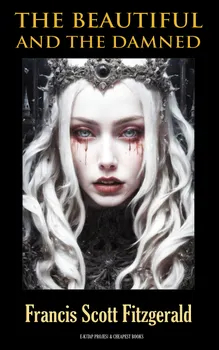
The Beautiful and the Damned

In 1913, when Anthony Patch was twenty-five, two years were already gone since irony, the Holy Ghost of this later day, had, theoretically at least, descended upon him. Irony was the final polish of the shoe, the ultimate dab of the clothes-brush, a sort of intellectual "There!"—yet at the brink of this story he has as yet gone no further than the conscious stage. As you first see him he wonders frequently whether he is not without honor and slightly mad, a shameful and obscene thinness glistening on the surface of the world like oil on a clean pond, these occasions being varied, of course, with those in which he thinks himself rather an exceptional young man, thoroughly sophisticated, well ad-justed to his environment, and somewhat more significant than any one else he knows.

This was his healthy state and it made him cheerful, pleasant, and very attractive to intelligent men and to all women. In this state he considered that he would one day accomplish some quiet subtle thing that the elect would deem worthy and, passing on, would join the dimmer stars in a nebulous, indeterminate heaven half-way between death and immortality.

Until the time came for this effort he would be Anthony Patch—not a portrait of a man but a distinct and dynamic personality, opinionated, contemptuous, functioning from within outward—a man who was aware that there could be no honor and yet had honor, who knew the sophistry of courage and yet was brave.

A WORTHY MAN AND HIS GIFTED SON

Anthony drew as much consciousness of social security from being the grandson of Adam J. Patch as he would have had from tracing his line over the sea to the crusaders. This is inevitable; Virginians and Bostonians to the contrary notwithstanding, an aristocracy founded sheerly on money postulates wealth in the particular.

Now Adam J. Patch, more familiarly known as "Cross Patch," left his father's farm in Tarrytown early in sixty-one to join a New York cavalry regiment.

He came home from the war a major, charged into Wall Street, and amid much fuss, fume, applause, and ill will he gathered to himself some seventy-five million dollars.

Über dieses Buch

In 1913, when Anthony Patch was twenty-five, two years were already gone since irony, the Holy Ghost of this later day, had, theoretically at least, descended upon him. Irony was the final polish of the shoe, the ultimate dab of the clothes-brush, a sort of intellectual "There!"—yet at the brink of this story he has as yet gone no further than the conscious stage. As you first see him he wonders frequently whether he is not without honor and slightly mad, a shameful and obscene thinness glistening on the surface of the world like oil on a clean pond, these occasions being varied, of course, with those in which he thinks himself rather an exceptional young man, thoroughly sophisticated, well ad-justed to his environment, and somewhat more significant than any one else he knows.

This was his healthy state and it made him cheerful, pleasant, and very attractive to intelligent men and to all women. In this state he considered that he would one day accomplish some quiet subtle thing that the elect would deem worthy and, passing on, would join the dimmer stars in a nebulous, indeterminate heaven half-way between death and immortality.

Until the time came for this effort he would be Anthony Patch—not a portrait of a man but a distinct and dynamic personality, opinionated, contemptuous, functioning from within outward—a man who was aware that there could be no honor and yet had honor, who knew the sophistry of courage and yet was brave.

A WORTHY MAN AND HIS GIFTED SON

Anthony drew as much consciousness of social security from being the grandson of Adam J. Patch as he would have had from tracing his line over the sea to the crusaders. This is inevitable; Virginians and Bostonians to the contrary notwithstanding, an aristocracy founded sheerly on money postulates wealth in the particular.

Now Adam J. Patch, more familiarly known as "Cross Patch," left his father's farm in Tarrytown early in sixty-one to join a New York cavalry regiment.

He came home from the war a major, charged into Wall Street, and amid much fuss, fume, applause, and ill will he gathered to himself some seventy-five million dollars.
Starte noch heute mit diesem Buch für € 0

  • Hole dir während der Testphase vollen Zugriff auf alle Bücher in der App
  • Keine Verpflichtungen, jederzeit kündbar
Jetzt kostenlos testen
Mehr als 52 000 Menschen haben Nextory im App Store und auf Google Play 5 Sterne gegeben.

  1. 1. Nov.
    4.3
    #13

    El Gran Gatsby :

    Francis Scott Fitzgerald

  2. Neu

    100 Clásicos de la Literatura Universal

    Francis Scott Fitzgerald, Mary Shelley, Lyman Frank Baum, Louisa May Alcott, Dante Alighieri, Jane Austen, Ambrose Bierce, Emily Brontë, Edgar Rice Burroughs, Lewis Carroll, Wilkie Collins, René Descartes, Charles Dickens, Emily Dickinson, Alexandre Dumas, Gustave Flaubert, Benito Pérez Galdós, Johann Wolfgang von Goethe, Thomas Hardy, E T A Hoffmann, Washington Irving, Henry James, James Joyce, Franz Kafka, Gaston Leroux, Federico García Lorca, H.P. Lovecraft, Publio Virgilio Marón, Lucy Maud Montgomery, John William Polidori, Marco Polo, Antoine de Saint-Exupéry, Emilio Salgari, Walter Scott, Mark Twain, Jules Verne, Julio Verne, H.G. Wells, Edith Wharton, Mary Wollstonecraft, Stefan Zweig, Sun Tzu, Bram Stoker, - Aristoteles, George Bernard Shaw, Henryk Sienkiewicz, Concepción Arenal, Charlotte Brontë, Miguel de Cervantes, G.K. Chesterton, Daniel Defoe, Fyodor Mikhailovich Dostoyevsky, Arthur Conan Doyle, Sigmund Freud, H. Rider Haggard, Homero, Immanuel Kant, Rudyard Kipling, Molière, Friedrich Nietzsche, Fernando de Rojas, Sófocles, William Makepeace Thackeray, León Tolstói, Voltaire, Ramón María del Valle-Inclán, Oscar Wilde, Virginia Woolf

  3. Neu

    100 Obras Maestras Que Debes Leer Antes De Morir

    Francis Scott Fitzgerald, Mary Shelley, Lyman Frank Baum, Edith Nesbit, Dante Alighieri, Jane Austen, Ambrose Bierce, Emily Brontë, Edgar Rice Burroughs, Lewis Carroll, Wilkie Collins, René Descartes, Charles Dickens, Emily Dickinson, Alexandre Dumas, Gustave Flaubert, Benito Pérez Galdós, Johann Wolfgang von Goethe, Thomas Hardy, E T A Hoffmann, Washington Irving, Henry James, James Joyce, Franz Kafka, Gaston Leroux, Federico García Lorca, H.P. Lovecraft, Publio Virgilio Marón, Lucy Maud Montgomery, John William Polidori, Marco Polo, Antoine de Saint-Exupéry, Emilio Salgari, Walter Scott, Mark Twain, Jules Verne, H.G. Wells, Edith Wharton, Mary Wollstonecraft, Fernando de Rojas

  4. Neu

    The Great Gatsby, Animal Farm & 1984 (3In1)

    Francis Scott Fitzgerald

  5. 3.6

    The Great Gatsby

    Francis Scott Fitzgerald

  6. The Curious Case of Benjamin Button

    Francis Scott Fitzgerald

  7. 3.6

    The Great Gatsby

    Francis Scott Fitzgerald

  8. #11

    Verrückter Sonntag : Eine Erzählung von Francis Scott Fitzgerald

    Francis Scott Fitzgerald

  9. Der große Gatsby : Der berühmte Roman über den amerikanischen Traum, Reichtum und Illusionen

    Francis Scott Fitzgerald

  10. #10

    Rückkehr nach Babylon : 10 Erzählungen (1931-1932)

    Francis Scott Fitzgerald

  11. #9

    Fifi, das Hotel Kind : Eine Erzählung von Francis Scott Fitzgerald

    Francis Scott Fitzgerald

  12. 4.3
    #13

    El gran Gatsby

    Francis Scott Fitzgerald