The Night Land

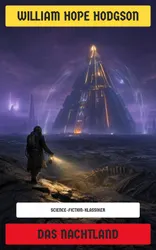
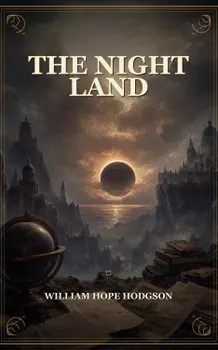
The Night Land is science fiction ahead of its time. Published in 1912, the book introduces a 17th-century gentleman who loses his wife. He soon discovers himself somehow reanimated in Earth's far future, millions of years from now, when the sun has died and the Earth has become a hellish waste. What remains of humanity lives in titanic mile-high pyramids surrounded by energy shields to protect them from the abhuman monsters lurking in the darkness. The human survivors soon receive a distress signal sent by a long-forgotten lesser pyramid, and the narrator embarks on a bloody quest to rescue the maiden of the pyramid—which he knows to be his lost love, somehow transcending time and space. On his journey the narrator is beset by countless horrifying monsters, many of them mutated former-humans. These depictions are so singular that H. P. Lovecraft called The Night Land "one of the most potent pieces of macabre imagination ever written." The novel is unique in its farsighted depiction of technology. The narrator has telepathic powers and is able to communicate with others over long distances. These powers are enabled by his "brain elements," which are possibly surgically implanted. Telepathic communications may be spied upon by the monsters of the waste, but a "master word" sent by the caller may verify the integrity of the signal—a description of a kind of early public-key cryptography. The narrator survives on food pellets and "powdered water," predicting a kind of astronaut food. His weapon of choice is a Diskos, a kind of whirling razor-sharp blade that shoots fire and energy. The machines and force fields of the human pyramid monument are powered by "Earth current," which the narrator worries is slowly becoming dimmer over the years. The pyramid itself is a jewel of imagination: described as miles wide and miles high, each layer is its own city, and it continues deep underground where artificial grow chambers provide food for millions of humans. Though the novel maintains a sort of legendary status for its grim and imaginative depiction of a monstrous future world, critics acknowledge the work as a flawed masterpiece. The narrative is written in a highly.
Über dieses Buch

The Night Land is science fiction ahead of its time. Published in 1912, the book introduces a 17th-century gentleman who loses his wife. He soon discovers himself somehow reanimated in Earth's far future, millions of years from now, when the sun has died and the Earth has become a hellish waste. What remains of humanity lives in titanic mile-high pyramids surrounded by energy shields to protect them from the abhuman monsters lurking in the darkness. The human survivors soon receive a distress signal sent by a long-forgotten lesser pyramid, and the narrator embarks on a bloody quest to rescue the maiden of the pyramid—which he knows to be his lost love, somehow transcending time and space. On his journey the narrator is beset by countless horrifying monsters, many of them mutated former-humans. These depictions are so singular that H. P. Lovecraft called The Night Land "one of the most potent pieces of macabre imagination ever written." The novel is unique in its farsighted depiction of technology. The narrator has telepathic powers and is able to communicate with others over long distances. These powers are enabled by his "brain elements," which are possibly surgically implanted. Telepathic communications may be spied upon by the monsters of the waste, but a "master word" sent by the caller may verify the integrity of the signal—a description of a kind of early public-key cryptography. The narrator survives on food pellets and "powdered water," predicting a kind of astronaut food. His weapon of choice is a Diskos, a kind of whirling razor-sharp blade that shoots fire and energy. The machines and force fields of the human pyramid monument are powered by "Earth current," which the narrator worries is slowly becoming dimmer over the years. The pyramid itself is a jewel of imagination: described as miles wide and miles high, each layer is its own city, and it continues deep underground where artificial grow chambers provide food for millions of humans. Though the novel maintains a sort of legendary status for its grim and imaginative depiction of a monstrous future world, critics acknowledge the work as a flawed masterpiece. The narrative is written in a highly.

Starte noch heute mit diesem Buch für € 0

  • Hole dir während der Testphase vollen Zugriff auf alle Bücher in der App
  • Keine Verpflichtungen, jederzeit kündbar
Jetzt kostenlos testen
Mehr als 52 000 Menschen haben Nextory im App Store und auf Google Play 5 Sterne gegeben.

  1. Neu

    30 Occult and Supernatural masterpieces in one book

    Washington Irving, Mary Shelley, Charles Dickens, Joseph Sheridan Fanu, Elizabeth Cleghorn Gaskell, Louisa May Alcott, Oscar Wilde, Rudyard Kipling, Edith Nesbit, John Meade Falkner, Henry James, H.G. Wells, Montague Rhodes James, Arnold Bennett, Henry Rider Haggard, William Hope Hodgson, Virginia Woolf, Master Hendrick Certain, Pastor Tappau's, Lefebvre, De Lacy

  2. Neu

    Carnacki, The Ghost Finder

    William Hope Hodgson

  3. The Ghost Pirates

    William Hope Hodgson

  4. 1900 to 1939 Science Fiction - 17 Classic Science Fiction Short Stories from 1900 to 1939

    H.G. Wells, Murray Leinster, H.P. Lovecraft, Robert E. Howard, Clark Ashton Smith, Jack Williamson, Henry Kuttner, Paul Ernst, Mack Reynolds, George T. Spillman, William Hope Hodgson, August Derleth, Carl W. Ganzlin, Ambrose Bierce, Carl Jacobi, William Brittain, Edmond Hamilton, Frank Belknap Long

  5. Das Nachtland : Science-Fiction-Klassiker

    William Hope Hodgson

  6. Das Haus an der Grenze : Science-Fiction-Klassiker

    William Hope Hodgson

  7. 30 Occult and Supernatural masterpieces in one book

    Washington Irving, Mary Shelley, Charles Dickens, Joseph Sheridan Le Fanu, Elizabeth Cleghorn Gaskell, Louisa May Alcott, Oscar Wilde, Rudyard Kipling, Edith Nesbit, John Meade Falkner, Henry James, H.G. Wells, Montague Rhodes James, Arnold Bennett, Henry Rider Haggard, William Hope Hodgson, Virginia Woolf, Master Hendrick Hudson Certain, Pastor Tappau's, Lefebvre, De Lacy

  8. Carnacki, The Ghost Finder

    William Hope Hodgson

  9. The Ghost Pirates

    William Hope Hodgson

  10. 11 Tales of the Unknown Before Lovecraft : Early Science Fiction, Weird Tales & Speculative Fiction

    Algernon Blackwood, William Hope Hodgson, E. M. Forster, Ambrose Bierce, Jack London, H.G. Wells, Arthur Machen, Nathaniel Hawthorne

  11. The Voice in the Night :

    William Hope Hodgson