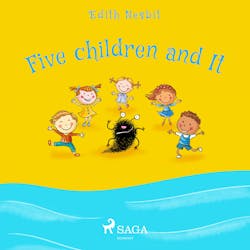
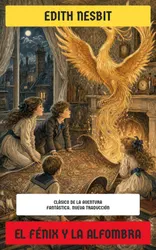
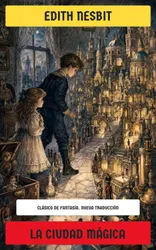
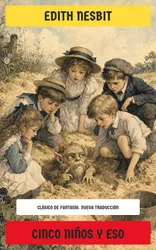
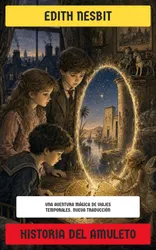
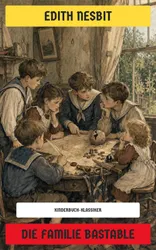
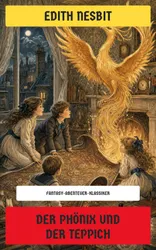
Edith Nesbit's The Psammead Trilogy gathers three landmark fantasies—Five Children and It, The Phoenix and the Carpet, and The Story of the Amulet—into a richly imaginative sequence of magical misadventure. Centred on a group of Edwardian children and the irascible sand-fairy Psammead, the books combine domestic realism with mythic invention, comic irony, and historical romance. Nesbit's style is brisk, witty, and startlingly modern: she places the marvellous not in remote fairyland but within nurseries, gravel pits, and London streets, helping to shape the tradition of twentieth-century children's fantasy. Nesbit (1858–1924) was a pioneering English writer whose unconventional life, socialist commitments, and experience as a mother informed her sympathetic yet unsentimental portrayal of childhood. A founding member of the Fabian Society, she possessed a keen awareness of class, empire, and modernity, all of which surface beneath the trilogy's playful adventures. Her children are independent, argumentative, and morally educable, reflecting both her progressive ideals and her intimate knowledge of family life. This illustrated edition is recommended to readers seeking a foundational work of modern fantasy: humorous, inventive, and intellectually alive. Children will enjoy its enchantments and mishaps; adults will appreciate its narrative sophistication, social texture, and enduring influence on writers from C. S. Lewis to J. K. Rowling.
This enriched edition has been carefully crafted to add value to your reading experience.
- A comprehensive Introduction outlines these selected works' unifying features, themes, or stylistic evolutions.
- The Author Biography highlights personal milestones and literary influences that shape the entire body of writing.
- A Historical Context section situates the works in their broader era—social currents, cultural trends, and key events that underpin their creation.
- A concise Synopsis (Selection) offers an accessible overview of the included texts, helping readers navigate plotlines and main ideas without revealing critical twists.
- A unified Analysis examines recurring motifs and stylistic hallmarks across the collection, tying the stories together while spotlighting the different work's strengths.
- Reflection questions inspire deeper contemplation of the author's overarching message, inviting readers to draw connections among different texts and relate them to modern contexts.
- Lastly, our hand‐picked Memorable Quotes distill pivotal lines and turning points, serving as touchstones for the collection's central themes.