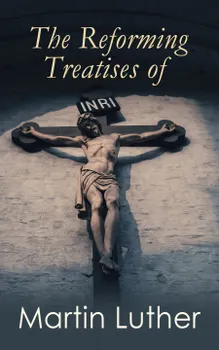
The Reforming Treatises of Martin Luther : Three 1520 Tracts on Church Reform: Priesthood of Believers, Sacraments Reformed, and Christian Liberty by Faith

"Address to the Christian Nobility of the German Nation" is the first of the three tracts written by Martin Luther in 1520. In this work, he defined for the first time the signature doctrines of the priesthood of all believers and the two kingdoms. After the church made a strong attempt at drawing distinct lines on saying who had authority in the spiritual sphere and its matters. This division of Christians into spheres motivated Luther to write on the "three walls" the "Romanists" created to protect themselves from reform.

"Prelude on the Babylonian Captivity of the Church" is a theological treatise, the second of the three major tracts from 1520. In this work Luther examines the seven sacraments of the Catholic Church in the light of his interpretation of the Bible. With regard to the Eucharist, he advocates restoring the cup to the laity, dismisses the Catholic doctrine of Transubstantiation but affirms the real presence of the body and blood of Christ in the Eucharist, and rejects the teaching that the Mass is a sacrifice offered to God.

"A Treatise on Christian Liberty" is the third of Luther's major reforming treatises of 1520. It developed the concept that as fully forgiven children of God, Christians are no longer compelled to keep God's law; however, they freely and willingly serve God and their neighbors. Luther also further develops the concept of justification by faith. In the treatise, Luther stated, "A Christian is a perfectly free lord of all, subject to none. A Christian is a perfectly dutiful servant of all, subject to all."

Über dieses Buch

"Address to the Christian Nobility of the German Nation" is the first of the three tracts written by Martin Luther in 1520. In this work, he defined for the first time the signature doctrines of the priesthood of all believers and the two kingdoms. After the church made a strong attempt at drawing distinct lines on saying who had authority in the spiritual sphere and its matters. This division of Christians into spheres motivated Luther to write on the "three walls" the "Romanists" created to protect themselves from reform.

"Prelude on the Babylonian Captivity of the Church" is a theological treatise, the second of the three major tracts from 1520. In this work Luther examines the seven sacraments of the Catholic Church in the light of his interpretation of the Bible. With regard to the Eucharist, he advocates restoring the cup to the laity, dismisses the Catholic doctrine of Transubstantiation but affirms the real presence of the body and blood of Christ in the Eucharist, and rejects the teaching that the Mass is a sacrifice offered to God.

"A Treatise on Christian Liberty" is the third of Luther's major reforming treatises of 1520. It developed the concept that as fully forgiven children of God, Christians are no longer compelled to keep God's law; however, they freely and willingly serve God and their neighbors. Luther also further develops the concept of justification by faith. In the treatise, Luther stated, "A Christian is a perfectly free lord of all, subject to none. A Christian is a perfectly dutiful servant of all, subject to all."

Starte noch heute mit diesem Buch für € 0

  • Hole dir während der Testphase vollen Zugriff auf alle Bücher in der App
  • Keine Verpflichtungen, jederzeit kündbar
Jetzt kostenlos testen
Mehr als 52 000 Menschen haben Nextory im App Store und auf Google Play 5 Sterne gegeben.

  1. 7. Aug.

    Der Prediger Salomo (Kohelet)

    Martin Luther

  2. 24. Juli

    2. Brief des Paulus an die Korinther

    Martin Luther

  3. 10. Juli

    Der Brief des Paulus an die Römer

    Martin Luther

  4. Neu

    Apostelgeschichte

    Martin Luther

  5. Neu

    Das Buch Daniel

    Martin Luther

  6. Neu

    1. Brief des Paulus an die Korinther

    Martin Luther

  7. Die Bibel - Hörbuch Klassiker

    Martin Luther, Hörbuch Klassiker

  8. Das Evangelium nach Markus

    Martin Luther

  9. Das Evangelium nach Matthäus

    Martin Luther

  10. 95 Thesen des Theologen Dr. Martin Luther. : Hörbuchzeit: Klassiker der Weltliteratur

    Hörbuchzeit, Martin Luther

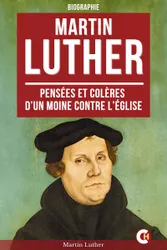
  11. Martin Luther : Pensées et Colères d’un Moine Contre l’Église

    Martin Luther

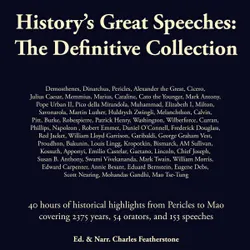
  12. History's Great Speeches: The Definitive Collection : 40 hours of historical highlights from Pericles to Mao covering 54 orators, and 153 speeches

    Julius Caesar, Marcus Tullius Cicero, Demosthenes, Pericles, William Pitt, William Lloyd Garrison, William Morris, Abraham Lincoln, Albert Apponyi, Alexander the Great, A.M. Sullivan, Annie Besant, Caius Marius, Caius Memmius, Catiline, Cato The Younger, Charles Phillips, Joseph, Daniel O'Connell, Dinarchus, EDMUND BURKE, Eduard Bernstein, Edward Carpenter, Elizabeth I, Emilio Castelar, Eugene Debs, Frederick Douglass, Mohandas Gandhi, George Graham Vest, Girolamo Savonarola, Giuseppe Garibaldi, Huldrych Zwingli, John Calvin, Gaetano, Louis Kossuth, Louis Lingg, Mao Tsetung, Mark Anthony, Mark Twain, Martin Luther, Maximillian Robespierre, Mikhail Bakunin, Muhammad, Napoleon Bonaparte, Otto von Bismarck, Peter Kropotkin, Phillip Melanchthon, Pico della Mirandola, Pierre Joseph Proudhon, Pope Urban, Red Jacket, Robert Emmet, Susan B. Anthony, Swami Vivekananda