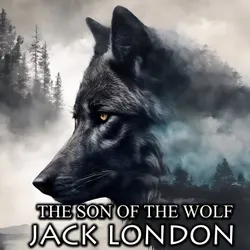
The Son of the Wolf

Jack London gained his first and most lasting fame as the author of tales of the Klondike gold rush. This, his first collection of stories, draws on his experience in the Yukon. The stories tell of gambles won and lost, of endurance and sacrifice, and often turn on the qualities of exceptional women and on the relations between the white adventurers and the native tribes.

The Son

of the Wolf (excerpt)

Man rarely places a proper valuation upon his womankind, at least not

until deprived of them. He has no conception of the subtle atmosphere

exhaled by the sex feminine, so long as he bathes in it; but let it

be withdrawn, and an ever-growing void begins to manifest itself in

his existence, and he becomes hungry, in a vague sort of way, for a

something so indefinite that he cannot characterize it. If his

comrades have no more experience than himself, they will shake their

heads dubiously and dose him with strong physic. But the hunger will

continue and become stronger; he will lose interest in the things of

his everyday life and wax morbid; and one day, when the emptiness has

become unbearable, a revelation will dawn upon him.

In the Yukon country, when this comes to pass, the

man usually provisions a poling boat, if it is summer, and if winter,

harnesses his dogs, and heads for the Southland. A few months later,

supposing him to be possessed of a faith in the country, he returns

with a wife to share with him in that faith, and incidentally in his

hardships. This but serves to show the innate selfishness of man. It

also brings us to the trouble of 'Scruff' Mackenzie, which occurred

in the old days, before the country was stampeded and staked by a

tidal-wave of the che-cha-quas, and when the Klondike's only claim to

notice was its salmon fisheries.

'Scruff' Mackenzie bore the earmarks of a frontier

birth and a frontier life.

His face was stamped with twenty-five years of

incessant struggle with Nature in her wildest moods,--the last two,

the wildest and hardest of all, having been spent in groping for the

gold which lies in the shadow of the Arctic Circle. When the yearning

sickness came upon him, he was not surprised, for he was a practical

man and had seen other men thus stricken. But he showed no sign of

his malady, save that he worked harder. All summer he fought

mosquitoes and washed the sure-thing bars of the Stuart River for a

double grubstake. Then he floated a raft of houselogs down the Yukon

to Forty Mile, and put together as comfortable a cabin as any the

camp could boast of. In fact, it showed such cozy promise that many

men elected to be his partner and to come and live with him. But he

crushed their aspirations with rough speech, peculiar for its

strength and brevity, and bought a double supply of grub from the

trading-post...

About Jack London:

Jack London (1876-1916), was an American author and a pioneer in the then-burgeoning world of commercial magazine fiction. He was one of the first Americans to make a lucrative career exclusively from writing. London was self-educated. He taught himself in the public library, mainly just by reading books. In 1898, he began struggling seriously to break into print, a struggle memorably described in his novel, Martin Eden (1909). Jack London was fortunate in the timing of his writing career. He started just as new printing technologies enabled lower-cost production of magazines. This resulted in a boom in popular magazines aimed at a wide public, and a strong market for short fiction. In 1900, he made $2,500 in writing, the equivalent of about $75,000 today. His career was well under way. Among his famous works are: Children of the Frost (1902), The Call of the Wild (1903), The Sea Wolf (1904), The Game (1905), White Fang (1906), The Road (1907), Before Adam (1907), Adventure (1911), and The Scarlet Plague (1912).

Über dieses Buch

Jack London gained his first and most lasting fame as the author of tales of the Klondike gold rush. This, his first collection of stories, draws on his experience in the Yukon. The stories tell of gambles won and lost, of endurance and sacrifice, and often turn on the qualities of exceptional women and on the relations between the white adventurers and the native tribes.

The Son

of the Wolf (excerpt)

Man rarely places a proper valuation upon his womankind, at least not

until deprived of them. He has no conception of the subtle atmosphere

exhaled by the sex feminine, so long as he bathes in it; but let it

be withdrawn, and an ever-growing void begins to manifest itself in

his existence, and he becomes hungry, in a vague sort of way, for a

something so indefinite that he cannot characterize it. If his

comrades have no more experience than himself, they will shake their

heads dubiously and dose him with strong physic. But the hunger will

continue and become stronger; he will lose interest in the things of

his everyday life and wax morbid; and one day, when the emptiness has

become unbearable, a revelation will dawn upon him.

In the Yukon country, when this comes to pass, the

man usually provisions a poling boat, if it is summer, and if winter,

harnesses his dogs, and heads for the Southland. A few months later,

supposing him to be possessed of a faith in the country, he returns

with a wife to share with him in that faith, and incidentally in his

hardships. This but serves to show the innate selfishness of man. It

also brings us to the trouble of 'Scruff' Mackenzie, which occurred

in the old days, before the country was stampeded and staked by a

tidal-wave of the che-cha-quas, and when the Klondike's only claim to

notice was its salmon fisheries.

'Scruff' Mackenzie bore the earmarks of a frontier

birth and a frontier life.

His face was stamped with twenty-five years of

incessant struggle with Nature in her wildest moods,--the last two,

the wildest and hardest of all, having been spent in groping for the

gold which lies in the shadow of the Arctic Circle. When the yearning

sickness came upon him, he was not surprised, for he was a practical

man and had seen other men thus stricken. But he showed no sign of

his malady, save that he worked harder. All summer he fought

mosquitoes and washed the sure-thing bars of the Stuart River for a

double grubstake. Then he floated a raft of houselogs down the Yukon

to Forty Mile, and put together as comfortable a cabin as any the

camp could boast of. In fact, it showed such cozy promise that many

men elected to be his partner and to come and live with him. But he

crushed their aspirations with rough speech, peculiar for its

strength and brevity, and bought a double supply of grub from the

trading-post...

About Jack London:

Jack London (1876-1916), was an American author and a pioneer in the then-burgeoning world of commercial magazine fiction. He was one of the first Americans to make a lucrative career exclusively from writing. London was self-educated. He taught himself in the public library, mainly just by reading books. In 1898, he began struggling seriously to break into print, a struggle memorably described in his novel, Martin Eden (1909). Jack London was fortunate in the timing of his writing career. He started just as new printing technologies enabled lower-cost production of magazines. This resulted in a boom in popular magazines aimed at a wide public, and a strong market for short fiction. In 1900, he made $2,500 in writing, the equivalent of about $75,000 today. His career was well under way. Among his famous works are: Children of the Frost (1902), The Call of the Wild (1903), The Sea Wolf (1904), The Game (1905), White Fang (1906), The Road (1907), Before Adam (1907), Adventure (1911), and The Scarlet Plague (1912).
Starte noch heute mit diesem Buch für € 0

  • Hole dir während der Testphase vollen Zugriff auf alle Bücher in der App
  • Keine Verpflichtungen, jederzeit kündbar
Jetzt kostenlos testen
Mehr als 52 000 Menschen haben Nextory im App Store und auf Google Play 5 Sterne gegeben.

  1. 24. Juli

    Wie man ein Feuer macht. Eine Abenteuergeschichte. : Hörbuchzeit: Klassiker der Weltliteratur

    Hörbuchzeit, Jack London

  2. 25. Juni
    4.0

    Call of the Wild

    Jack London

  3. 4.5

    L'appel de la forêt

    Jack London

  4. Neu

    Le Peuple de l'Abîme

    Jack London

  5. 1.0

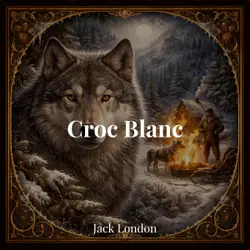
    Croc-Blanc

    Jack London

  6. Neu

    50 Clásicos que Debes Leer Antes de Morir : Un viaje literario por los tesoros de la literatura universal

    Dante Alighieri, Aristóteles, Jane Austen, Charles Baudelaire, Giovanni Boccaccio, Anne Brontë, C. Collodi, James Fenimore Cooper, Fedor Mikhaïlovitch Dostoïevski, Arthur Conan Doyle, Alexandre Dumas, José de Espronceda, Gustave Flaubert, Sigmund Freud, Benito Pérez Galdós, Kahlil Gibran, Johann Wolfgang Goethe, Johann Wolfgang von Goethe, Victor Hugo, Thomas Hardy, Nathaniel Hawthorne, Vicente Blasco Ibáñez, Washington Irving, James Joyce, Mariano José de Larra, Jack London, Federico García Lorca, H.P. Lovecraft, Antonio Machado, Gustav Meyrink, John Stuart Mill, Amado Nervo, Friedrich Nietzsche, Solomon Northup, Alexander Sergeyevich Pushkin, Francisco de Quevedo, Walter Scott, William Shakespeare, Robert Louis Stevenson, Harriet Beecher Stowe, Jonathan Swift, Mark Twain, Miguel De Unamuno, Ramón María del Valle-Inclán, Julio Verne, Virginia Woolf

  7. Neu

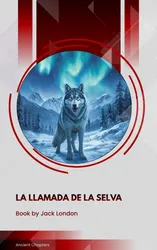
    La llamada de la selva

    Jack London

  8. Neu

    Apocalypse Then : 6 Early Tales of Humanities End

    E. M. Forster, Jack London, Arthur Conan Doyle, M.P. Shiel, H.P. Lovecraft, Mary Shelley

  9. Neu

    Abenteurer des Schienenstranges

    Jack London

  10. Neu

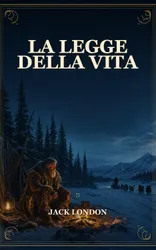
    La legge della vita

    Jack London

  11. Neu

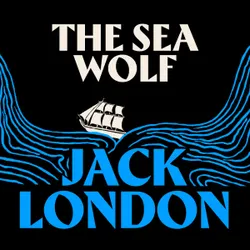
    The Sea Wolf

    Jack London

  12. Neu

    The Adventure Collection: Treasure Island, The Jungle Book, Gulliver's Travels

    Jonathan Swift, Jack London, Rudyard Kipling, Howard Pyle, Robert Louis Stevenson