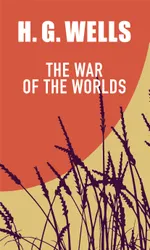
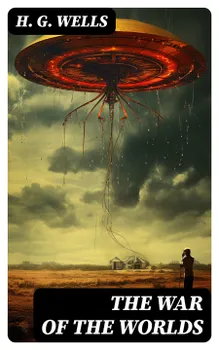
THE WAR OF THE WORLDS

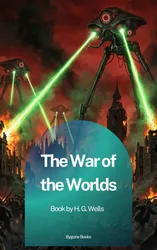
H. G. Wells' seminal work, "The War of the Worlds," intertwines elements of science fiction with profound social criticism, reflecting the anxieties of late Victorian society. Through its vivid depiction of a Martian invasion, Wells employs a first-person narrative that draws readers into a harrowing exploration of survival and societal collapse. The novel's innovative use of unreliable narrators and intense imagery illustrates not only the terror of extraterrestrial encounters but also serves as an allegory for imperialism, colonialism, and the fragility of human civilization in the face of seemingly insurmountable forces. H. G. Wells, often hailed as the father of science fiction, was deeply influenced by the scientific advancements of his era, alongside his interest in social evolution. His background in biology and his progressive political beliefs informed his literary pursuits, leading him to challenge the status quo of his time. "The War of the Worlds" emerged in 1898 amidst a burgeoning fascination with science and technology, capturing the zeitgeist of an age teetering on the brink of modernity while grappling with its darker implications. This timeless novel is essential reading for those intrigued by the intersections of science, society, and human resilience. Whether you are a devoted science fiction enthusiast or a reader seeking profound philosophical reflections, Wells' harrowing tale will compel you to confront the very essence of humanity amid the unknown.
Über dieses Buch

H. G. Wells' seminal work, "The War of the Worlds," intertwines elements of science fiction with profound social criticism, reflecting the anxieties of late Victorian society. Through its vivid depiction of a Martian invasion, Wells employs a first-person narrative that draws readers into a harrowing exploration of survival and societal collapse. The novel's innovative use of unreliable narrators and intense imagery illustrates not only the terror of extraterrestrial encounters but also serves as an allegory for imperialism, colonialism, and the fragility of human civilization in the face of seemingly insurmountable forces. H. G. Wells, often hailed as the father of science fiction, was deeply influenced by the scientific advancements of his era, alongside his interest in social evolution. His background in biology and his progressive political beliefs informed his literary pursuits, leading him to challenge the status quo of his time. "The War of the Worlds" emerged in 1898 amidst a burgeoning fascination with science and technology, capturing the zeitgeist of an age teetering on the brink of modernity while grappling with its darker implications. This timeless novel is essential reading for those intrigued by the intersections of science, society, and human resilience. Whether you are a devoted science fiction enthusiast or a reader seeking profound philosophical reflections, Wells' harrowing tale will compel you to confront the very essence of humanity amid the unknown.
Starte noch heute mit diesem Buch für € 0

  • Hole dir während der Testphase vollen Zugriff auf alle Bücher in der App
  • Keine Verpflichtungen, jederzeit kündbar
Jetzt kostenlos testen
Mehr als 52 000 Menschen haben Nextory im App Store und auf Google Play 5 Sterne gegeben.

  1. 100 Meisterwerke der englischen Literatur - Klassiker, die man kennen muss : Hamlet, 1984, Ulysses...

    George Orwell, Charles Dickens, Jane Austen, Katherine Mansfield, H.P. Lovecraft, William Wordsworth, John Keats, Percy Bysshe Shelley, Robert Burns, John Milton, William Shakespeare, Christopher Marlowe, Geoffrey Chaucer, Laurence Sterne, Henry Fielding, Mary Shelley, Emily Brontë, Charlotte Brontë, Anne Brontë, William Makepeace Thackeray, George Eliot, D. H. Lawrence, Herman Melville, Thomas Wolfe, Virginia Woolf, Joseph Conrad, Sinclair Lewis, Walt Whitman, Edgar Allan Poe, Oscar Wilde, Jerome K Jerome, Washington Irving, Bram Stoker, H.G. Wells, Daniel Defoe, Lew Wallace, James Fenimore Cooper, Jonathan Swift, Robert Louis Stevenson, Mark Twain, Lewis Carrol, Edward Bulwer-Lytton, F. Scott Fitzgerald, Arthur Conan Doyle, Jack London, Henry David Thoreau, G.K. Chesterton, Edith Wharton, Henry James, Thomas Hardy, Margaret Mitchell, Kate Chopin, Willa Cather, Charlotte Perkins Gilman, James Joyce, John Galsworthy, Francis Hodgson Burnett, Lucy Maud Montgomery, Louisa May Alcott, Rudyard Kipling

  2. 12. Nov.

    The Empire of the Ants and Other Stories

    H.G. Wells

  3. 1. Sep.

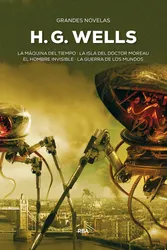
    Grandes Novelas : La máquina del tiempo - La isla del doctor Moreau - El hombre invisible - La guerra de los mundos

    H.G. Wells

  4. 26. Aug.
    4.0

    The First Men in the Moon

    H.G. Wells

  5. 26. Aug.

    The New World Order

    H.G. Wells

  6. 31. Juli
    4.2

    The Time Machine

    H.G. Wells

  7. 4.1

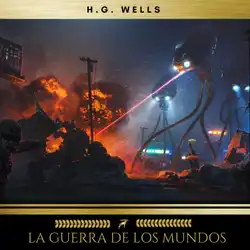
    La Guerra de los Mundos

    H.G. Wells

  8. Neu

    The Sleeper Awakes : Two Hundred Years Asleep, and Master of a World He Never Made

    H.G. Wells

  9. Neu

    The Story of the Inexperienced Ghost : A Comic Encounter With the Clumsiest Spirit in Literature

    H.G. Wells

  10. Neu

    The World Set Free : The 1914 Novel That Named the Atomic Bomb

    H.G. Wells

  11. Neu

    The Time Machine : One Machine, Eight Hundred Thousand Years, and the End of Humanity

    H.G. Wells

  12. Neu

    The Book of Shadows Vol 2

    Bram Stoker, H.G. Wells, Robert W. Chambers, Mary E. Freeman, Arthur Machen, Mary Webb, John Buchan, William Fryer Harvey, Sir Hugh Walpole