Troilus and Cressida

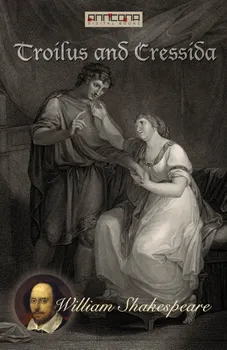
Troilus and Cressida is a tragedy by William Shakespeare, believed to have been written in 1602. It was described by Frederick S. Boas as one of Shakespeare's problem plays. The play ends on a very bleak note with the death of the noble Trojan Hector and destruction of the love between Troilus and Cressida.

Throughout the play, the tone lurches wildly between bawdy comedy and tragic gloom, and readers and theatre-goers have frequently found it difficult to understand how one is meant to respond to the characters. However, several characteristic elements of the play (the most notable being its constant questioning of intrinsic values such as hierarchy, honour and love) have often been viewed as distinctly "modern.”

The play's puzzling and intriguing nature has meant that Troilus and Cressida has rarely been popular on stage, and neither during Shakespeare's own lifetime nor between 1734 and 1898 is there any recorded performance of the play.

The play was also condemned by the Victorians for its explicit sexual references (though the sex, while explicitly and importantly present, is portrayed satirically and highly negatively).

It was not staged in its original form until the early 20th century, but since then, it has become increasingly popular, especially after the First World War, owing to its cynical depiction of immorality and disillusionment.

William Shakespeare (1564-1616) was an English poet, playwright and actor, widely regarded as the greatest writer in the English language and the world's pre-eminent dramatist. His extant works, including some collaborations, consist of about 38 plays, 154 sonnets, two long narrative poems, and a few other verses. His plays have been translated into every major living language and are performed more often than those of any other playwright.

Shakespeare was a respected poet and playwright in his own day, but his reputation did not rise to its present heights until the 19th century. His plays remain highly popular today and are constantly studied, performed, and reinterpreted in diverse cultural and political contexts throughout the world.

In 2016, celebrations will commence in the United Kingdom and across the world to honour The Bard's 400th anniversary.

Über dieses Buch

Troilus and Cressida is a tragedy by William Shakespeare, believed to have been written in 1602. It was described by Frederick S. Boas as one of Shakespeare's problem plays. The play ends on a very bleak note with the death of the noble Trojan Hector and destruction of the love between Troilus and Cressida.

Throughout the play, the tone lurches wildly between bawdy comedy and tragic gloom, and readers and theatre-goers have frequently found it difficult to understand how one is meant to respond to the characters. However, several characteristic elements of the play (the most notable being its constant questioning of intrinsic values such as hierarchy, honour and love) have often been viewed as distinctly "modern.”

The play's puzzling and intriguing nature has meant that Troilus and Cressida has rarely been popular on stage, and neither during Shakespeare's own lifetime nor between 1734 and 1898 is there any recorded performance of the play.

The play was also condemned by the Victorians for its explicit sexual references (though the sex, while explicitly and importantly present, is portrayed satirically and highly negatively).

It was not staged in its original form until the early 20th century, but since then, it has become increasingly popular, especially after the First World War, owing to its cynical depiction of immorality and disillusionment.

William Shakespeare (1564-1616) was an English poet, playwright and actor, widely regarded as the greatest writer in the English language and the world's pre-eminent dramatist. His extant works, including some collaborations, consist of about 38 plays, 154 sonnets, two long narrative poems, and a few other verses. His plays have been translated into every major living language and are performed more often than those of any other playwright.

Shakespeare was a respected poet and playwright in his own day, but his reputation did not rise to its present heights until the 19th century. His plays remain highly popular today and are constantly studied, performed, and reinterpreted in diverse cultural and political contexts throughout the world.

In 2016, celebrations will commence in the United Kingdom and across the world to honour The Bard's 400th anniversary.
Starte noch heute mit diesem Buch für € 0

  • Hole dir während der Testphase vollen Zugriff auf alle Bücher in der App
  • Keine Verpflichtungen, jederzeit kündbar
Jetzt kostenlos testen
Mehr als 52 000 Menschen haben Nextory im App Store und auf Google Play 5 Sterne gegeben.

  1. Die Bändigung des Weibs

    William Shakespeare

  2. 13. Nov.

    Dramer II. Strö lycka, féer : Komiska förväxlingar, Så tuktas en argbigga, Två gentlemän från Verona, Kärleks möda är förgäves, En midsommarnattsdröm, Muntra fruarna i Windsor.

    William Shakespeare

  3. Neu

    50 Clásicos que Debes Leer Antes de Morir : Un viaje literario por los tesoros de la literatura universal

    Dante Alighieri, Aristóteles, Jane Austen, Charles Baudelaire, Giovanni Boccaccio, Anne Brontë, C. Collodi, James Fenimore Cooper, Fedor Mikhaïlovitch Dostoïevski, Arthur Conan Doyle, Alexandre Dumas, José de Espronceda, Gustave Flaubert, Sigmund Freud, Benito Pérez Galdós, Kahlil Gibran, Johann Wolfgang Goethe, Johann Wolfgang von Goethe, Victor Hugo, Thomas Hardy, Nathaniel Hawthorne, Vicente Blasco Ibáñez, Washington Irving, James Joyce, Mariano José de Larra, Jack London, Federico García Lorca, H.P. Lovecraft, Antonio Machado, Gustav Meyrink, John Stuart Mill, Amado Nervo, Friedrich Nietzsche, Solomon Northup, Alexander Sergeyevich Pushkin, Francisco de Quevedo, Walter Scott, William Shakespeare, Robert Louis Stevenson, Harriet Beecher Stowe, Jonathan Swift, Mark Twain, Miguel De Unamuno, Ramón María del Valle-Inclán, Julio Verne, Virginia Woolf

  4. Neu

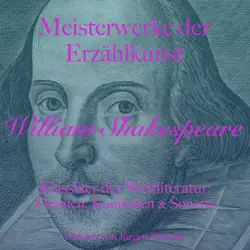
    William Shakespeare: Meisterwerke der Erzählkunst : Klassiker der Weltliteratur: Dramen, Komödien und Sonette

    William Shakespeare

  5. Neu

    The Big Book of Christmas

    Louisa May Alcott, O.Henry, Mark Twain, Beatrix Potter, Charles Dickens, William Shakespeare, Harriet Beecher Stowe, Emily Dickinson, Robert Louis Stevenson, Rudyard Kipling

  6. Neu
    4.5
    #10

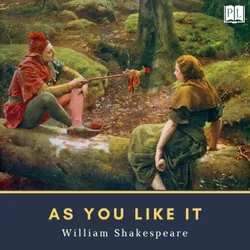
    As You Like It

    William Shakespeare

  7. Neu

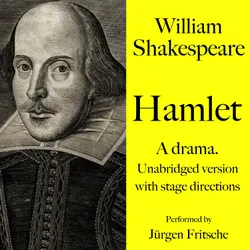
    William Shakespeare: Hamlet. A drama. : Unabridged version with stage directions

    William Shakespeare

  8. Neu

    A Midsummer Night's Dream

    William Shakespeare

  9. Neu
    3.3

    Romeo and Juliet

    William Shakespeare

  10. Neu
    4.0

    Hamlet

    William Shakespeare

  11. Neu
    3.8

    Macbeth

    William Shakespeare

  12. Neu
    2.5

    Othello

    William Shakespeare